Hot Stone Massage for Back Pain: Benefits, Relief and What to Expect
/Best for warmth-led relaxation: hot stone massage. Best for heat-sensitive guests: nonheated Swedish massage. Best for focused muscular tension: targeted deep tissue massage. This 2026 guide explains hot stone massage benefits, the limits of back-pain relief, and how to choose a comfortable session.
TL;DR
- Hot stone massage benefits center on warmth, relaxation, and temporary relief of muscular tension—not correcting spinal problems.
- Choose nonheated Swedish massage when you want relaxation without heated stones.
- Choose targeted deep tissue massage for focused muscular work, not simply stronger pressure.
- Bodycentre Day Spa suits Costa Mesa guests seeking massage alongside facial care and recovery services.
Why this matters
Back discomfort is a symptom, not a diagnosis. A tight back after sitting calls for a different conversation from new pain after a fall, pain with weakness, or pain that keeps worsening.
Bodycentre Day Spa brings massage, facials, skincare, and advanced recovery services together at its Costa Mesa location. That combination suits guests with different wellness goals, but choosing a massage still starts with your symptoms—not the longest treatment menu.
Warmth is a comfort feature, not proof that a massage treats the cause of back pain. Use this 2026 guide to match the experience to your preferences and recognize when medical assessment comes first.
What makes the best massage for back tension?
Choose by suitability rather than intensity. These criteria explain the order of the recommendations below:
- Heat preference: Heated stones should feel comfortably warm, never burning or difficult to tolerate.
- Pressure control: You should be able to request lighter pressure, a different position, or an immediate stop.
- Treatment goal: General relaxation and focused work on a tense area are different priorities.
- Health screening: Changes in sensation, skin problems, recent injuries, and relevant medical conditions belong in the intake conversation.
- Realistic expectations: A useful session supports comfort without promising to repair discs, eliminate nerve compression, or guarantee lasting relief.
Massage options at a glance
These are general treatment approaches, not a statement that every option is suitable for you or included in a particular booking.
Hot stone massage
- Best for: Warmth-led relaxation
- Standout feature: Heated stones combined with massage
- Key limitation: Heat is unsuitable for some guests
Nonheated Swedish massage
- Best for: Heat-sensitive relaxation
- Standout feature: Flowing strokes without heated stones
- Key limitation: Less focused than targeted muscular work
Targeted deep tissue massage
- Best for: Localized muscular tension
- Standout feature: Slower, focused pressure
- Key limitation: Firm pressure can be uncomfortable and is not appropriate for every painful area
1. Hot stone massage: best for warmth-led relaxation
Hot stone massage combines hands-on massage with heated, smooth stones. Depending on the approach, a therapist uses stones during strokes or places them with appropriate protection while working elsewhere.
The warmth changes how the session feels. It does not make stronger pressure necessary, and you do not need to tolerate excessive heat to receive a worthwhile massage.
What hot stone massage benefits mean for your back
For someone with ordinary muscular tightness, the main appeal is a warm, relaxing experience that can ease the feeling of tension temporarily. The quiet setting and hands-on work also give you time away from sustained sitting or repetitive activity.
Keep the distinction clear: feeling less tense is different from correcting the cause of persistent pain. Hot stones do not realign your spine, remove a herniated disc, or establish why your back hurts.
Hot stone massage pros:
- Combines warmth and hands-on massage in one experience.
- Suits guests who find gentle heat comforting.
- Allows you to discuss lighter pressure without giving up the warming element.
Hot stone massage cons:
- Adds a heat-related risk, particularly when sensation is reduced.
- Is not a substitute for assessment of unexplained or worsening back pain.
- Is a poor match when warmth feels unpleasant or aggravates symptoms.
Best for: Guests who enjoy heat and want relaxation around everyday muscular tension.
For appointment planning, read how long a hot stone massage session takes, then confirm what your chosen appointment includes. Verdict: Buy for comfortable warmth and relaxation—not a promised back-pain cure.
2. Nonheated Swedish massage: best for heat-sensitive relaxation
Swedish massage generally uses flowing strokes, kneading, and adjustable pressure. Without heated stones, you can concentrate on whether the touch and positioning feel comfortable.
This is a practical alternative when you like massage but dislike heat. Choosing a nonheated session does not mean you have to choose firm pressure instead.
Nonheated Swedish massage pros:
- Removes heated stones from the experience.
- Allows broad, flowing work for general relaxation.
- Gives you room to request gentle pressure and avoid sensitive areas.
Nonheated Swedish massage cons:
- Does not provide the warming sensation that defines hot stone massage.
- A broad session can leave less attention for one specific area unless you discuss your priorities.
Best for: Guests who want a calming massage without added heat.
For your 2026 booking, ask explicitly whether the session includes any heated accessories; treatment names alone do not describe every detail. Verdict: Buy when heat avoidance matters more than the stone experience.
3. Targeted deep tissue massage: best for localized muscular tension
Deep tissue massage uses slower, more focused work on muscles and surrounding connective tissue. It is an approach to pressure and tissue work—not a requirement to endure pain.
If one muscular area bothers you more than the rest, discuss that location before the session. Pain that radiates, produces numbness, or comes with weakness needs assessment rather than a request for deeper pressure.
Targeted deep tissue massage pros:
- Gives a specific muscular area focused attention.
- Lets you discuss location, pressure, and tolerance in detail.
- Does not require heated stones.
Targeted deep tissue massage cons:
- Firm pressure can feel uncomfortable or cause soreness.
- Is unsuitable over some injuries and inflamed or otherwise vulnerable areas.
- Does not diagnose whether pain originates in muscle, joint, or nerve tissue.
Best for: Guests seeking focused muscular work after appropriate screening.
Verdict: Buy for a clearly discussed muscular goal; skip the idea that harder always means better.
How these options are ranked
The ranking follows heat preference, pressure control, treatment goals, screening, and realistic expectations. It is a suitability guide, not a claim that one technique produces better medical outcomes.
For this hot-stone-focused comparison, warmth-led relaxation comes first. Nonheated Swedish massage answers the heat-sensitive guest's needs, while targeted deep tissue massage answers a different request: concentrated muscular work.
Which massage should you choose?
Choose hot stone massage if warmth is part of the experience you want. Choose nonheated Swedish massage if you want relaxation without heated stones, or discuss targeted deep tissue massage when focused muscular work is your priority.
Use these three questions before choosing:
- Heat preference: Do you usually find gentle warmth comfortable?
- Pressure preference: Do you want light, moderate, or focused pressure?
- Symptom check: Is this familiar muscular tightness, or new and unexplained pain?
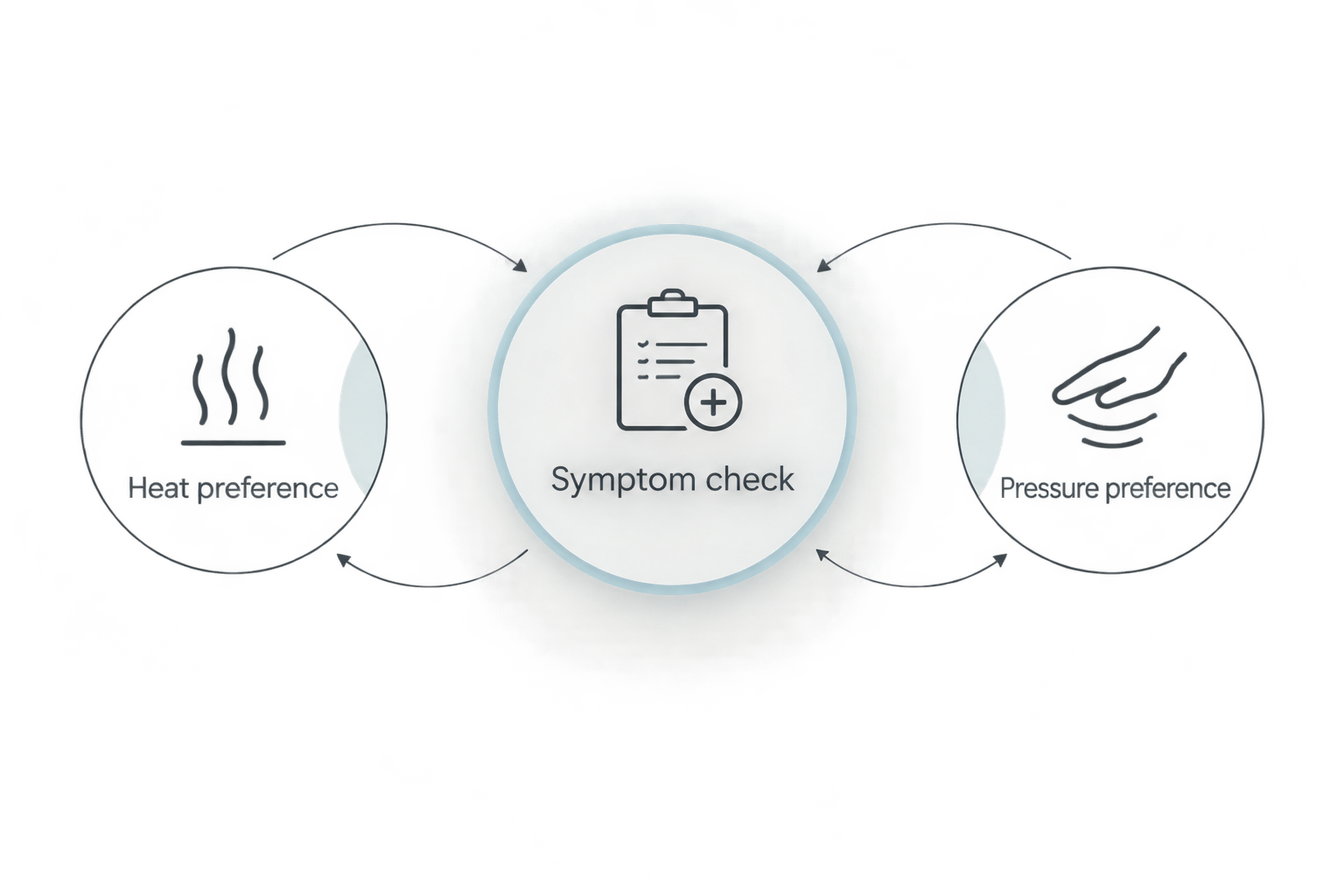
Choose the experience around your symptoms, heat preference, and pressure tolerance.
Bodycentre Day Spa is best for local guests who want massage, facial care, and advanced recovery options at one Costa Mesa location. Guests traveling from Newport Beach, Irvine, or Huntington Beach should plan around that Costa Mesa address; these nearby cities are not additional spa locations.
Discuss your massage preferences
Ask about heated stones, pressure preferences, and the right appointment for your goals.
What to expect at a hot stone massage
A useful 2026 booking conversation covers your goal, relevant health history, and comfort preferences before treatment begins. Confirm the appointment details directly rather than assuming every hot stone session follows the same sequence.
Before treatment
Explain where your back feels uncomfortable, when symptoms started, and what makes them better or worse. Mention recent surgery, injuries, pregnancy, medications affecting bleeding, reduced skin sensation, and any condition that affects heat tolerance.
Tell the therapist about skin irritation and recent skin treatments, too. If you are also planning a facial, waxing, or another recovery service, ask about the sequence instead of assuming every combination suits the same visit.
During treatment
Your therapist should explain positioning, draping, and how to communicate discomfort. Ask how heated stones will be used and what adjustments are possible.
Say something immediately if a stone feels too hot, pressure feels sharp, or your position strains your back. You never need to wait for discomfort to become painful before requesting a change.
After treatment
Stand up slowly and notice how you feel before returning to your day. Drink normally according to thirst and follow any relevant instructions from your healthcare professional.
Massage does not require a detox routine. If you develop worsening pain, skin blistering, new numbness, or other concerning symptoms, seek appropriate medical advice rather than treating the reaction as evidence that the massage worked.
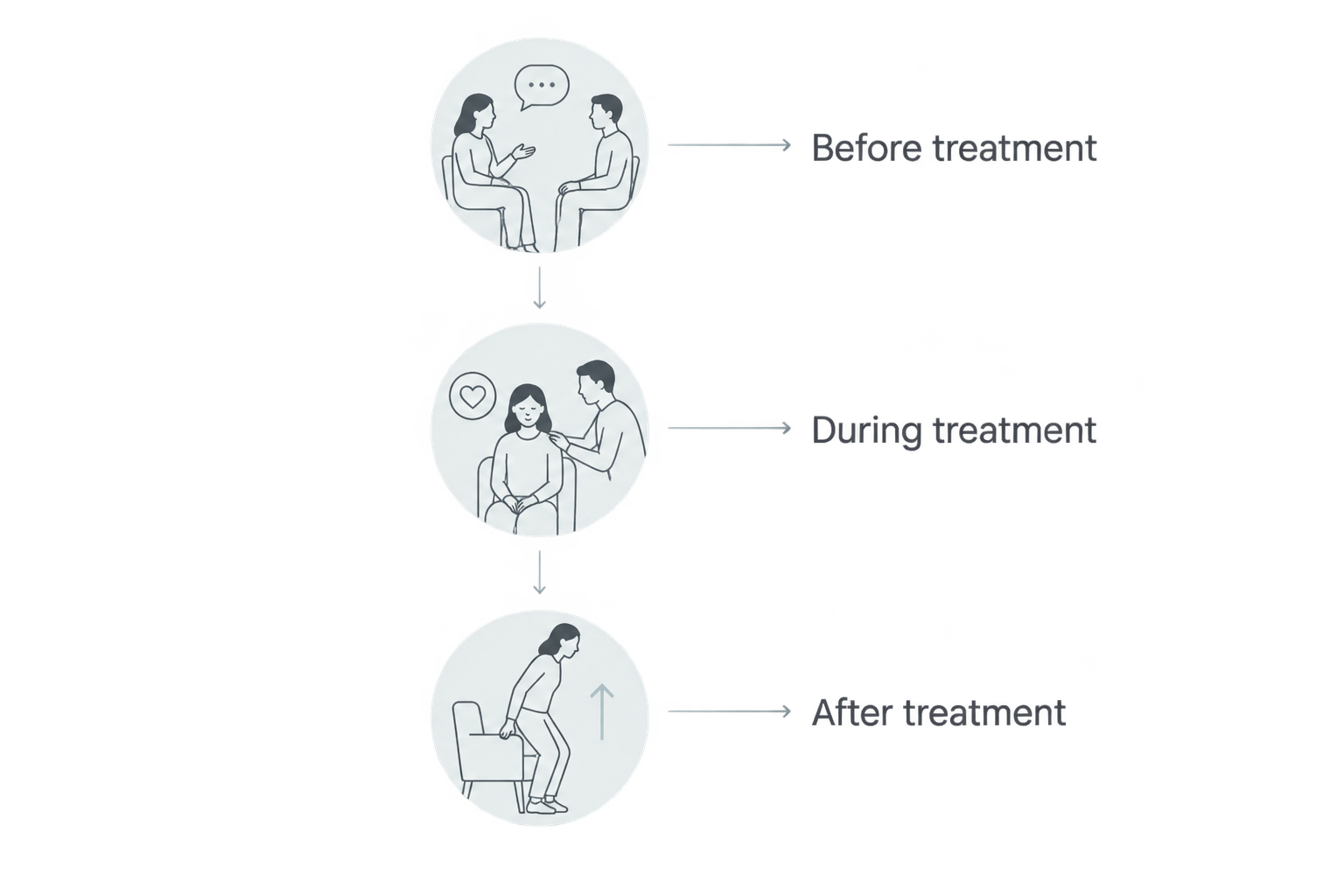
Clear communication matters before, during, and after massage.
When back pain needs medical attention first
Do not book massage as the first response to back pain with new bladder or bowel changes, numbness around the groin, or significant new leg weakness. Seek urgent medical assessment.
Pain after a serious injury, pain with fever, and persistent or worsening symptoms also deserve medical attention. Tell the clinician about relevant health conditions and any history of cancer.
Reduced sensation deserves particular attention with heated stones because you cannot rely on discomfort to warn you that heat is excessive. Ask your healthcare professional whether heated massage is appropriate if you have neuropathy or another condition affecting sensation.
For pregnancy, recent surgery, circulation concerns, or medicines that increase bleeding risk, get individualized guidance before scheduling. A spa intake conversation supports treatment selection; it does not replace medical assessment.
FAQ
What are the main hot stone massage benefits?
Hot stone massage combines warmth, hands-on massage, and relaxation, with possible temporary relief of muscular tension. It does not diagnose or correct the underlying cause of persistent back pain.
Is hot stone massage better than deep tissue for back pain?
Neither is automatically better for back pain. Hot stone massage emphasizes warmth, while deep tissue massage emphasizes focused muscular work; the right choice depends on your symptoms, preferences, and health screening.
Should hot stone massage feel very hot?
No, heated stones should feel comfortably warm rather than burning or painful. Tell the therapist immediately if the heat feels excessive and ask for the stones to be removed or adjusted.
Can hot stone massage fix sciatica?
Hot stone massage is not a treatment that reliably fixes the cause of sciatica. Pain traveling down the leg, especially with weakness or numbness, deserves clinical assessment before you seek deeper pressure or added heat.
Can I get hot stone massage if I have diabetes?
Diabetes requires an individualized suitability discussion, especially if you have reduced sensation, circulation problems, or skin wounds. Ask your healthcare professional about heated massage and disclose relevant conditions before treatment.
How often should I get hot stone massage in 2026?
There is no single schedule that suits every guest. Base repeat appointments on your goals, comfort, response, and any healthcare advice rather than assuming that more frequent treatment produces better results.
Where is Bodycentre Day Spa located?
Bodycentre Day Spa is physically located in Costa Mesa, California. Guests from nearby Orange County cities can discuss massage, facial care, and recovery-service preferences when planning a visit.
One last thing
The best adjustment is often less, not more: less heat, lighter pressure, or more comfortable positioning. Those changes do not weaken a massage; they make the experience fit you.
Before your next session, decide which matters most—warmth, gentle relaxation, or focused muscular work—and say it plainly. A clear request is more useful than asking for the strongest treatment.