
How long do the effects of a facial typically last?
/A facial’s effects are temporary: freshly moisturized skin can look smoother immediately, while lasting improvements depend on the treatment, your skin, and your home care. There is no single duration that applies to every facial, and a visible glow does not mean acne, discoloration, or fine lines have been permanently corrected. For a 2026 appointment, choose the treatment around your goal rather than a promised number of days.
TL;DR
- For facials Costa Mesa guests are comparing, judge hydration, texture, and congestion separately; they do not follow one timeline.
- Bodycentre Day Spa suits Costa Mesa guests seeking facial care alongside massage and recovery services.
- A stronger treatment is not automatically a better choice, especially before an important event.
- Gentle skincare and sun protection matter more than trying to preserve a glow with extra exfoliation.
Why this matters
A facial can leave your skin feeling comfortable without resolving the concern that brought you in. Conversely, an appointment that includes extractions or exfoliation can cause temporary redness rather than an immediate event-ready finish.
Decide what success means before you book. If you are choosing between hydration, smoother texture, and help with congestion, start with the guide to facial treatments for different skin types in Costa Mesa. Those are different goals, not interchangeable promises.
How long do the effects of a facial typically last?
The effects last for different periods because a facial combines different kinds of care. Moisturizer changes how the skin’s surface feels, exfoliation removes surface buildup, and extractions address selected clogged pores; none stops the processes that cause dryness or congestion to return.
The useful question is not simply how long a facial lasts. Ask which effect you want to maintain and what the treatment actually does to produce it.
Hydration-focused care
- Best for: Dry-feeling or tight skin
- What you can notice: Softer, more comfortable skin
- Benefit: Supports surface moisture
- Limitation: Does not remove the cause of recurring dryness
Gentle exfoliation
- Best for: Rough-feeling surface texture
- What you can notice: A smoother feel
- Benefit: Removes some surface buildup
- Limitation: Excess exfoliation can irritate skin
Congestion-focused care
- Best for: Selected clogged pores
- What you can notice: A change in treated areas
- Benefit: Addresses individual blockages
- Limitation: Does not prevent every future breakout
Comfort-focused care
- Best for: Guests prioritizing relaxation
- What you can notice: A pleasant treatment experience
- Benefit: Makes comfort the central goal
- Limitation: Relaxation is not a treatment for a skin disease
These are treatment categories, not a confirmed service menu. Ask what a specific appointment includes before choosing it, especially if your skin reacts easily to new products.
Hydration: judge comfort, not just shine
A moisturized finish can make skin look brighter because the surface reflects light differently. That effect is not the same as a lasting change in pigmentation or collagen.
Notice whether your face feels comfortable after cleansing and whether your usual moisturizer still works well. Comfort is a more useful checkpoint than how glossy your skin looks immediately after an appointment.
Exfoliation: smoother does not mean stronger is better
Exfoliation removes dead cells from the skin’s surface. The result depends on the method, its intensity, and your skin’s condition before treatment.
Adding an at-home scrub to extend the result can do the opposite of what you want. Ask when to restart exfoliating products rather than assuming that another application will preserve smoothness.
Congestion: treated pores are not permanent prevention
Extractions address individual clogged pores when appropriate. They do not switch off oil production or prevent new blockages elsewhere.
If your main concern is recurring acne, distinguish supportive spa skincare from medical treatment. Painful, deep, persistent, or scarring breakouts deserve a dermatologist’s assessment rather than repeated attempts to extract them.
Why facial results vary
Two guests can receive similar facial care and have different experiences afterward. The difference is not proof that one person needs a stronger treatment or more frequent appointments.
- Treatment content: Cleansing, moisturizing, exfoliation, and extractions act differently. Ask what is included rather than relying on a treatment’s name.
- Starting condition: Skin that already feels irritated needs a different approach from skin that feels comfortable but looks dull.
- Home skincare: Cleansers, moisturizers, retinoids, and exfoliating acids affect how skin feels between visits. Share your current routine before treatment.
- Sun exposure: Ultraviolet exposure contributes to skin damage and uneven pigmentation. A facial does not replace sun protection.
- Ongoing skin conditions: Acne, eczema, and rosacea need appropriate assessment. A relaxing appointment does not establish a diagnosis or replace prescribed care.
For your 2026 skincare planning, record the treatment’s actual steps and your response. A short description such as comfortable after cleansing is more useful than a vague rating of whether your skin looked perfect.
How to choose a facial around your goal
Use these 3 planning steps before booking. The aim is to match the appointment to your skin, not to select the longest list of treatment steps.
- Choose your goal. Identify the concern you most want to address: dryness, rough texture, congestion, or relaxation. Tell the provider which concern takes priority.
- Share your routine. Include prescription skincare, over-the-counter active ingredients, allergies, recent procedures, and previous reactions. Do not stop prescribed treatment without advice from its prescriber.
- Plan your aftercare. Ask what to avoid, what to continue, and which reactions require a call. Get instructions specific to the treatment you receive.
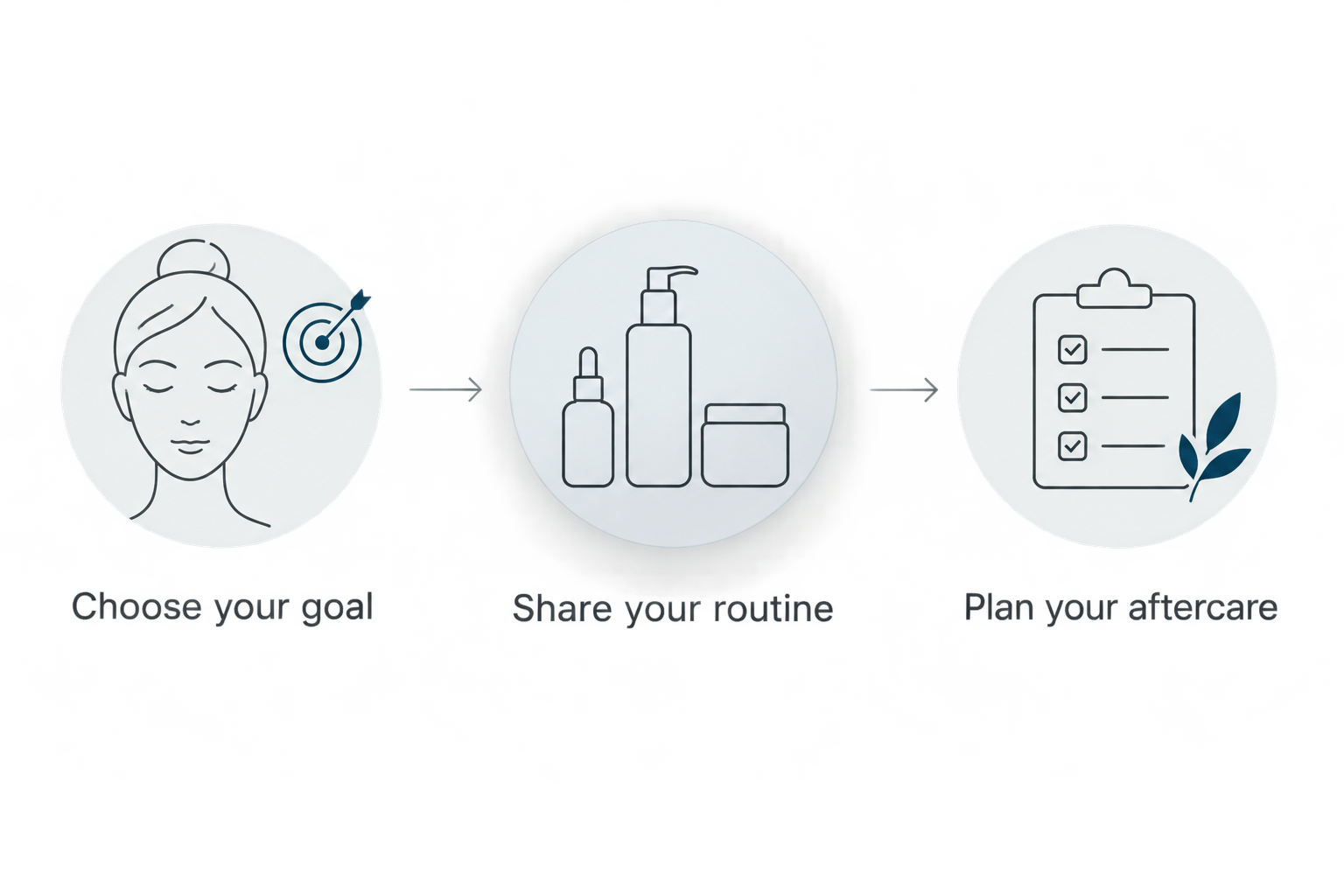
Choose the appointment around your skin and the care you can follow afterward.
Tell your provider about an upcoming wedding, photo session, or work event before choosing treatment intensity. An unfamiliar facial immediately before an important occasion gives you little opportunity to understand your skin’s response.
If you want a brighter appearance for an event
Choose predictability over intensity. A treatment you have previously tolerated gives you more useful planning information than a new service described as stronger or deeper.
Ask whether the appointment includes extractions or exfoliation and whether those steps fit your event schedule. There is no universal waiting period that makes every facial suitable for every guest.
If you want ongoing skin improvement
Look for a plan that connects appointment care with your everyday routine. Repeated visits without reviewing irritation, product use, or the original concern are not a substitute for reassessment.
Your 2026 plan should also have a clear reason to change course. If a concern persists, ask whether the next step is different skincare, a different treatment, or medical advice—not simply another identical appointment.
How do you care for your skin after a facial?
Follow the instructions for the treatment you actually received. Advice for a gentle moisturizing facial is not automatically appropriate after more intensive exfoliation.
Keep the routine understandable. A familiar cleanser, a suitable moisturizer, and sun protection create a clearer starting point than several new products introduced together.
Keep cleansing gentle
Avoid scrubbing skin that feels tender or irritated. Use the cleansing method your provider recommends, and do not pick at areas that received extractions.
Ask specifically about retinoids, exfoliating acids, and abrasive tools. Restarting them is a treatment-specific decision, not a test of how much your skin can tolerate.
Protect your skin outdoors
The American Academy of Dermatology recommends broad-spectrum, water-resistant sunscreen with SPF 30 or higher. Its general guidance includes applying sunscreen about 15 minutes before going outdoors and reapplying approximately every 2 hours outdoors, as well as after swimming or sweating.
Those are general sun-protection instructions, not a facial-specific result timeline. Follow the product label and any individualized advice, and use shade and protective clothing rather than relying on sunscreen alone.
Track the response without chasing perfection
If you want a useful comparison, take 2 photographs: one before treatment and another after your skin has settled. Keep lighting, camera angle, and makeup consistent, and avoid filters.
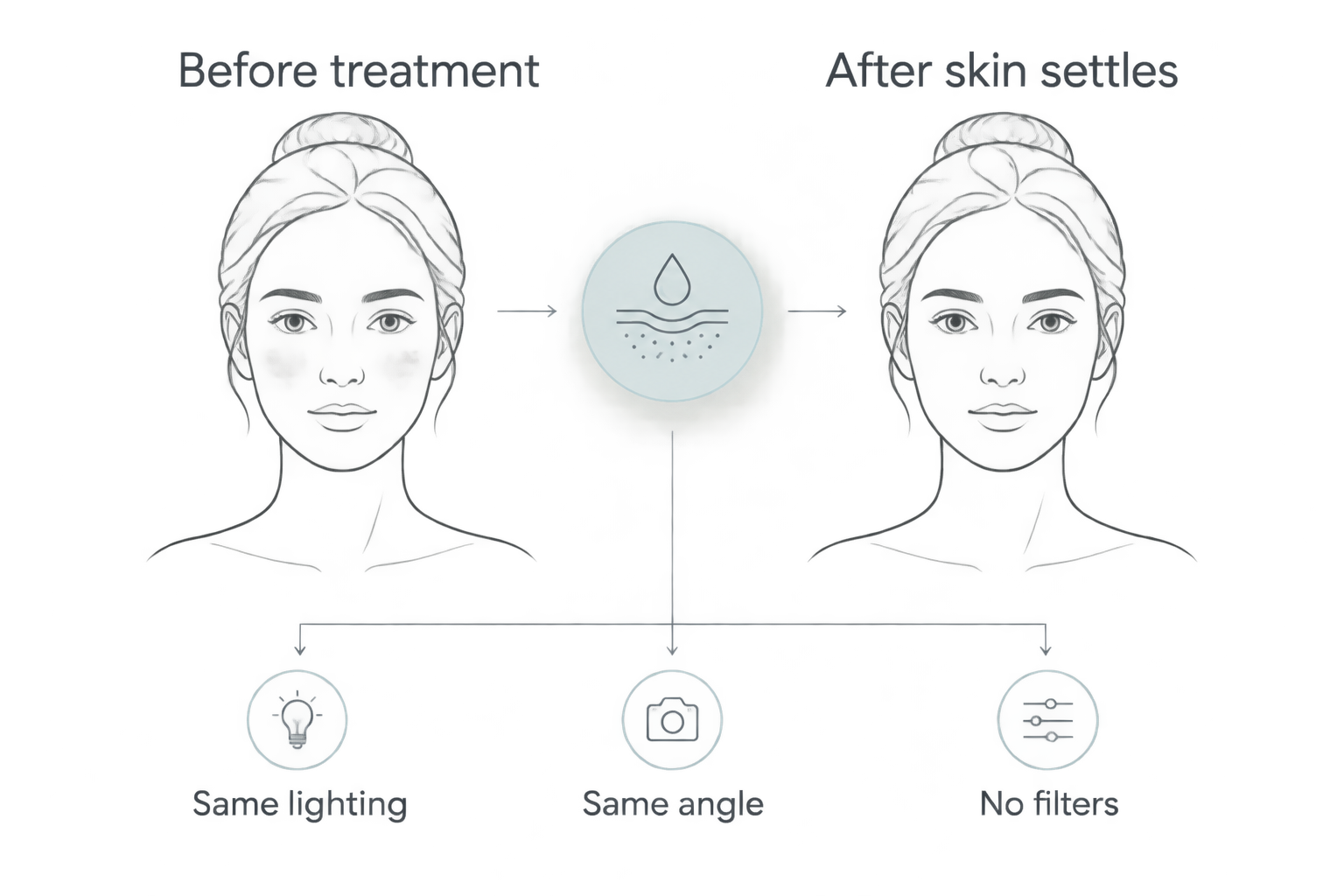
Consistent photographs are more useful than comparing different lighting or filters.
Photographs cannot diagnose a skin condition, and a camera can miss changes in comfort. Add a brief note about tightness, stinging, or tenderness so your next discussion is not based on appearance alone.
Can you combine a facial with massage or recovery care?
You can ask about arranging different services during one visit, but their purposes remain separate. Massage addresses a different experience from facial skincare; adding a recovery service does not establish that a facial’s effects will last longer.
Bodycentre Day Spa combines facials, massage, biohacking, and recovery services at its Costa Mesa location. Bodycentre Day Spa is best for guests who want facial care and broader spa or recovery options in one setting. The limitation is that a combined visit still needs treatment-specific planning and does not replace medical care.
Guests coming from Costa Mesa, Newport Beach, Irvine, or Huntington Beach should plan travel around the appointment and aftercare instructions. The physical spa is in Costa Mesa, not in those neighboring cities.
Ask about service order before combining treatments, particularly when another activity involves heat, sweating, or pressure against your face. Your provider needs to know the complete visit plan rather than learning about an additional service afterward.
Plan your facial visit
Ask about facial care, aftercare, and combining spa or recovery services at the Costa Mesa location.
How often should you book another facial?
Book according to your goal, skin response, and the treatment’s intensity—not because an immediate glow has faded. A routine appointment schedule should still change when your skin becomes irritated or your skincare changes.
Before rebooking, ask what the next appointment is intended to accomplish. If the answer is unclear, clarify the goal rather than treating frequency itself as a benefit.
Should you get a facial right before a special occasion?
Avoid making an important event your first test of an unfamiliar facial. Tell your provider the event date and discuss treatments you have previously tolerated.
For a 2026 celebration, leave planning room for consultation and individualized timing. A stronger appointment is not automatically a better preparation for photographs or makeup.
When should you call a dermatologist instead?
Seek medical advice for worsening irritation, persistent burning, blistering, marked swelling, or signs of infection. Trouble breathing or rapidly developing facial swelling requires emergency care.
Do not assume that every reaction is a normal stage of getting clearer skin. Persistent acne, changing skin lesions, and recurring rashes also need assessment beyond a cosmetic facial.
FAQ
How long will my skin look good after a facial?
There is no single duration for every facial because hydration, exfoliation, and extractions produce different effects. Judge the specific concern you treated rather than expecting every benefit to last equally long.
Will a facial permanently shrink my pores?
A facial does not permanently shrink pores. Removing surface buildup or selected blockages can change their appearance, but that is not a permanent change in pore size.
Can I wear makeup after a facial?
Makeup timing depends on the treatment and your skin’s condition afterward. Ask your provider for instructions, particularly after extractions or exfoliation, and avoid covering irritated skin without advice.
Should I exfoliate again when the facial glow fades?
Do not use a fading glow as your signal to exfoliate again. Follow the treatment-specific advice about restarting acids, scrubs, or retinoids, especially if your skin feels tight or sensitive.
Does redness mean my facial worked better?
Redness is not proof of a better facial result. Its significance depends on the treatment and your skin; worsening redness, pain, or swelling needs professional advice.
What sunscreen should I use after a facial?
Choose broad-spectrum, water-resistant sunscreen with SPF 30 or higher, consistent with American Academy of Dermatology guidance. Follow your treatment instructions and the sunscreen label, and include shade and protective clothing.
Can massage or biohacking make facial results last longer?
Do not assume that massage or biohacking extends a facial’s results. Each service needs its own purpose, suitability check, and aftercare discussion.
One last thing
A glow fading is not the same as your skin getting worse. Surface shine, lighting, and product finish all influence what you see; comfort and the original treatment goal deserve equal attention.
For your next 2026 visit, bring one clear question: what should I notice, and what should make me contact you? That gives you a better decision tool than a promise that every facial lasts the same number of days.