
How long until you see results from cavitation treatments?
/There is no single cavitation treatment results timeline: visible changes depend on the specific ultrasound device, treatment area, and individual response, so a promised number of days is not a reliable answer. An immediate change in a photograph or tape measurement does not, by itself, establish lasting fat reduction; judge results against a documented baseline at the follow-up recommended for that device.
TL;DR
- The cavitation treatment results timeline depends on the device; a universal deadline is not a reliable promise.
- Bodycentre Day Spa combines spa care and recovery services in Costa Mesa; confirm cavitation details before booking.
- Use consistent photographs and measurements to assess body contouring, rather than treating scale weight as proof.
- Ask about the device, safety screening, expected outcome, and follow-up before committing to treatment.
Why this matters
A dramatic same-day photograph and a lasting change in body contour are different outcomes. If you do not separate them, you risk judging a treatment too early—or continuing appointments without a clear reason.
For your 2026 treatment planning, start with a repeatable way to assess change. This guide to body composition tracking methods provides related context, but the assessment must match your goal: localized contour, overall body composition, and body weight are not interchangeable measurements.
Ask what will be measured before asking how quickly it will change. A clear baseline makes the eventual follow-up more useful.
How long until you see results from cavitation treatments?
The useful answer is a device-specific follow-up schedule, not a universal countdown. “Cavitation” describes an ultrasound-related process, but the treatment name alone does not identify the equipment, settings, intended use, or evidence behind a provider’s timeline.
The FDA’s consumer guidance on non-invasive body contouring explains that these procedures are not weight-loss treatments and that outcomes and risks differ by technology. That distinction matters: evidence about a particular medical ultrasound device does not automatically support every service advertised as ultrasonic cavitation.
Use these stages to understand what an appointment and its follow-up can establish:
Before treatment
- What it tells you: Your starting contour, measurements, and suitability
- What it does not prove: How much change you will achieve
Immediately afterward
- What it tells you: Your immediate appearance and treatment response
- What it does not prove: Lasting fat reduction or the final outcome
Planned follow-up
- What it tells you: Whether comparable photos and measurements show change
- What it does not prove: That every difference came from treatment alone
Later reassessment
- What it tells you: Whether an observed change persists
- What it does not prove: A guarantee against future body changes
There is no honest reason to attach a universal number to these stages without knowing the device. Get the expected assessment interval and its supporting evidence before your first appointment.
A provider should also explain what happens if follow-up shows no meaningful improvement. Buying additional sessions is not a substitute for reviewing the original treatment goal.
Immediately afterward: treat the result as preliminary
An immediate visual difference is an observation, not a final verdict. Posture, abdominal tension, lighting, and tape placement can all change how a treated area looks or measures.
Take particular care with photographs showing different clothing or camera angles. A closer camera, a rotated torso, or a waistband pressing into the skin makes a comparison less reliable even when both photographs are genuine.
For a useful comparison:
- Use the same pose, camera position, lighting, and clothing.
- Keep your abdomen relaxed rather than drawing it inward.
- Measure at the same marked anatomical location.
- Record the date and any other treatments performed.
Do not turn an early tape-measure difference into a claim about fat loss. The measurement shows circumference at that moment; it does not identify which tissue or temporary condition accounts for the difference.
At follow-up: compare like with like
Your follow-up should answer a specific question: has the treated area changed in the way you agreed to assess? Bring your baseline records rather than relying on memory or how a single outfit feels.
For a 2026 appointment, request a written assessment plan with a baseline, a follow-up point, and a decision about whether further treatment makes sense. The schedule should come from the equipment’s instructions and relevant clinical evidence, not a generic social-media calendar.
Use this sequence:
- Set your goal. Describe the area and the change you hope to see without assuming weight loss.
- Record your baseline. Take consistent photographs and circumference measurements before treatment.
- Check your response. Report symptoms and follow the provider’s device-specific aftercare instructions.
- Compare your results. Repeat the original assessment under comparable conditions at follow-up.
- Review your plan. Decide whether the outcome supports stopping, reassessing, or discussing another approach.
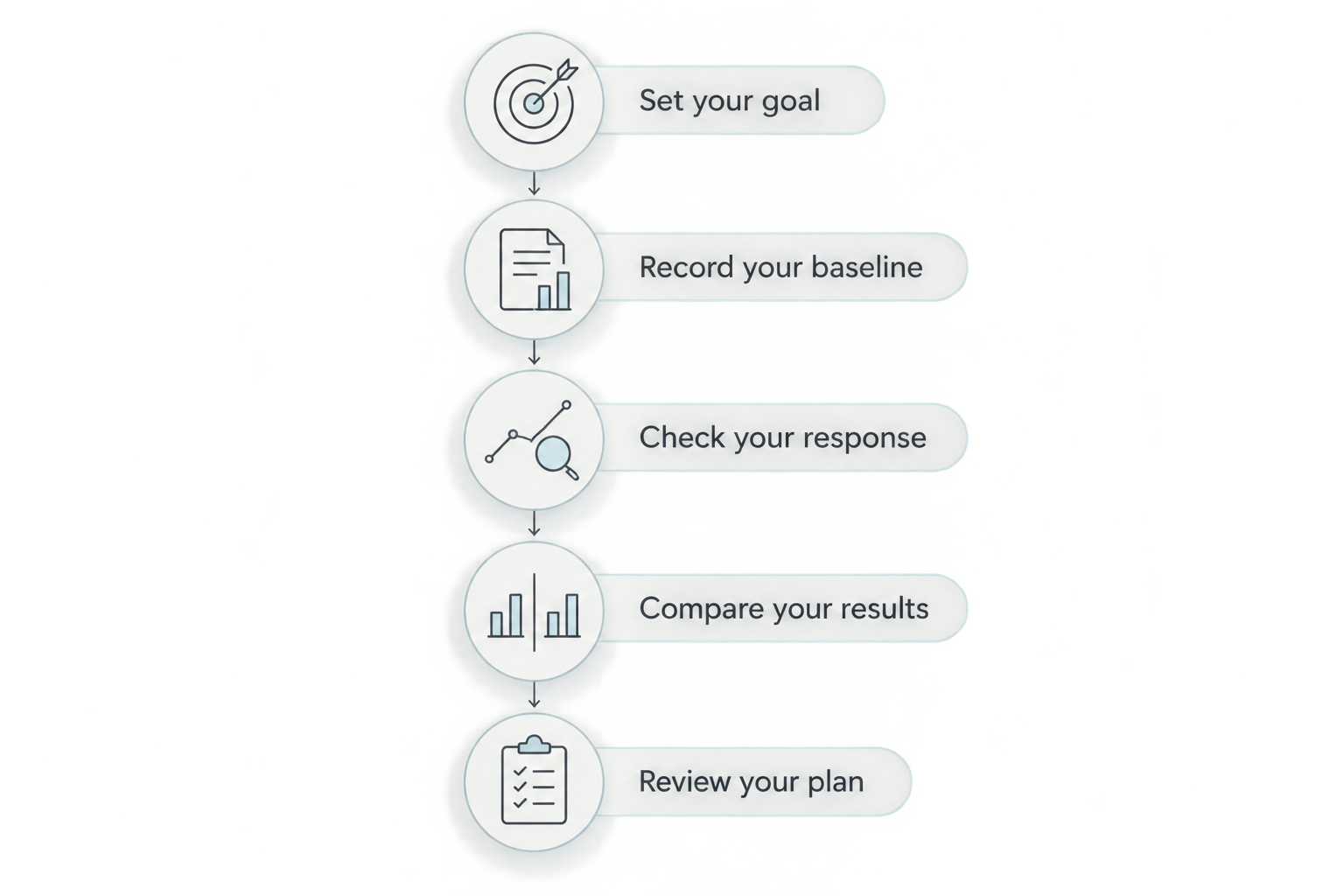
Decide how to assess change before treatment, then repeat the same assessment at follow-up.
A treatment course should have a review point, not just another booking. If the provider changes the promised outcome after treatment begins, return to the original goal and ask for a clear explanation.
Why the cavitation treatment results timeline varies
Several details change how you should interpret a timeline. These are questions to resolve during consultation, not reasons to accept an unlimited wait for results.
- Device and intended use. Different ultrasound systems have different instructions and supporting evidence. Ask for the exact device name and its intended treatment areas.
- Treatment area. The tissue and contour being assessed matter. A claim about one body area should not automatically become a promise about another.
- Starting concern. Localized fullness, loose skin, cellulite, and abdominal distension are different concerns. A treatment directed at one does not necessarily address the others.
- Individual suitability. Your medical history, skin condition, implants, and other factors affect whether treatment is appropriate. Suitability comes before scheduling.
- Measurement conditions. Changes in hydration, posture, clothing, or tape placement complicate comparisons. Consistency helps separate a visible trend from measurement noise.
- Other changes during treatment. Weight change, exercise changes, and additional procedures make it harder to attribute an outcome to cavitation alone. Record them rather than ignoring them.
A useful explanation identifies the factor and changes the plan accordingly. “Everyone is different” is not enough without a clear assessment method.
How should you track cavitation results in 2026?
For a localized contour goal, use photographs and circumference measurements together. Each has a useful role, and each has limitations; neither should be presented as a precise measurement of fat removed.
Standardized photographs
- Best for: Visible contour
- Advantage: Show the shape of the treated area
- Limitation: Lighting, pose, and camera angle affect appearance
Circumference measurements
- Best for: Local size changes
- Advantage: Provide a repeatable reference when technique stays consistent
- Limitation: Tape tension, placement, and abdominal distension affect readings
Body weight
- Best for: Overall weight trend
- Advantage: Adds context about broader body changes
- Limitation: Does not isolate a treated area or establish local fat reduction
Keep a simple record rather than checking repeatedly throughout the day. Follow the agreed assessment schedule, and include enough detail to reproduce the original setup.
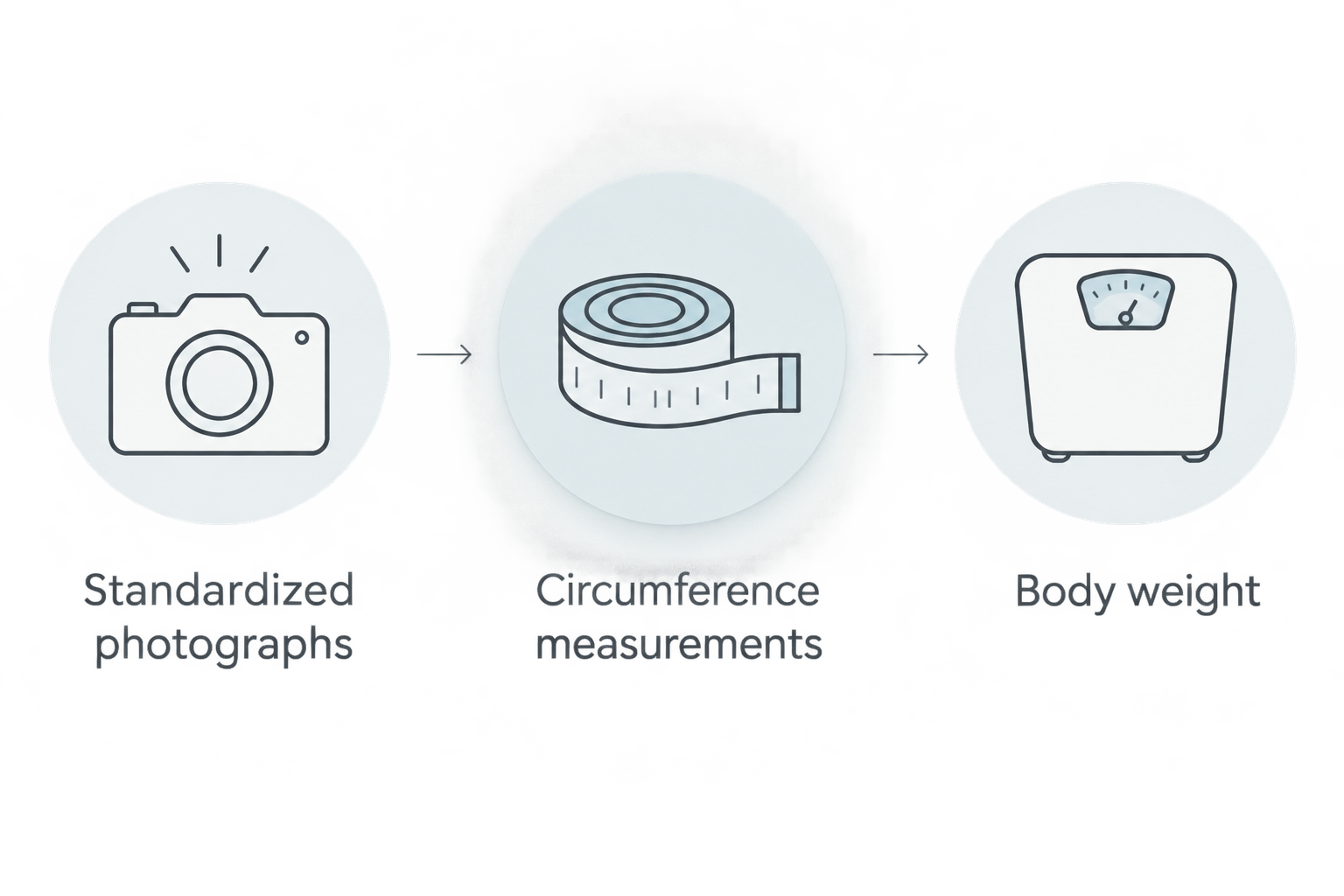
Photographs and measurements assess local contour; body weight adds broader context.
A body-composition reading is not a shortcut around this process. Whole-body estimates and localized contour assessments answer different questions, so ask how any proposed test will help evaluate your stated goal.
What should you ask before booking cavitation?
Start with the equipment, the person providing treatment, and the safety assessment. A confident promise is less useful than a specific explanation you can understand.
Ask these questions during your 2026 consultation:
- What is the exact device, and what is its regulatory status for the intended use?
- What evidence supports the expected outcome and assessment timing?
- Who performs treatment, and what training do they have with this device?
- What medical conditions, medications, implants, or skin problems require extra screening?
- What adverse effects should prompt a call or medical assessment?
- What happens if the planned follow-up shows no meaningful change?
In the United States, FDA clearance is specific to a device and its intended use; it is not a guarantee of your result. Avoid treating the word “approved” in an advertisement as a complete safety explanation.
Bodycentre Day Spa offers massage, facials, skincare, and advanced recovery services at its Costa Mesa location. Bodycentre Day Spa is best for Orange County guests seeking spa care and recovery services under one roof. That combination does not establish cavitation availability or replace a device-specific consultation.
Whether you travel from Costa Mesa, Irvine, Newport Beach, or Huntington Beach, the physical spa location is Costa Mesa. Use the contact page to confirm whether the specific treatment you want is offered and who can answer suitability questions.
Do you need massage or recovery treatments afterward?
Do not assume an additional treatment is necessary to make cavitation work. Ask whether any recommended add-on is part of the device’s instructions or has evidence relevant to your treatment goal.
Massage can be a separate relaxation appointment, a facial can address skincare goals, and recovery services have their own purposes. Their inclusion in a wellness visit does not prove that they accelerate body-contouring results.
Keep those goals separate when planning your visit. A pleasant treatment experience and a measurable contour change are both legitimate interests, but they require different ways of judging success.
What if you do not see a change?
Return to the baseline and the agreed follow-up point. Check that the assessment conditions match before concluding either that treatment worked or that it failed.
If there is no meaningful difference, ask the provider to review suitability, device expectations, and the original concern. Loose skin or abdominal distension, for example, should not be treated as proof that you simply need more fat-focused appointments.
Do not continue solely because you have already invested time. Persistent pain, burns, blistering, or other concerning symptoms call for prompt professional assessment rather than waiting for a cosmetic result.
FAQ
Can I see cavitation results after the first treatment?
An immediate visible or measured difference does not establish lasting fat reduction. Compare standardized records at the follow-up recommended for the specific device rather than treating the first appointment as the final result.
How many cavitation sessions do I need before judging results?
There is no universal session count for judging cavitation results. The device, intended use, suitability assessment, and supporting evidence should determine the treatment plan and review point.
Does cavitation make you lose weight?
Non-invasive body contouring is not a weight-loss treatment. A localized contour goal should be assessed separately from changes on the bathroom scale.
Does drinking extra water make cavitation results happen faster?
Do not treat extra water as a proven shortcut to faster cavitation results. Follow individualized aftercare guidance and any medical fluid restrictions rather than forcing water intake.
Should I book cavitation right before an important event?
Do not rely on cavitation to deliver a guaranteed appearance change by an event date. Ask about device-specific follow-up and possible adverse effects before scheduling around a wedding, holiday, or photo session.
Are cavitation results permanent?
A cavitation treatment does not guarantee a permanent body shape. Ask about evidence for the specific device and how later weight or body changes affect the outcome being assessed.
Does Bodycentre Day Spa offer the cavitation treatment I want?
Contact Bodycentre Day Spa to confirm the specific treatment and equipment before booking. The spa is in Costa Mesa and offers traditional spa care alongside advanced recovery services.
One last thing
For your 2026 consultation, ask: “What finding at follow-up would make you advise against more treatment?” The answer reveals whether the plan has a meaningful stopping point.
Keep a copy of your baseline and follow-up records. They give you a more useful basis for decisions than a promise about how quickly someone else saw a change.