
How often should you get a body scrub?
/You should get a body scrub only as often as your skin tolerates the specific treatment; there is no single schedule that suits every person or every scrub. Before repeating one, make sure your skin is comfortable, intact, and free of lingering redness, stinging, or peeling. For your 2026 routine, count exfoliating products used at home as well as professional treatments—not just spa appointments.
TL;DR
- For a body scrub orange county search, prioritize skin assessment over a preset appointment schedule.
- Bodycentre Day Spa combines spa care and recovery services in Costa Mesa; ask about current exfoliation options before booking.
- Skip physical exfoliation over sunburn, open skin, or irritated areas.
- Count exfoliating acids, brushes, and scrubs together when planning your skincare routine.
Why this matters
A scrub removes dead cells from the skin’s surface through friction. Doing more does not automatically produce a better result: excessive exfoliation can leave skin irritated, dry, and uncomfortable. The right question is not simply when your last appointment happened, but how your skin responded afterward.
If you are comparing local spa visits, Bodycentre Day Spa is physically located in Costa Mesa and serves Orange County guests. Bodycentre Day Spa is best for guests seeking spa care and advanced recovery services in one Costa Mesa location. A broader wellness visit still needs a skin-specific decision about exfoliation.
How often should you get a body scrub?
Repeat a body scrub only after your skin has returned to its normal, comfortable condition and the treatment is appropriate for your current routine. Skin type, scrub strength, pressure, medications, and other exfoliating treatments all affect that decision. A standing appointment is not a reason to scrub irritated skin.
Use this comparison to choose your next step. These are decision categories, not prescribed treatment intervals.
Comfortable skin without irritation
- Best for: Considering occasional exfoliation
- Practical next step: Review the treatment and your home products before booking
- Main limitation: Feeling comfortable does not make every scrub suitable
Dry or easily irritated skin
- Best for: A gentler skincare approach
- Practical next step: Prioritize moisturizer and ask whether exfoliation is appropriate
- Main limitation: Friction can worsen discomfort
Recent use of exfoliating acids or a retinoid
- Best for: Reviewing overlapping treatments
- Practical next step: Tell your provider exactly what you use
- Main limitation: A scrub adds another potential source of irritation
Sunburn, broken skin, or an active rash
- Best for: Postponing exfoliation
- Practical next step: Allow healing and seek medical advice when needed
- Main limitation: A cosmetic scrub does not treat the underlying problem
For your 2026 appointment calendar, treat the previous session’s aftereffects as useful information. Tell the provider if your skin felt tight, tender, itchy, or unusually sensitive afterward. Do not interpret those symptoms as proof that the treatment worked.
Comfortable skin: reassess before repeating
Occasional exfoliation can improve the feel of rough surface skin. That cosmetic benefit does not establish a required maintenance schedule, and it does not mean you need stronger pressure at the next visit. Your goal is comfortable skin, not the strongest sensation you can tolerate.
Before another scrub, check whether your usual cleanser and moisturizer feel normal on your skin. Notice any lingering tenderness beneath clothing or sensitivity during a shower. If ordinary care suddenly stings, stop exfoliating rather than trying to scrub through the problem.
A professional treatment also differs from a quick application at home. Product ingredients, friction, treatment area, and technique all matter. Do not copy an at-home product’s directions onto a different professional treatment.
Dry or sensitive skin: prioritize comfort
Dryness is not always a request for exfoliation. Flaking can accompany irritation, and rubbing already uncomfortable skin can make matters worse. Start by reviewing cleansing habits and moisturizing rather than assuming every rough patch needs removal.
For sensitive skin, ask what the treatment contains and how the provider adjusts pressure. Fragrance and abrasive particles are separate considerations: a product can smell pleasant while still being unsuitable for your skin. Describe previous reactions clearly, including where they occurred and what you applied beforehand.
If you have eczema, psoriasis, an unexplained rash, or recurring irritation, ask a dermatologist whether physical exfoliation belongs in your routine. A spa consultation does not replace diagnosis or treatment of a skin condition.
Recently exfoliated skin: review the overlap
Your skin experiences the whole routine, even when different products have different names. A textured washcloth, dry brush, granular scrub, exfoliating body wash, and acid lotion can all contribute to exfoliation. Separate purchases do not create separate recovery needs.
Check labels for exfoliating ingredients such as glycolic acid, lactic acid, and salicylic acid. Also disclose retinoids and prescribed skin treatments. Do not stop a prescribed medication on your own to fit in a cosmetic appointment; ask the prescribing clinician for guidance.
For your 2026 skincare review, bring product names or clear label photographs to the consultation. Specific ingredients are more useful than describing everything as a body lotion. Let the provider explain whether the proposed scrub duplicates something you already use.
Why body scrub frequency varies
The following factors matter more than a generic recurring booking:
- Skin condition: Intact, comfortable skin needs a different approach from skin that is cracked, inflamed, or sunburned.
- Treatment intensity: Abrasive texture and applied pressure affect how much friction your skin receives.
- Home exfoliation: Brushes, textured cloths, acid-based products, and scrubs add to your overall routine.
- Medications and skincare: Retinoids and certain treatments increase the need for individualized advice before exfoliation.
- Recent hair removal: Shaving or waxing can leave skin sensitive; discuss the area and its condition before adding friction.
- Response afterward: Persistent redness, burning, peeling, or tenderness means you should stop and reassess, not keep the same schedule.
These factors explain why another person’s routine is not a useful prescription for yours. Even your own previous schedule needs review when your products, skin condition, or treatment changes.
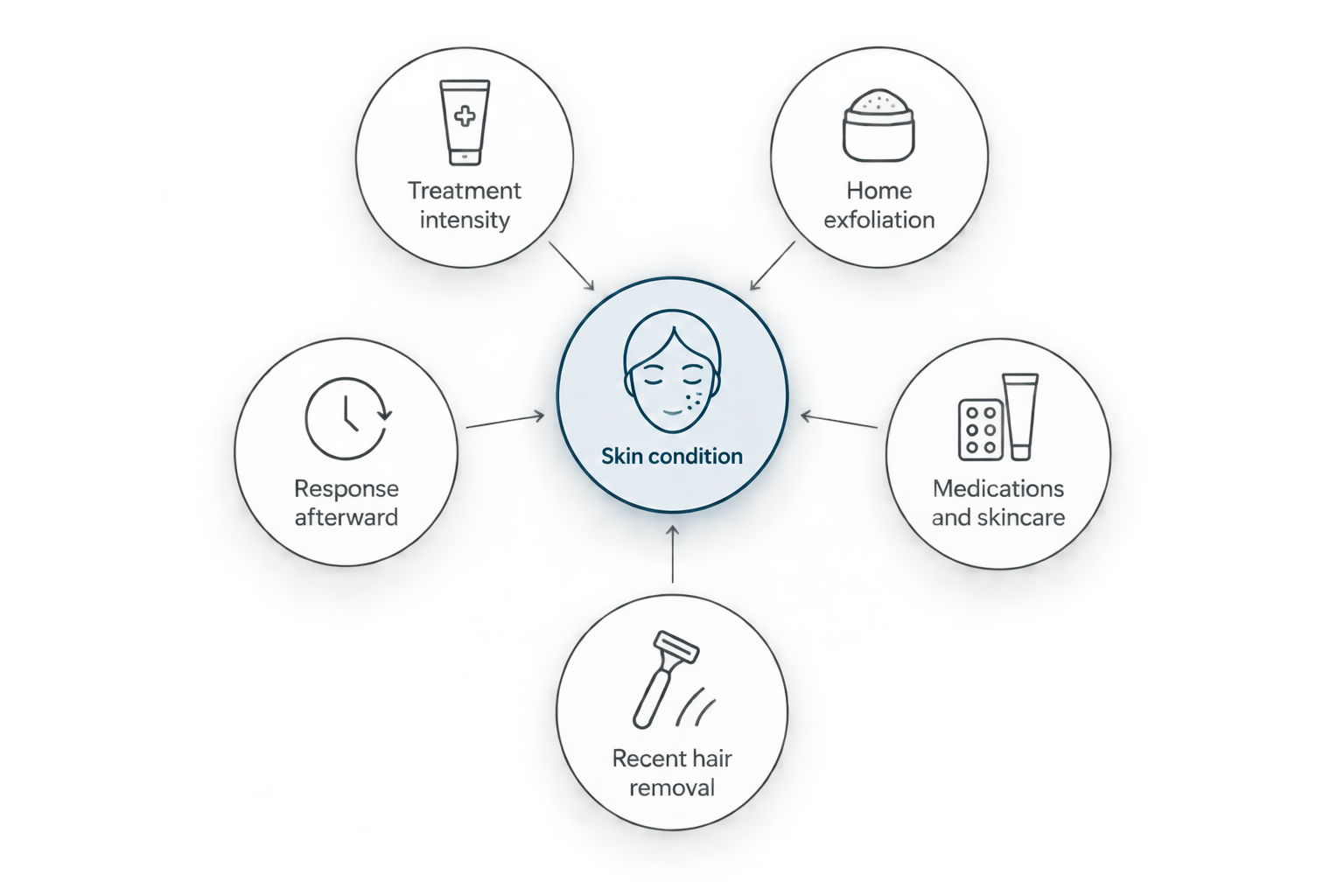
Your next scrub depends on the whole routine, not just the date of your last appointment.
How do you decide whether to book another scrub?
Use a short screening process before choosing an appointment. The purpose is to identify reasons to adjust or postpone treatment, not to diagnose your own skin.
- Check your skin. Look for sunburn, open areas, active irritation, or tenderness. Do not scrub those areas.
- Review your products. Include body washes, lotions, brushes, prescription products, and anything used for acne or rough texture.
- Discuss recent treatments. Mention waxing, shaving, peels, and other procedures involving the same skin.
- Confirm the service. Ask what the treatment involves, which areas it covers, and what preparation and aftercare apply.
- Reassess afterward. Explain any uncomfortable reaction before arranging another session.
Ask for the reasoning behind the suggested timing. A useful recommendation connects the treatment to your skin and products; it does not rely only on a calendar. Keep any aftercare instructions so you can distinguish normal expectations from symptoms that need attention.
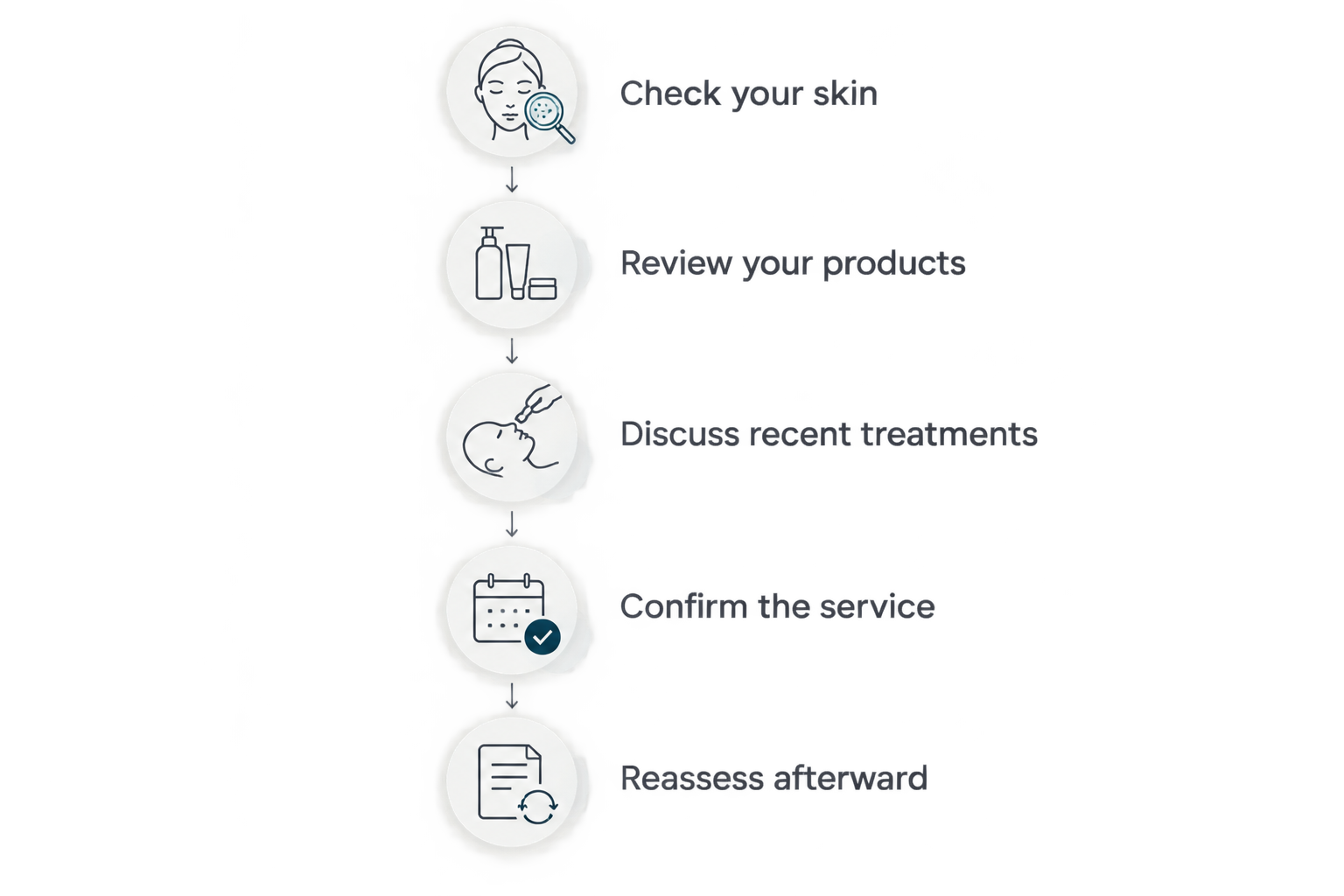
Review skin condition and overlapping treatments before choosing your next appointment.
What should you ask before booking in Orange County?
If you searched for “body scrub Orange County,” compare the actual treatment rather than assuming every listing describes the same service. Ask whether exfoliation is currently offered, what the product contains, and whether the provider reviews sensitive skin and recent hair removal. Confirm preparation instructions before your visit.
Bodycentre Day Spa offers massage, facials, skincare, and waxing alongside biohacking and recovery services. Do not assume that a body scrub is included in a massage, facial, or recovery appointment. Ask about the specific service you want through the contact page.
Whether you live in Costa Mesa, Irvine, Newport Beach, or Huntington Beach, the physical spa location is Costa Mesa. In your 2026 planning, leave room to follow preparation advice rather than fitting exfoliation into a visit regardless of your skin’s condition.
Can you combine a body scrub with other treatments?
Combining appointments requires attention to the skin areas involved, the products used, and the order of treatment. A facial treats a different area from a body scrub, but that does not remove the need to disclose your full skincare routine. Massage oils or fragranced products also deserve discussion when your skin is reactive.
Waxing needs particular care because hair removal can leave skin sensitive. Ask the provider how to separate exfoliation from hair removal for the specific area and product involved. Do not use a general spa itinerary as a substitute for those instructions.
Biohacking and recovery appointments have their own screening and preparation requirements. Hyperbaric oxygen, red light therapy, PEMF, and altitude training are not substitutes for skin aftercare, and a scrub should not be presented as a way to improve their results. Choose each service for its stated purpose rather than expecting every treatment to enhance every other treatment.
What should you do after a body scrub?
Keep aftercare simple: follow the provider’s instructions, avoid adding more exfoliation to irritated skin, and use a moisturizer that your skin tolerates. Do not chase an extra-smooth feeling with a brush or another scrub. Stop using a product that causes burning and seek advice if symptoms persist or worsen.
For exposed skin, the American Academy of Dermatology recommends broad-spectrum, water-resistant sunscreen with SPF 30 or higher, applied 15 minutes before going outdoors. Reapply it every 2 hours while outdoors, and after swimming or sweating as directed. These are general sun-protection recommendations, not a special permission to expose freshly irritated skin.
For your 2026 routine, make sunscreen and moisturizer dependable habits rather than treating a scrub as the main event. Seek medical attention for severe pain, blistering, spreading redness, or other concerning symptoms after treatment.
Is a professional body scrub better than an at-home scrub?
A professional scrub is not automatically gentler or more suitable than an at-home product. A provider can discuss the treatment and adjust technique, but you still need to disclose medications, sensitivities, and recent procedures. The setting alone does not establish safety.
At home, you control the product and pressure, but it is easy to overlap exfoliants without noticing. Follow the product directions rather than extending application time or pressing harder. Neither approach is a treatment for an undiagnosed rash or persistent skin problem.
Should you keep a scrub appointment if your skin is irritated?
No—postpone exfoliation when skin is sunburned, broken, or actively irritated. Contact the provider about changing the visit rather than arriving expecting the same treatment. If the irritation is unexplained, persistent, or worsening, consult a healthcare professional.
FAQ
How often should I get a professional body scrub?
There is no single interval that suits every person and every scrub. Choose timing based on your skin’s condition, the treatment’s intensity, your home products, and qualified advice.
Can I use a body scrub every day?
Daily body scrubbing is not a suitable default routine. Follow the product instructions and stop exfoliating if you develop redness, stinging, peeling, or tenderness.
Should I get a body scrub if my skin is dry?
Dry skin does not automatically need a scrub. Prioritize gentle care and moisturizer, and ask for advice if flaking is persistent or accompanied by itching or inflammation.
Can I get a body scrub after waxing?
Do not scrub skin that remains irritated or sensitive after waxing. Ask your provider when exfoliation is appropriate for the treated area and the products involved.
Does a body scrub replace a massage or facial?
A body scrub does not replace a massage or facial because these services have different purposes. Exfoliation addresses surface skin, while the details of massage and facial care depend on the treatment selected.
Where is Bodycentre Day Spa located?
Bodycentre Day Spa is located in Costa Mesa, California. It serves Orange County guests seeking spa care and recovery services; ask directly about current exfoliation options before booking.
What should I tell a provider before a body scrub?
Tell the provider about sensitive skin, current irritation, medications, exfoliating products, and recent hair removal or procedures. Bring product names or label photographs so the discussion is specific.
One last thing
A scrub appointment and an exfoliation session are not the same count. Your acid lotion, textured cloth, and body brush belong in the same conversation as a professional treatment. Before scheduling more, inventory what already touches your skin—you might need less overlap, not another appointment.