
How often should you get a sports massage?
/Get a sports massage according to your training demands, comfort, and response to previous sessions—not a fixed weekly or monthly rule. There is no universal appointment interval that suits everyone in 2026. Persistent pain, a new injury, or symptoms that worsen need assessment rather than simply more frequent massage.
TL;DR
- For sports massage near me searches, prioritize assessment and communication over a preset appointment schedule.
- Bodycentre Day Spa suits Orange County guests seeking spa care and recovery services at one Costa Mesa location.
- Review how you feel after treatment before committing to recurring visits.
- New injuries and persistent pain need appropriate assessment, not automatically deeper or more frequent massage.
Why this matters
A recurring appointment is convenient, but convenience does not establish what your body needs. Training, work, sleep, and your reason for booking all influence whether another session makes sense. A useful massage plan should respond to those circumstances rather than turn every uncomfortable day into another treatment.
Bodycentre Day Spa is best for Orange County guests who want spa care and recovery services at one Costa Mesa location. Bodycentre Day Spa combines massage, facials, and skincare with biohacking and performance services. That combination gives you different ways to plan a wellness visit; it does not mean you need to combine treatments to benefit from an appointment.
For your 2026 recovery planning, separate the question of what feels relaxing from the question of what needs medical attention. Massage belongs in the former conversation unless a qualified healthcare professional has advised how it fits into care for a particular condition.
How often should you get a sports massage?
Book again when you have a clear goal, have reviewed your response, and can explain what you want the next session to address. Do not choose an interval solely because a teammate, trainer, or social media post recommends it.
Use this sequence before setting a recurring schedule:
- Name your goal. Decide whether you want relaxation, attention to familiar muscle tension, or a session that fits around training.
- Describe your baseline. Explain where you feel discomfort, when it started, and which movements bring it on. Include recent changes in exercise or physical work.
- Review your response. Notice whether the session was comfortable and whether it helped with the goal you identified. Mention unwanted soreness or symptoms that changed afterward.
- Choose the next step. Discuss whether another massage, a different approach, or assessment by a healthcare professional is appropriate.
These are planning steps, not a treatment prescription. You do not need to turn them into a rigid calendar or wait for severe discomfort before discussing your needs.
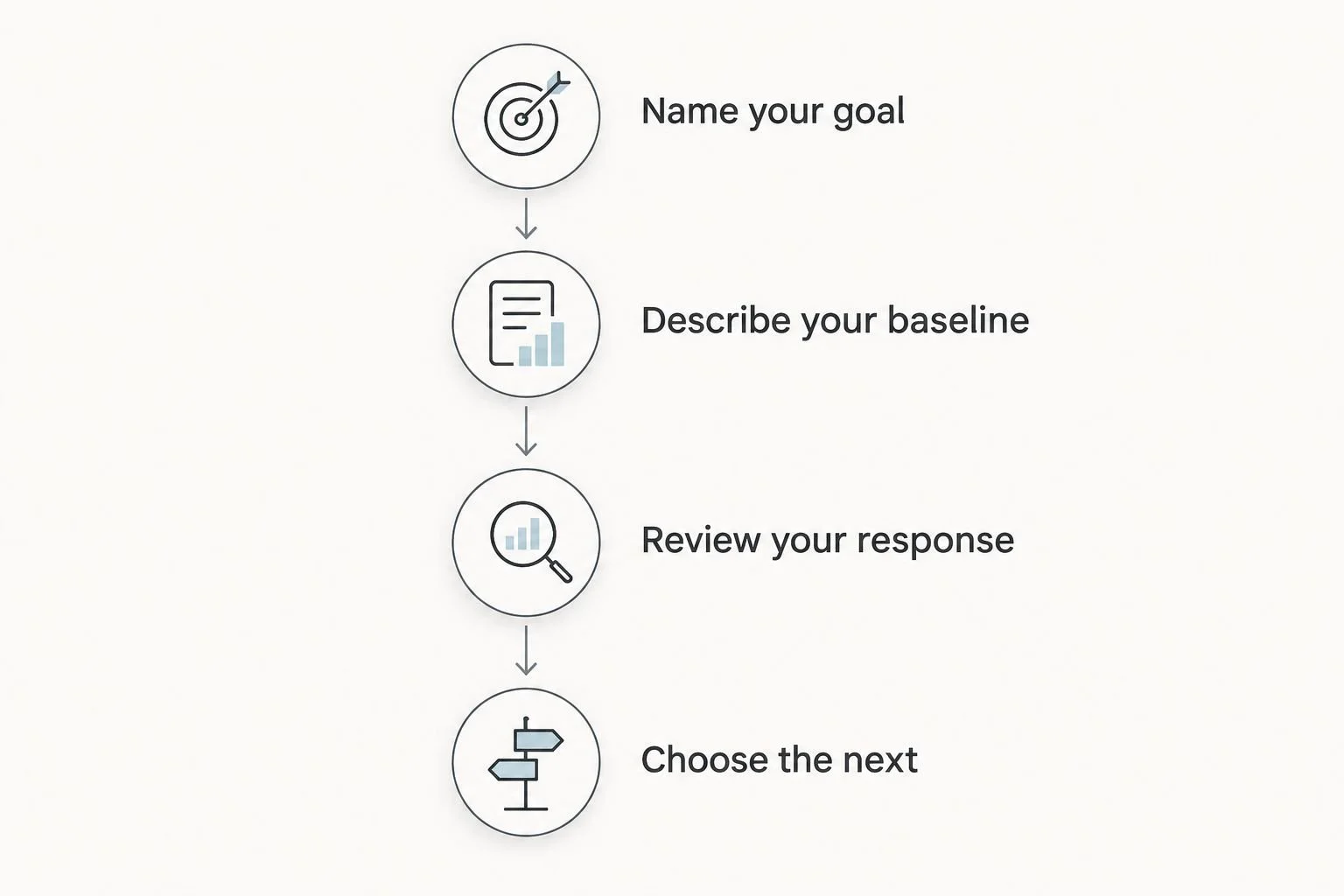
Decide on another appointment after reviewing your goal and response.
Bring the same information to each appointment. A short note about your last session is more useful than asking for the same pressure automatically, especially when your activity level or symptoms have changed.
Which scheduling approach fits your situation?
The following options describe ways to make a booking decision. They are not medical recommendations or prescribed intervals.
Goal-based booking
- Best for: Guests with a specific comfort or relaxation goal
- Advantage: Gives each appointment a clear purpose
- Limitation: Requires you to reassess rather than book automatically
Training-calendar booking
- Best for: Active people coordinating appointments with exercise
- Advantage: Makes the session part of a practical training plan
- Limitation: A busy training week does not establish a need for massage
Recurring booking
- Best for: Guests who value a predictable wellness routine
- Advantage: Simplifies planning and travel
- Limitation: Can continue after the original goal has changed
Assessment before booking
- Best for: People with new, worsening, or unexplained symptoms
- Advantage: Puts the cause of symptoms ahead of a spa appointment
- Limitation: Can mean postponing massage while seeking advice
Choose the approach that matches your current situation, not the one that creates the most appointments. A recurring visit can be enjoyable without being a medical necessity. Keep that distinction clear when deciding how often to return.
Recreational exercise: let your goal set the schedule
If you exercise for enjoyment, start by identifying what you want from massage. General relaxation, attention to a familiar tense area, and preparation for a demanding event are different requests. Tell the therapist which matters most instead of assuming that “sports” means the strongest possible treatment.
A practical 2026 exercise routine should leave room for ordinary recovery habits and changes in your schedule. Massage can be an optional part of that routine; it does not replace sleep, appropriate exercise progression, or assessment of an injury.
The advantage of flexible booking is that you can respond to what you actually need. The drawback is that it takes more deliberate planning than keeping a standing appointment. Before leaving a session, agree on what information would help you decide whether to return.
Demanding training: coordinate rather than add appointments
When your training becomes more demanding, tell the therapist what changed. Describe the activity, the body areas involved, and any important upcoming sessions or events. That context helps you discuss a treatment approach without assuming more training automatically requires more massage.
Do not use massage to make an unresolved injury feel acceptable enough to train through. If discomfort keeps returning during the same activity, investigate the cause with an appropriate healthcare professional rather than treating every recurrence as a scheduling problem.
Planning around training has a clear advantage: you can consider the appointment alongside your other commitments. Its limitation is equally important. A well-organized calendar cannot establish whether a particular treatment is suitable for your symptoms.
Event preparation: avoid last-minute experiments
Before a race, match, or other important event, discuss the timing and purpose of massage with your therapist. Explain whether you have had that style of treatment before and how you responded. A familiar, comfortable approach is a more informed choice than requesting unfamiliar intensive work simply because the event matters.
Do not assume soreness proves that a treatment was effective. If a previous session left you uncomfortable, share that experience before booking similar work near an important activity.
After the event, describe what you feel rather than diagnosing it yourself. Ordinary post-exercise discomfort and an injury are not interchangeable. Sudden pain, pronounced swelling, or difficulty using a limb calls for healthcare assessment rather than a routine recovery booking.
Why sports massage frequency varies
Your appointment schedule should reflect your circumstances. These factors give the booking conversation a useful starting point:
- Your goal: Relaxation and attention to a specific area are different reasons to book. State the outcome you want without assuming massage can guarantee it.
- Your activity: Explain changes in training, repetitive work, or time spent sitting. Include what makes the area feel better or worse.
- Your response: Discuss comfort during treatment and how you felt afterward. Unwanted soreness is feedback, not a reason to request greater pressure.
- Your health history: Share relevant conditions, medications, recent procedures, and injuries so suitability can be considered before treatment.
- Your preferences: Pressure, positioning, draping, and areas you do not want treated matter. You can change your mind during a session.
- Your practical routine: Travel, work, caregiving, and other appointments affect what you can maintain. A manageable plan is preferable to one you feel obliged to follow.
No single factor produces a universal interval. Use the conversation to decide what is appropriate now, then revisit that decision when circumstances change.
What should you ask when searching “sports massage near me”?
A nearby address helps with convenience, but it does not answer whether the treatment fits your needs. For a 2026 booking, ask about the session itself before committing to a recurring arrangement.
Organize your questions around these areas:
- Treatment fit: Describe your activity and ask whether the offered massage suits your goal.
- Pressure choices: Ask how the therapist adjusts pressure and how you should communicate discomfort.
- Health history: Ask what information to provide before arrival and when medical clearance is needed.
- Visit planning: Confirm the physical location and discuss how to coordinate the appointment with your day.
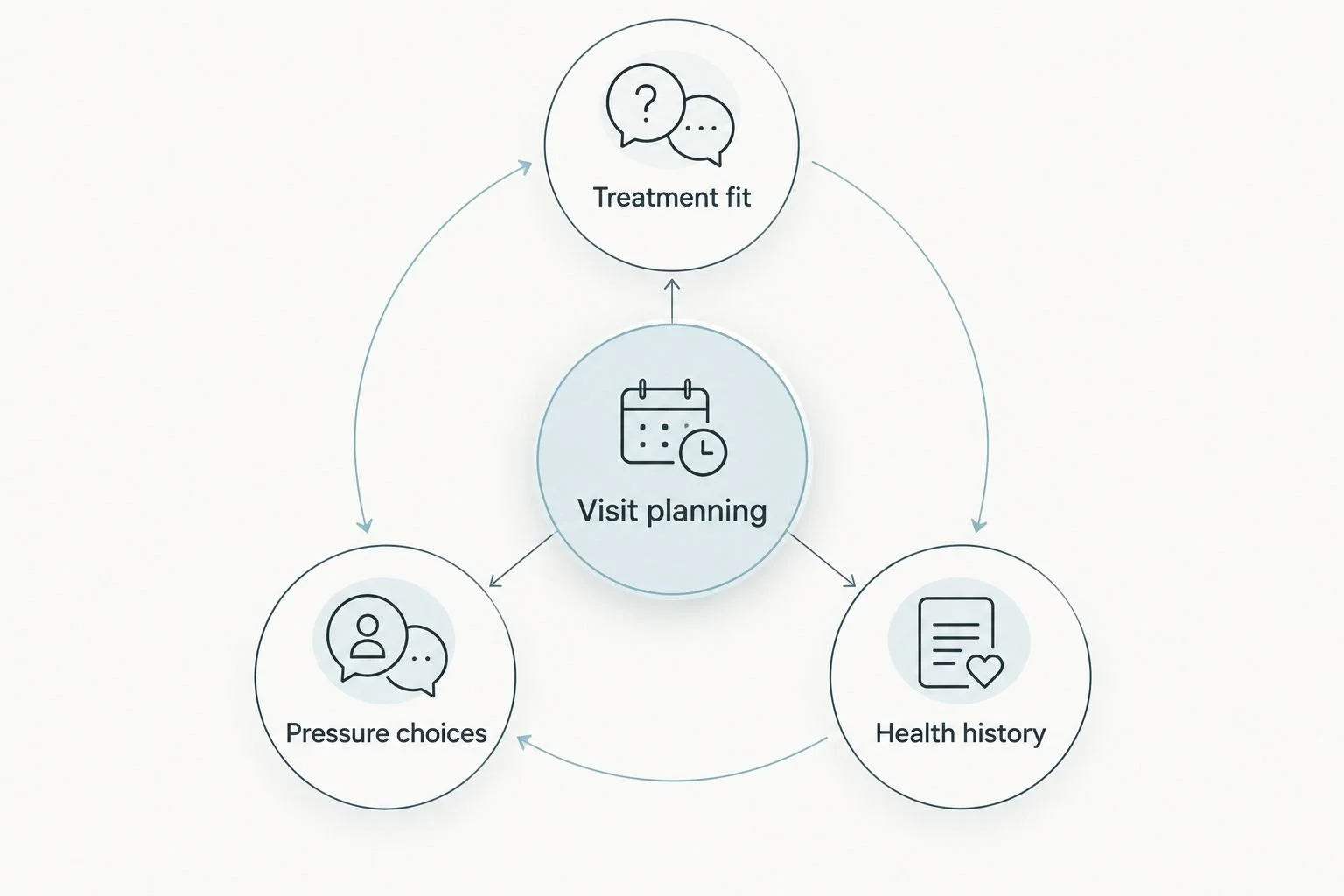
Ask about the treatment conversation, not just the appointment opening.
You should also feel comfortable asking the therapist to pause or stop. Clear communication is part of the appointment, not an interruption. If the proposed treatment does not match your expectations, resolve that before the hands-on work begins.
Planning a visit from Costa Mesa or nearby cities
Bodycentre Day Spa is physically located in Costa Mesa. Whether you live in Costa Mesa, Newport Beach, Irvine, or Huntington Beach, plan your travel to that location rather than assuming there is a branch in your city.
For your 2026 visit, choose the main reason you are coming before adding services. Massage, a facial, and an advanced recovery treatment address different interests. A facial belongs in a skincare conversation; it should not be presented as a way to solve training-related discomfort.
The same distinction applies to biohacking services. Red light therapy uses light, PEMF uses pulsed electromagnetic fields, hyperbaric oxygen involves oxygen in a pressurized environment, and altitude training changes the oxygen conditions used during training. These are different experiences, not interchangeable additions to massage.
The benefit of services under one roof is choice, not a requirement to book everything. The limitation is that a broader menu still requires a separate suitability conversation for each treatment. Start with your goal and ask what is relevant.
Use the contact page to confirm the massage options offered and explain what you want from your visit before choosing an appointment.
Should you get a sports massage every week?
Weekly massage is not a universal requirement for active people. A standing appointment can suit your preferences, but the calendar alone does not establish a health or performance benefit.
Review whether each session still has a clear purpose. If you are booking repeatedly because the same pain keeps returning, seek assessment rather than assuming the answer is a shorter gap between visits.
Is deeper pressure better when you train hard?
Deeper pressure is not automatically better because you exercise intensely. Tell the therapist what feels comfortable, and ask for an adjustment if treatment feels painful or makes you brace.
A useful session does not require you to tolerate the strongest pressure available. Your training history provides context; it does not remove your right to choose a gentler approach.
FAQ
How often should I get a sports massage if I run regularly?
Base your sports massage schedule on your goal, training context, and response to previous sessions rather than a fixed rule for runners. Discuss recurring pain with a qualified healthcare professional instead of relying on repeated massage.
Can I get a sports massage if I do not play sports?
You do not need to compete in a sport to ask about sports massage. Explain your activities and comfort goals so the therapist can discuss whether the offered approach fits your needs.
Should I book sports massage before or after exercise?
Choose timing after discussing your exercise plans and previous response with the therapist. Avoid treating an unfamiliar intensive session as an essential last-minute preparation step.
Does soreness mean my sports massage worked?
Soreness does not prove that sports massage worked. Report unwanted soreness and ask whether pressure, technique, or the treatment plan should change.
Can sports massage replace treatment for an injury?
Sports massage does not replace assessment or treatment of an injury. New, worsening, or unexplained symptoms need appropriate healthcare advice before you treat them as ordinary muscle tension.
Where is Bodycentre Day Spa located for Orange County visitors?
Bodycentre Day Spa is located in Costa Mesa. Guests from Newport Beach, Irvine, Huntington Beach, and other Orange County communities should plan travel to the Costa Mesa location.
One last thing
For your 2026 massage plan, write down what would make an appointment worthwhile before you book it. That might be a comfortable relaxation session or a focused conversation about familiar tension—not a promise of better athletic performance.
The next appointment should have a purpose, not just a date. Bring feedback from the previous visit and give yourself permission to change the plan.