Best Massage for Muscle Recovery After Training: Sports, Deep Tissue or Both?
/Best overall: sports massage for training-related soreness. Best for persistent, localized tension: deep tissue; best for sensitive muscles: gentle relaxation massage. The best massage for muscle recovery matches your symptoms and training schedule—not the strongest pressure you can tolerate.
TL;DR
- Sports massage is the best massage for muscle recovery when the session follows your training demands.
- Deep tissue suits localized muscle tension, not fresh injuries or severely tender muscles.
- Sports massage and deep tissue can overlap; treatment intensity matters more than the booking label.
- BodyCentre Day Spa combines massage, facials, and advanced recovery services at its Costa Mesa location.
Why this matters
A hard workout does not automatically call for a hard massage. Delayed-onset muscle soreness typically begins 12–24 hours after unfamiliar exercise and is often strongest 24–72 hours afterward, according to the American College of Sports Medicine's guidance on exercise soreness. That tenderness is not an instruction to push harder.
For your 2026 recovery routine, choose the session around how you feel today. General soreness, a familiar tight spot, and sudden pain during a lift require different decisions.
BodyCentre Day Spa is best for Orange County guests who want massage and advanced recovery services alongside traditional spa care. The physical spa is in Costa Mesa, serving guests from nearby communities including Newport Beach, Irvine, and Huntington Beach.
What makes the best massage for muscle recovery?
Judge a recovery massage by these criteria before choosing a name from a menu:
- Symptom fit: General post-workout tenderness needs a different approach from one familiar area of tension.
- Pressure control: You should be able to breathe normally and relax without bracing against the therapist's hands.
- Training context: Tell the therapist what you trained and what activity comes next.
- Adaptability: The session should change when a technique feels sharp, irritating, or too intense.
- Safety boundaries: A therapist should recognize when symptoms call for medical assessment instead of massage.
These criteria make the ranking useful in 2026 without treating any massage style as a guaranteed recovery shortcut. A well-adjusted, lighter session is a better choice than an aggressive treatment that ignores your feedback.
Recovery massage options at a glance
Sports massage
- Best for: Training-specific soreness and maintenance
- Standout approach: Focus follows the muscles and movements used in your sport
- Key limitation: The name alone does not specify pressure or techniques
Deep tissue massage
- Best for: Familiar, localized muscle tension
- Standout approach: Slow, focused work with adjustable pressure
- Key limitation: Too much intensity can aggravate tender areas
Combined sports and deep tissue
- Best for: Mixed needs across different muscle groups
- Standout approach: Training-focused assessment with selective deeper work
- Key limitation: Requires clear communication about where to stay gentle
Gentle relaxation massage
- Best for: Widespread tenderness and a quieter recovery day
- Standout approach: Comfortable pressure with a relaxation focus
- Key limitation: Less suited to someone seeking concentrated work on one area
The distinction is between the purpose of the session and the techniques used. Sports massage describes a training-related purpose; deep tissue describes an approach to working with soft tissue. They are not mutually exclusive categories.
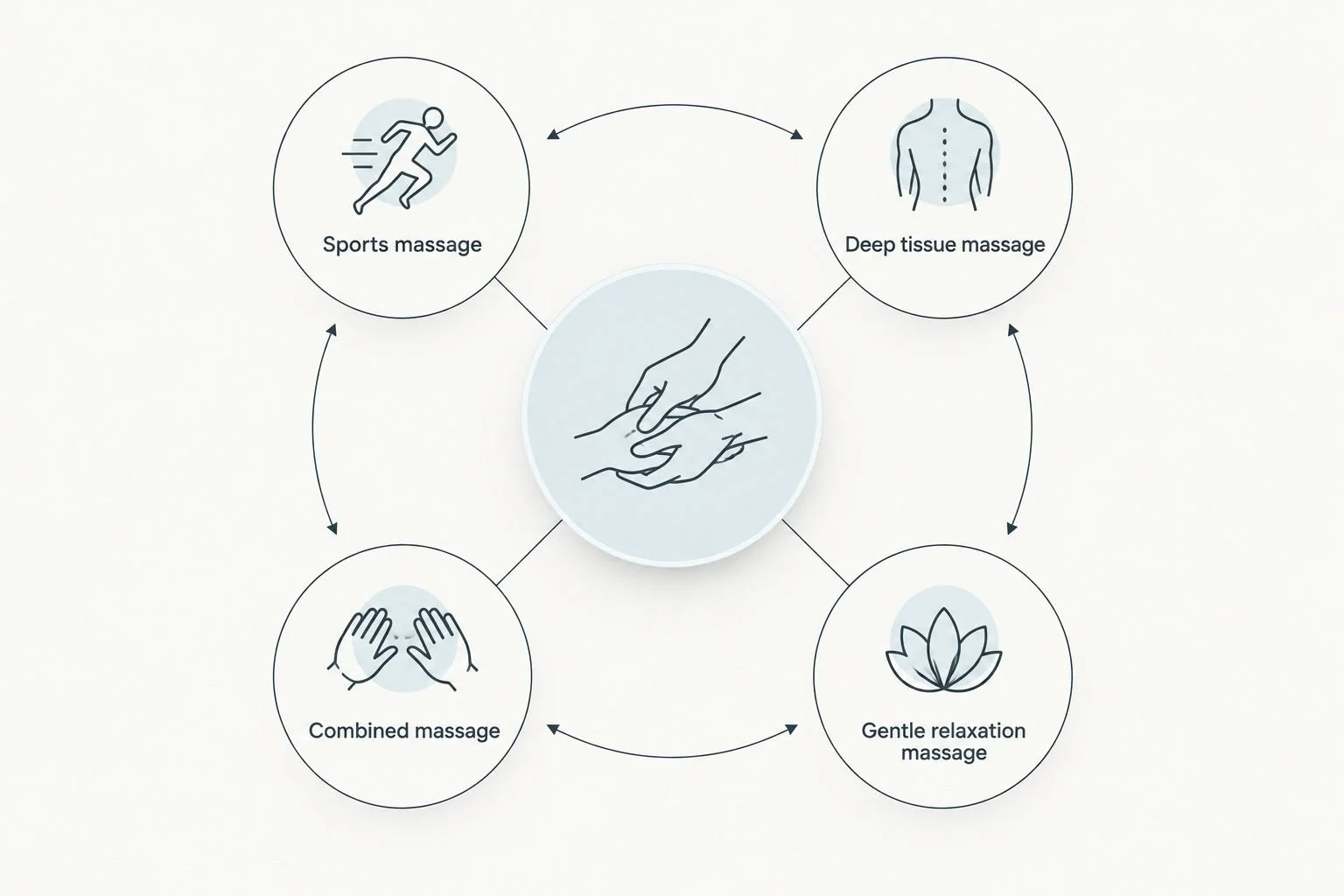
Choose the session's purpose first, then agree on pressure.
1. Sports massage: best for training-specific recovery
Sports massage organizes the session around your activity, symptoms, and training demands. A runner might discuss calf and hip discomfort; a swimmer might describe shoulder fatigue. The useful part is that conversation, not a promise of unusually forceful treatment.
Best for: Active people who want their massage focused on the demands of running, lifting, cycling, swimming, or recreational sport.
Sports massage pros:
- Gives your therapist a clear reason for prioritizing certain areas.
- Allows different techniques and pressure levels within one session.
- Connects treatment choices to your upcoming activity.
Sports massage cons:
- The label does not guarantee a particular technique or intensity.
- It does not diagnose an injury or establish readiness to return to sport.
For a 2026 training plan, ask for a session that reflects your current soreness rather than your toughest workout. Explain whether your next activity is an easy walk, a demanding practice, or a competition. That context helps the therapist discuss a suitable approach.
Verdict: Buy—choose sports massage as the default for training-focused care, with pressure adjusted to your tolerance.
2. Deep tissue massage: best for localized tension
Deep tissue massage uses slow, focused techniques directed at muscles and surrounding connective tissue. It is not a contest to reach the greatest possible pressure, and soreness afterward is not proof of a better treatment.
Best for: A familiar, localized area of tension that you can identify clearly and discuss without signs of a new injury.
Deep tissue massage pros:
- Concentrates attention on a specific concern.
- Allows deliberate, gradual pressure adjustments.
- Fits a session where focused work matters more than full-body coverage.
Deep tissue massage cons:
- Intense pressure can leave already sensitive tissue feeling more irritated.
- Concentrating on one spot leaves less time for other areas.
- It is not appropriate over a suspected acute muscle injury.
Describe the location and sensation rather than simply asking the therapist to go deeper. A useful description is that your upper back feels tight after desk work and training. A sharp pain that began suddenly during exercise belongs in a different conversation—with a qualified healthcare professional.
Verdict: Buy for familiar localized tension; skip aggressive deep work on fresh, unexplained pain.
3. Combined massage: best for mixed recovery needs
A combined session uses a sports-focused plan and adds deeper work only where it is appropriate. You do not need equally intense treatment everywhere: tender thighs and a familiar shoulder knot can receive different approaches.
Best for: People whose muscle groups need different pressure levels during the same visit.
Combined massage pros:
- Avoids forcing your whole body into one pressure setting.
- Keeps attention on training while allowing targeted techniques.
- Makes room for lighter work around sensitive areas.
Combined massage cons:
- The phrase does not describe a standardized service.
- Your therapist needs specific feedback to adjust each area.
- Adding techniques does not establish better recovery results.
Ask whether a session can combine a training-related focus with selective deeper work. Do not assume a combined approach requires booking separate treatments or that every provider uses the same terminology. Describe what you need and let the provider explain the available appointment options.
Verdict: Buy when your needs differ by area; skip the assumption that more techniques mean more benefit.
4. Gentle relaxation massage: best for tender recovery days
Gentle relaxation massage prioritizes comfortable touch and a calmer experience rather than concentrated pressure. It belongs in this comparison because not every recovery day needs intensive work.
Best for: Widespread tenderness, pressure sensitivity, or a day when relaxation is your main goal.
Gentle relaxation massage pros:
- Keeps comfort at the center of the session.
- Offers an alternative when deeper pressure feels unwelcome.
- Suits guests who want a quieter spa experience alongside training.
Gentle relaxation massage cons:
- Does not prioritize intensive work on a specific area.
- Still requires screening when soreness is severe or unexplained.
You do not have to justify choosing less pressure. If you are guarding your muscles or holding your breath, say so immediately. Ask the therapist to reduce intensity or stop working on that area.
Verdict: Buy when comfort is the priority; do not upgrade the pressure just to make the appointment feel more athletic.
How the options rank
Sports massage ranks first for its training-specific purpose. Deep tissue takes the localized-tension slot, a combined approach covers mixed needs, and gentle relaxation massage suits pressure-sensitive days.
This is a decision guide, not a claim that one technique repairs muscle faster than another. In 2026, the most useful comparison remains symptom fit, pressure control, training context, adaptability, and safety—not treatment intensity.
Soreness or injury? Make that decision first
Ordinary post-workout soreness tends to develop after exercise rather than announce itself as a sudden painful event. Pain during a sprint, a distinct pulling sensation, new bruising, or difficulty bearing weight deserves assessment rather than an attempt to massage it away.
For runners comparing massage with injury care, hamstring strain recovery raises a different question: whether the injured muscle is ready for progressive loading, not whether deeper pressure feels tolerable. A comfortable massage does not demonstrate that a strain has healed.
Stop exercise and seek medical guidance for a suspected injury. Severe muscle pain accompanied by marked weakness or dark urine after exertion requires urgent medical attention. These are not routine spa-booking concerns.
Massage also needs additional discussion when you take blood thinners, have a bleeding disorder, recently had surgery, or have a condition affecting sensation. Tell the provider before the appointment so suitability can be considered individually.
Plan your appointment around your next workout
Use this simple sequence when arranging recovery care in 2026. It works whether you train competitively or fit exercise around work and family.
Describe symptoms
Name the areas involved and explain when the discomfort began. Distinguish familiar stiffness from a new symptom. Tell the therapist about previous reactions to massage, especially pressure that left you feeling worse.
Share training
Explain what you trained and what comes next. Avoid experimenting with unfamiliar, intense bodywork immediately before an important event. A recovery appointment should fit your plans rather than create another physical challenge to manage.
Agree pressure
Choose a comfortable starting point and keep giving feedback. Pressure should not make you brace, flinch, or hold your breath. Ask the therapist to reassess an area rather than silently waiting for discomfort to pass.
Reassess afterward
Notice how everyday movement feels after the session. If discomfort increases or new symptoms appear, stop treating the problem as routine soreness and seek appropriate advice. Do not use temporary relief as permission to ignore pain during exercise.
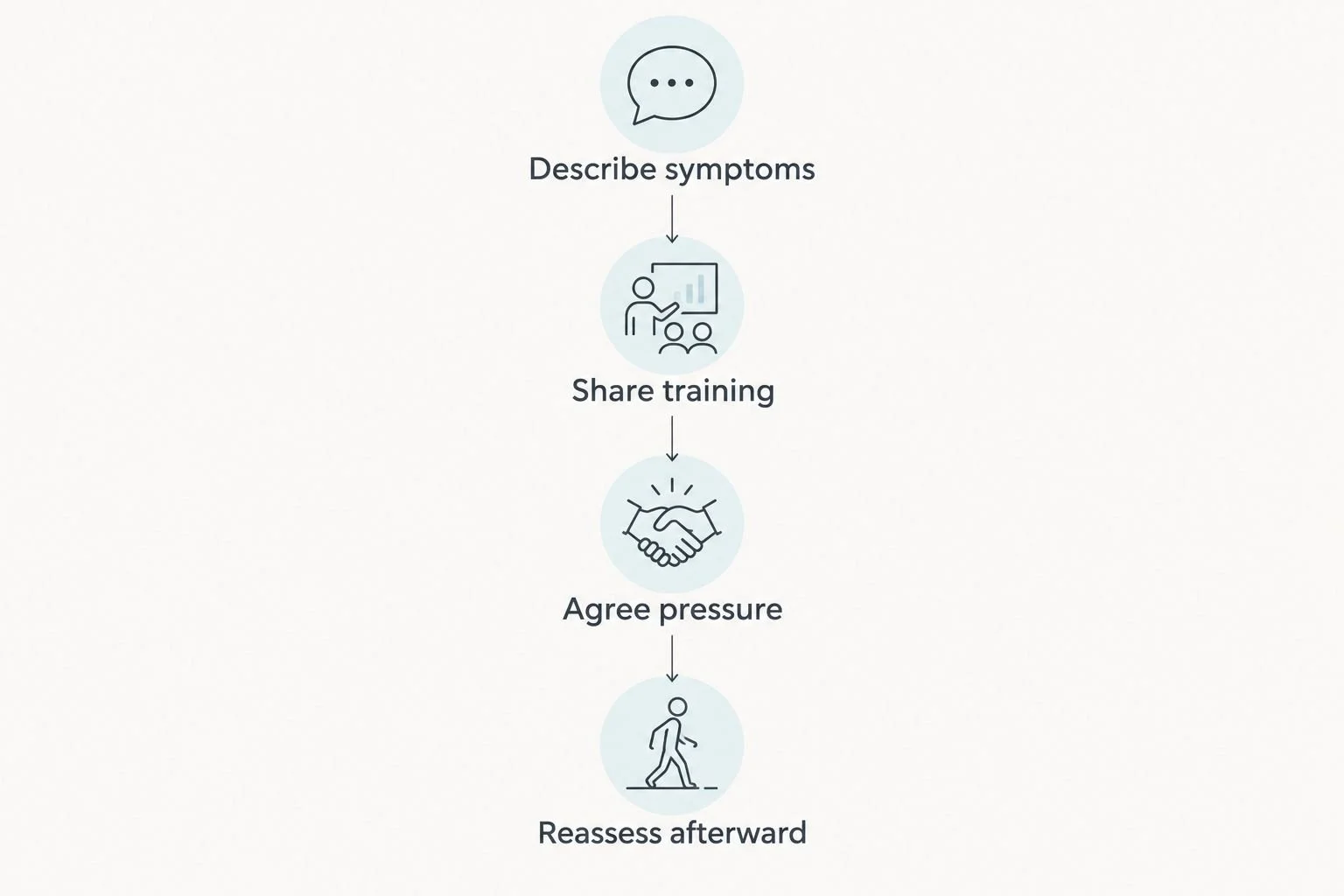
Clear communication matters before, during, and after massage.
You can bring this sequence to any appointment without knowing specialist terminology. A plain explanation of what hurts, what changed, and what you plan to do next gives the therapist a practical starting point.
Where spa care and advanced recovery fit
BodyCentre Day Spa combines massage therapy, facials, skincare, and waxing with services including red light therapy, PEMF, hyperbaric oxygen, and altitude training. That range gives local guests different reasons to visit the same Costa Mesa location; it does not make the services interchangeable.
PEMF means pulsed electromagnetic field therapy. Hyperbaric oxygen involves breathing oxygen in a pressurized chamber, while altitude training changes the oxygen conditions associated with exercise. Ask about suitability, limitations, and the purpose of any service before adding it to your day.
A facial addresses skincare goals, not muscle recovery. Likewise, a recovery-focused visit does not require stacking multiple treatments. Choose each service for a clear reason, not because a longer list sounds more effective.
Guests traveling from Costa Mesa, Newport Beach, Irvine, or Huntington Beach can contact the spa to discuss appointment options. Explain whether your priority is massage, skin care, relaxation, or a recovery service before arranging the visit.
Which recovery massage should you choose?
Choose sports massage if you are undecided and your main concern is ordinary training-related soreness. Request deep tissue for familiar localized tension, a combined approach for mixed needs, or gentle relaxation massage when comfort comes first.
Keep the rest of recovery in place. Adults generally need 7–9 hours of sleep nightly; massage does not replace sleep, adequate food, hydration, or sensible training progression. For your 2026 routine, consistency matters more than finding the toughest treatment you can endure.
FAQ
What's the best massage for muscle recovery after lifting?
Sports massage is a practical first choice for training-related soreness after lifting. Explain the muscles trained, your current tenderness, and your next workout so pressure and focus can be adjusted.
Is deep tissue better than sports massage?
Deep tissue is not automatically better than sports massage because the terms describe different things. Sports massage follows a training-related purpose, while deep tissue describes focused techniques that can be included in that session.
Can I combine sports massage and deep tissue?
Yes, a therapist can use a sports-focused approach with selective deep tissue techniques. Ask whether that approach fits your symptoms and the provider's available appointment options.
Should a recovery massage hurt?
A recovery massage should not require you to endure sharp pain, bracing, or breath-holding. Tell the therapist immediately so pressure or technique can change.
Can I get a massage immediately after a hard workout?
Base the decision on your symptoms rather than assuming immediate massage is necessary. Cool down, assess how you feel, and avoid aggressive pressure on very tender areas; sudden pain or suspected injury needs medical assessment.
Does massage help a pulled hamstring heal?
Massage is not a substitute for assessment and rehabilitation of a pulled hamstring. A qualified healthcare professional should guide injury care and return-to-sport decisions.
Where is BodyCentre Day Spa located?
BodyCentre Day Spa is physically located in Costa Mesa, California. It serves Orange County guests seeking massage, traditional spa care, and advanced recovery services.
One last thing
The most useful instruction is not “go as deep as possible.” It is “help me stay comfortable enough to relax, and adjust when I speak up.” Your ability to tolerate pressure is not a measure of recovery, fitness, or commitment.