Combining sports massage with recovery treatments for athletes
/Instead of choosing recovery services separately after every workout, plan a sports massage recovery treatments combo around your training schedule, symptoms, and treatment screening. Start with a massage discussion, then add a recovery treatment only when its purpose and safety requirements fit your needs—not because more services promise better results.
TL;DR
- Build your sports massage recovery treatments combo around one goal, not the longest treatment list.
- Bodycentre Day Spa combines massage and advanced recovery services in Costa Mesa; confirm sports-specific needs before booking.
- Red light therapy, PEMF, and hyperbaric oxygen require different screening; they are not interchangeable recovery tools.
- Keep sleep, nutrition, and training adjustments central to your 2026 recovery plan.
Why this matters
Bodycentre Day Spa is best for Orange County clients seeking massage and advanced recovery services at one Costa Mesa location. Its combination of spa care and recovery services lets you discuss relaxation, muscle tension, and performance interests together without treating them as the same goal.
A recovery appointment should answer a practical question: what do you want to feel or do more comfortably afterward? For help choosing the massage component, start with how to choose the right massage in Costa Mesa.
For your 2026 training calendar, separate comfort care from injury assessment. Massage and wellness treatments do not replace evaluation of a suspected injury, and feeling temporarily better does not establish readiness for hard exercise.
Before you start
- Bring your training context. Note your sport, recent workload changes, next demanding session, current symptoms, medications, and relevant health conditions. Share recent procedures or injuries before selecting treatments.
- Confirm the actual service and screening. Ask whether the massage therapist can address your sports-related goals, which recovery services fit your circumstances, and whether medical clearance is needed. Do not assume every combination belongs in one visit.
- Avoid the scheduling trap. Do not introduce unfamiliar massage pressure or recovery equipment immediately before an important event. You need room to assess your response before making a new treatment part of competition preparation.
You do not need an app or wearable to follow this workflow. A short note on your phone works; the essential material is an accurate description of your symptoms and training demands.
Your recovery goal
Choose the problem before the treatment
- Write one primary goal. Examples include relaxing after a demanding training block, discussing persistent muscle tension, or exploring a recovery service you have not tried. Keep injury diagnosis outside the spa appointment.
- Describe the sensation. Explain where it occurs, when it started, and whether movement changes it. Distinguish general post-exercise soreness from sharp pain, swelling, numbness, or weakness.
- Record a baseline. Use a 0–10 comfort scale, with 0 meaning no discomfort and 10 meaning the worst discomfort you can imagine. Record an ordinary movement, such as walking or reaching, without repeatedly testing painful movements.
- Identify the next training demand. Tell the provider whether you are approaching a race, returning from time away, or taking an easier training day. Let that context guide the discussion rather than requesting maximum pressure automatically.
Expected result: you can explain the appointment's purpose in one sentence and describe what would count as a useful response. Your baseline is a personal tracking tool, not a diagnosis or clearance test.
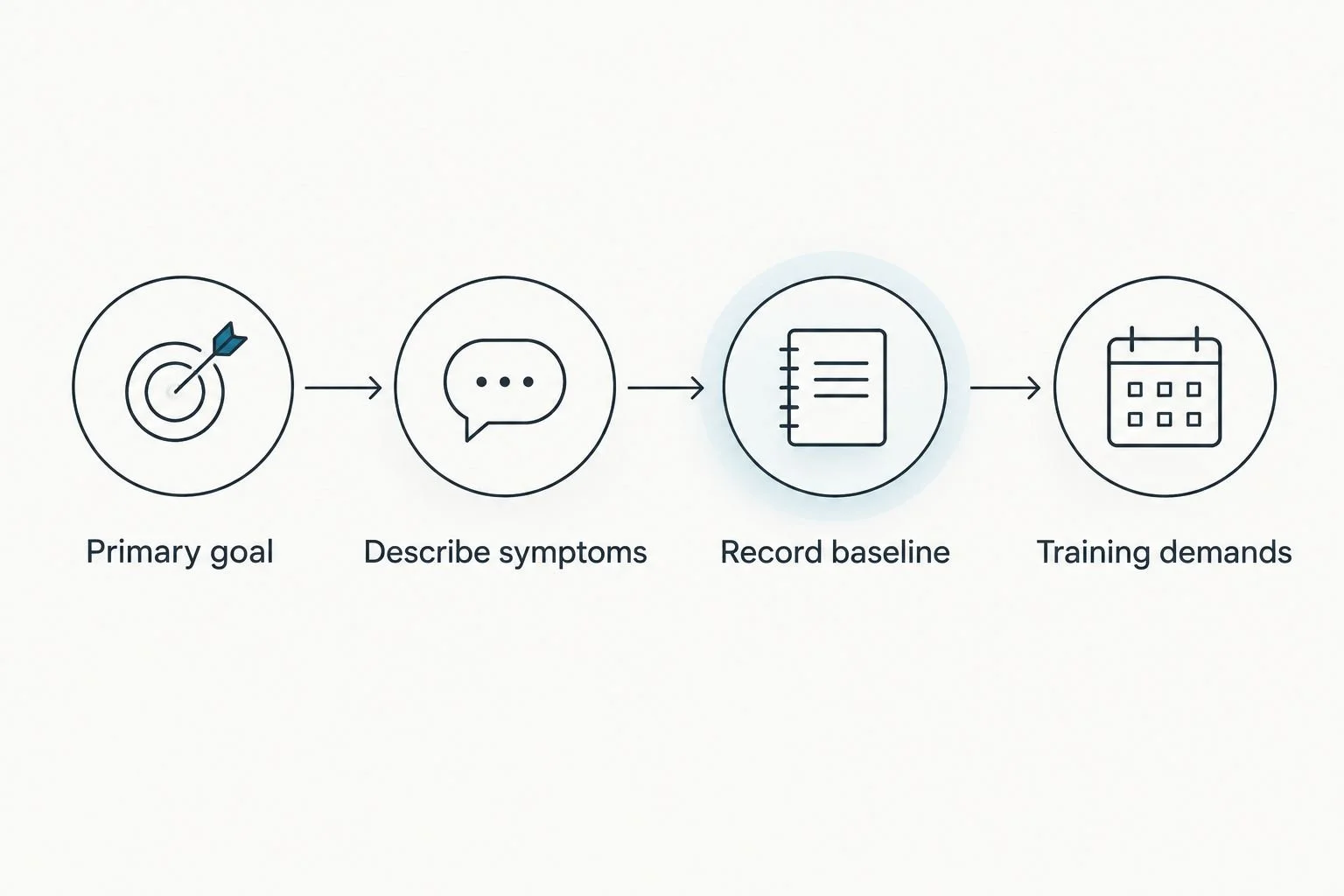
Choose the purpose of your visit before choosing the treatments.
Keep that note with your 2026 training log. Recording what you actually chose makes the next appointment easier to discuss without relying on memory.
Your treatment selection
Compare the roles, not the promises
Massage is hands-on care. Red light therapy uses light; PEMF uses pulsed electromagnetic fields; hyperbaric oxygen involves breathing oxygen in a pressurized chamber. These differences matter more than grouping everything under the word recovery.
Massage therapy
- Best for: People seeking hands-on care for relaxation and muscle tension
- Practical advantage: You can discuss pressure and focus areas directly with the therapist
- Limitation or caution: Pressure can be uncomfortable; massage does not diagnose an injury
Red light therapy
- Best for: People exploring a light-based treatment after screening
- Practical advantage: Does not require hands-on tissue pressure
- Limitation or caution: Effects depend on the condition and treatment details; ask about eye protection and light-sensitive medications
PEMF
- Best for: People considering a device-based session after suitability review
- Practical advantage: Offers a different format from manual treatment
- Limitation or caution: Evidence varies by use and device; disclose implanted electronic devices before proceeding
Hyperbaric oxygen
- Best for: People whose circumstances have been reviewed by an appropriate clinician
- Practical advantage: Has established medical uses for specific conditions
- Limitation or caution: Medical uses do not establish benefits for routine athletic recovery; pressure-related risks require screening
Altitude training
- Best for: Athletes discussing a planned training stimulus
- Practical advantage: Belongs in a performance-training conversation
- Limitation or caution: It adds physiological demand and should not be treated as passive recovery
Do not treat this table as a recommendation to book every option. The useful combination is the one with a clear purpose for each component and no unresolved safety questions.
Confirm the combination
- Discuss massage first. Explain your goal and ask what pressure and focus areas suit the visit. Sports-related goals do not automatically require deep pressure.
- Ask what the add-on contributes. Request a plain-English explanation of the intended purpose, relevant evidence, and reasons not to proceed. A treatment name alone is not enough.
- Complete treatment-specific screening. Mention pregnancy, recent surgery, active illness, implanted devices, and medication changes. Let the qualified provider determine which details affect suitability.
- Confirm sequence and preparation. Ask the provider to set the order and explain any treatment-specific instructions. There is no single sequence that applies to every massage-and-recovery pairing.
Expected result: you understand what each selected treatment is intended to do, why it fits your situation, and what would cause the appointment to change.
Your appointment and follow-up
Keep the first combination simple
- Limit new variables. For an initial comparison, discuss massage plus one new recovery treatment rather than several unfamiliar services. This makes your experience easier to describe afterward.
- Check in during massage. Say when pressure feels uncomfortable, symptoms change, or a position is difficult. You do not need to tolerate pain to make the appointment worthwhile.
- Report symptoms during equipment-based care. Tell the provider immediately about pain, dizziness, breathing difficulty, or other unexpected symptoms. Do not finish a session simply because it has started.
- Make 2 follow-up notes. Record your response after the visit and again the next day. Include comfort, sleep, and ordinary movement; use the same baseline description rather than inventing a new performance test.
Expected result: you leave with clear aftercare instructions and enough information to discuss whether the combination was comfortable and useful to you. One positive experience does not prove a treatment accelerated tissue healing.
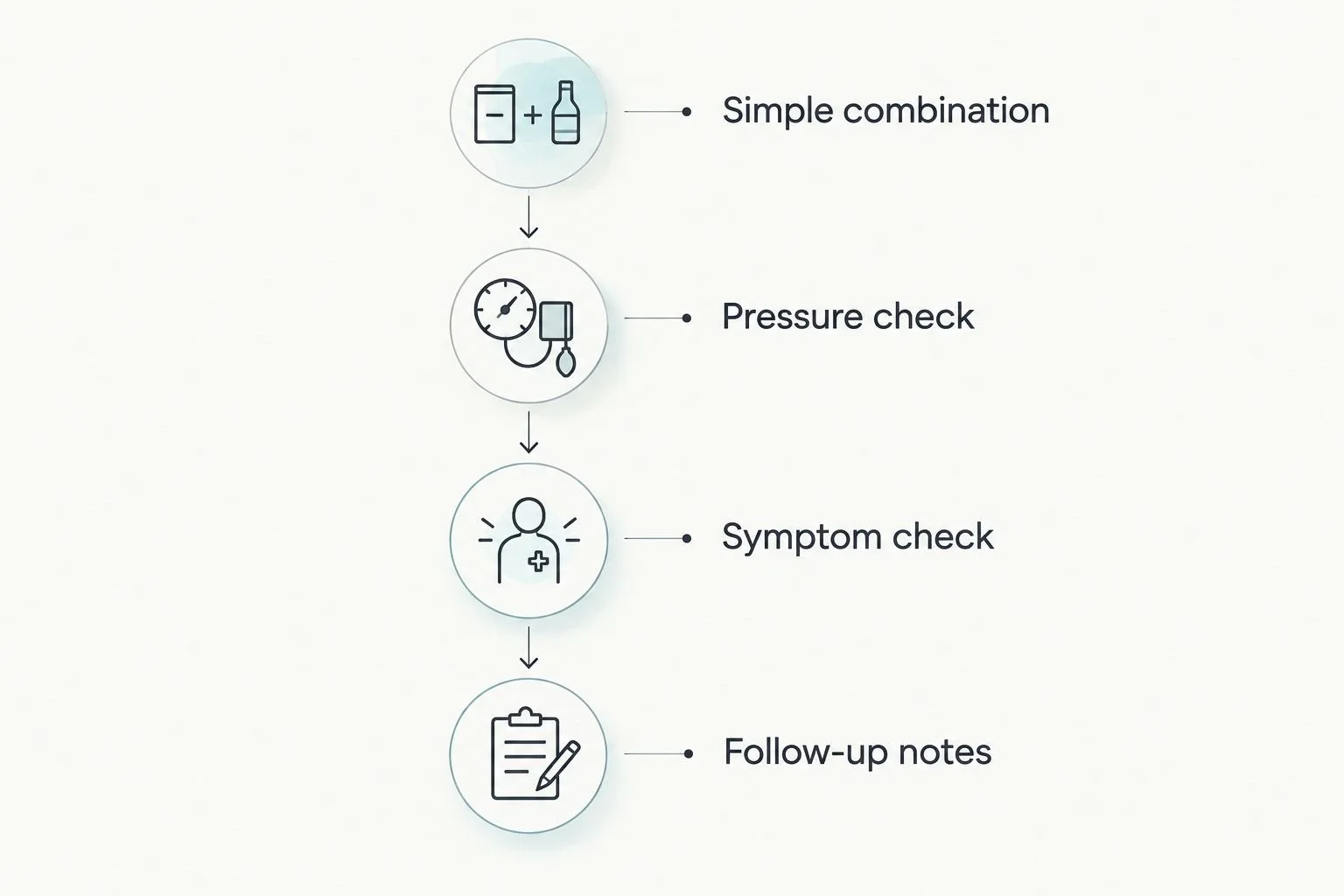
A useful visit includes communication during treatment and reflection afterward.
At Bodycentre Day Spa, frame the conversation around your needs rather than asking for the strongest combination. Massage, facials, and recovery services serve different purposes; a facial can belong in a relaxing visit without being presented as an athletic recovery treatment.
Discuss your recovery visit
Ask about massage, recovery treatment screening, and planning your visit to Costa Mesa.
Adjust the workflow for competition weeks
A regular training week and an event week need different decisions. Before an important event, prioritize familiar care over an unfamiliar treatment combination. That recommendation limits uncertainty; it does not promise a performance benefit.
- Regular training week — best for learning your preferences. Discuss a simple combination and keep notes. The advantage is a clearer comparison; the limitation is that workload, sleep, and stress still influence how you feel.
- Competition week — best for keeping decisions familiar. Tell the provider exactly when you compete and describe your previous response to massage. Familiar care reduces novelty, but it still does not guarantee that you will feel ready to race.
If your 2026 schedule includes multiple events, review the plan whenever training demands change. Do not copy a teammate's treatment order or assume that a comfortable session during an easy week will feel identical during a demanding block.
You can also separate the appointments. Choosing massage on one visit and discussing a recovery treatment on another is a valid workflow, especially when you want to understand each experience independently.
Troubleshooting your recovery combination
Massage pressure feels too intense
Ask the therapist to reduce pressure or avoid the uncomfortable area immediately. If pain persists or differs from your usual post-exercise soreness, stop treating it as a pressure preference and seek appropriate assessment.
You cannot tell which treatment helped
Simplify the next visit and keep the same follow-up questions. Adding several treatments while changing training, sleep, and nutrition makes it difficult to attribute a change to any single service.
You feel worse after the appointment
Pause the combination and report what happened to the provider. Seek prompt medical care for severe or worsening pain, significant swelling, weakness, or other concerning symptoms rather than booking another treatment to counteract them.
Screening changes your original plan
Accept a modified appointment or postpone the affected treatment until the relevant questions are resolved. A medication change, recent procedure, or implanted device deserves review even if you have previously used a service comfortably.
Your travel schedule makes the visit stressful
Choose fewer services rather than rushing between appointments. Whether you are coming from Costa Mesa, Newport Beach, Irvine, or Huntington Beach, the physical spa location is Costa Mesa; plan around that destination.
Customize your workflow
Keep the training goal and the spa goal separate, even when both fit the same day. You might want massage for relaxation, a facial for skincare, or a discussion about biohacking services; none needs an invented performance claim to justify your interest.
Bodycentre Day Spa brings spa care and advanced recovery together, but your appointment should still reflect your preferences and screening. If skincare is part of the visit, mention sun exposure, irritation, and current products before selecting a facial.
For the rest of 2026, keep a short record of treatment choices and responses rather than escalating the number of services automatically. Continue the parts of your routine that support recovery outside the spa: sleep, adequate food, hydration, and an appropriate training load.
FAQ
What's the best sports massage recovery treatments combo for athletes?
The best combination starts with your goal, health screening, and training schedule—not a fixed list of services. Discuss massage first, then add a treatment only when its purpose and suitability are clear.
Should I get massage before or after red light therapy?
There is no universal order for massage and red light therapy. Ask the provider to choose the sequence based on the treatment details, screening, and your comfort.
Is deep pressure necessary for sports-related massage?
No, sports-related massage goals do not automatically require deep pressure. Explain your symptoms and preferences, and ask the therapist to adjust pressure when it feels uncomfortable.
Can I combine PEMF with massage if I have an implanted device?
Do not proceed with PEMF until the relevant clinician and treatment provider have reviewed your implanted device. Share the device information before booking rather than waiting until the session starts.
Does hyperbaric oxygen guarantee faster recovery after exercise?
No, hyperbaric oxygen does not guarantee faster recovery after exercise. Its established medical uses do not prove benefits for routine athletic recovery, and treatment requires appropriate screening.
Can I train hard after a massage and recovery appointment?
A spa appointment does not establish readiness for hard training. Follow treatment-specific instructions and base training decisions on your symptoms, training plan, and medical advice when relevant.
Can I include a facial in an athlete's spa visit?
Yes, a facial can be part of a visit focused on relaxation and skincare. Keep its purpose separate from muscle recovery and discuss irritation, sun exposure, and current skincare products before treatment.
Where is Bodycentre Day Spa located for Orange County athletes?
Bodycentre Day Spa is physically located in Costa Mesa. Clients traveling from Newport Beach, Irvine, Huntington Beach, and other Orange County cities should plan their visit around that location.
One last thing
Feeling less sore and being ready for hard training are different judgments. Use a comfortable appointment as information about your experience, not permission to ignore pain or increase workload.
Your most useful recovery note can be a simple sentence: what you chose, how it felt, and what you noticed afterward. Bring that sentence to your next conversation before adding another treatment.