How does a reiki healing session work?
/Reiki sessions work through a practitioner placing their hands lightly on or just above your clothed body while you rest; the proposed transfer of healing energy has not been scientifically established. You can approach a session as quiet, supportive time, but not as a proven treatment for illness or a replacement for medical care.
TL;DR
- How does reiki healing work? Practitioners use light touch or hands held above you; energy-transfer claims remain unproven.
- Reiki does not involve the muscle pressure used in massage therapy.
- Bodycentre Day Spa combines spa care and recovery services in Costa Mesa; ask directly about Reiki offerings.
- Choose a practitioner who explains consent, respects boundaries, and makes no promises to cure disease.
How does a Reiki healing session work?
A Reiki appointment usually follows a simple sequence: discuss your preferences, get comfortable, receive light-touch or hands-off attention, and finish with a check-in. Practices differ, so confirm the details rather than expecting a fixed routine.
If your main goal is hands-on work for tight muscles, start by choosing the right massage in Costa Mesa. Reiki and massage are different experiences, even when both take place in a quiet treatment room.
1. Discuss your goals and boundaries
Tell the practitioner what you want from the appointment: quiet rest, a spiritual practice, or time away from a demanding schedule. Describe any positioning limitations and whether you want conversation or silence.
Ask whether the session includes physical contact. Consent comes before touch, and agreeing to an appointment does not mean agreeing to every hand placement or additional practice.
2. Settle into a comfortable position
Reiki commonly takes place while you remain fully clothed, lying on a treatment table or sitting in a chair. You should understand the setup before the session begins.
Ask for changes if lying flat, closing your eyes, or staying still feels uncomfortable. You do not need to tolerate discomfort to participate correctly.
3. Receive light-touch or hands-off attention
The practitioner holds their hands on or above different areas of your body, generally without the kneading or sustained muscle pressure associated with massage. Some practitioners use a sequence of positions; others organize the session differently.
You might notice warmth, relaxation, distraction, or nothing distinctive. None of those experiences proves that energy moved, and you do not need a particular sensation for the appointment to be valid as personal quiet time.
4. Finish with a check-in
At the end, take your time sitting up and describe your experience in ordinary terms. Feeling comfortable, uncomfortable, rested, or unchanged is useful feedback.
A responsible conversation stays within those observations. It does not turn sensations into a diagnosis or suggest that you should stop prescribed treatment.
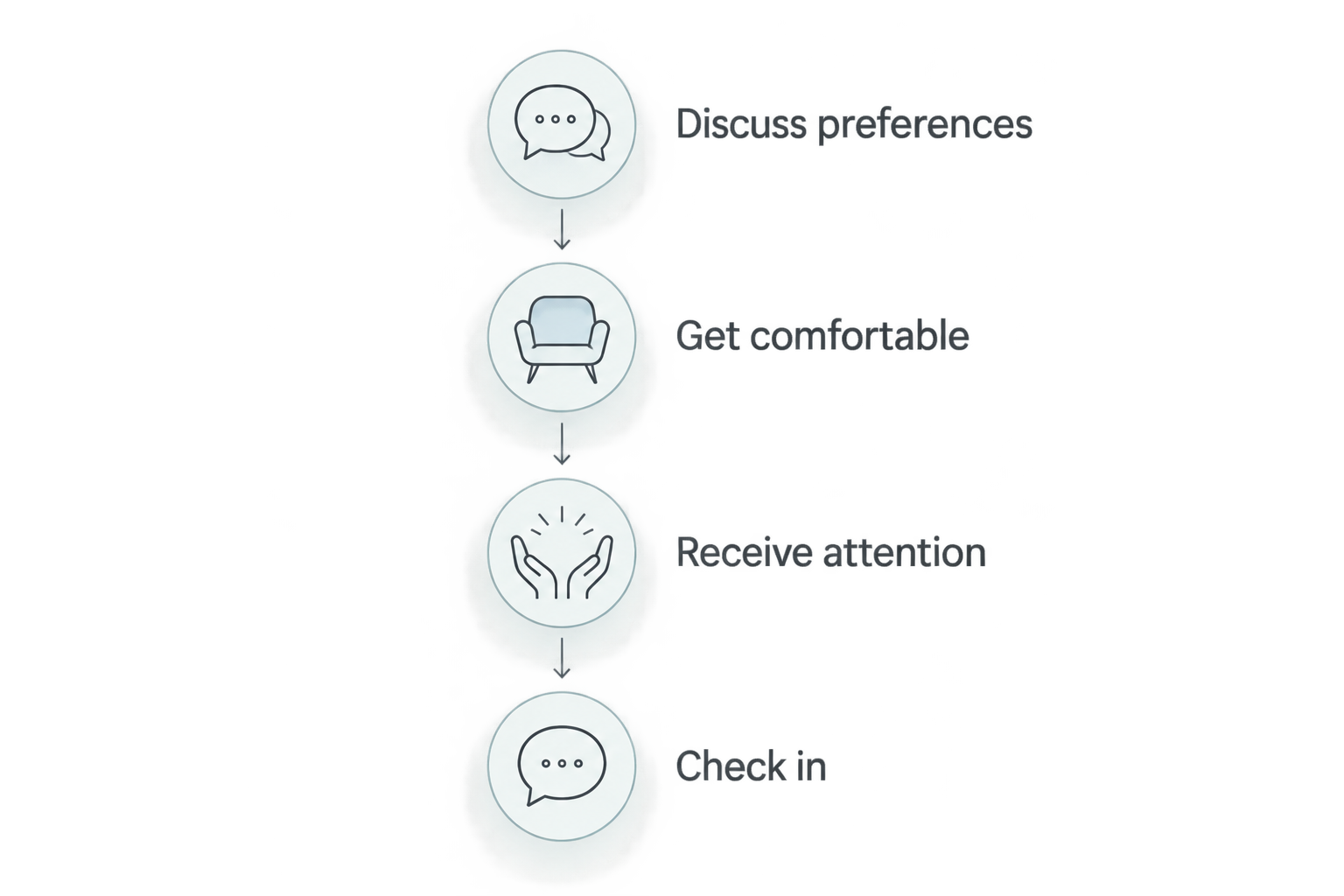
The appointment should begin with your preferences and end with a chance to give feedback.
Why this matters
The word healing can create expectations that the evidence does not support. A calming appointment and a treatment that changes a medical condition are not the same thing.
For this 2026 guide, the key distinction follows the National Center for Complementary and Integrative Health's public Reiki overview: Reiki has not been clearly shown effective for any health-related purpose, and scientific evidence does not establish the proposed energy field. That finding concerns treatment claims, not whether an individual enjoys the experience.
Feeling relaxed is a personal outcome, not proof of a medical mechanism. Keep that distinction when reading testimonials, choosing a practitioner, or deciding whether another appointment serves your goals.
What does “energy healing” mean in Reiki?
Reiki practitioners describe the practice in terms of energy moving through the practitioner to the recipient. That is the practice's explanatory belief, not an established account of how the body works.
A session also includes ordinary features you can observe: a quiet setting, focused attention, stillness, and sometimes gentle touch. Those features help explain what the appointment involves without claiming that an invisible process has been measured or verified.
You do not have to adopt a spiritual belief to ask about Reiki. You also do not have to accept spiritual language that makes you uncomfortable; ask the practitioner how they describe the session and whether that approach fits your preferences.
Reiki versus massage: which experience fits your goal?
Choose by what happens during the appointment, not by broad promises about wellness. Reiki centers on light-touch or hands-off attention, while massage involves hands-on manipulation of soft tissues.
Reiki
- Best for: People seeking quiet time who are comfortable with an energy-based spiritual practice
- What happens: Hands rest lightly on or above the clothed body
- Main advantage: Does not require muscle pressure
- Important limitation: Energy-transfer and disease-treatment claims are not established
Massage therapy
- Best for: People who want hands-on muscle and soft-tissue work
- What happens: A therapist uses pressure and movement on soft tissues
- Main advantage: Directly provides the physical bodywork the guest requests
- Important limitation: Pressure and positioning need adjustment to your health and comfort
Neither choice should begin with a promise to cure you. For massage, disclose relevant health conditions and injuries so the therapist can assess whether the requested work is appropriate; for Reiki, set the same clear boundaries around touch and positioning.
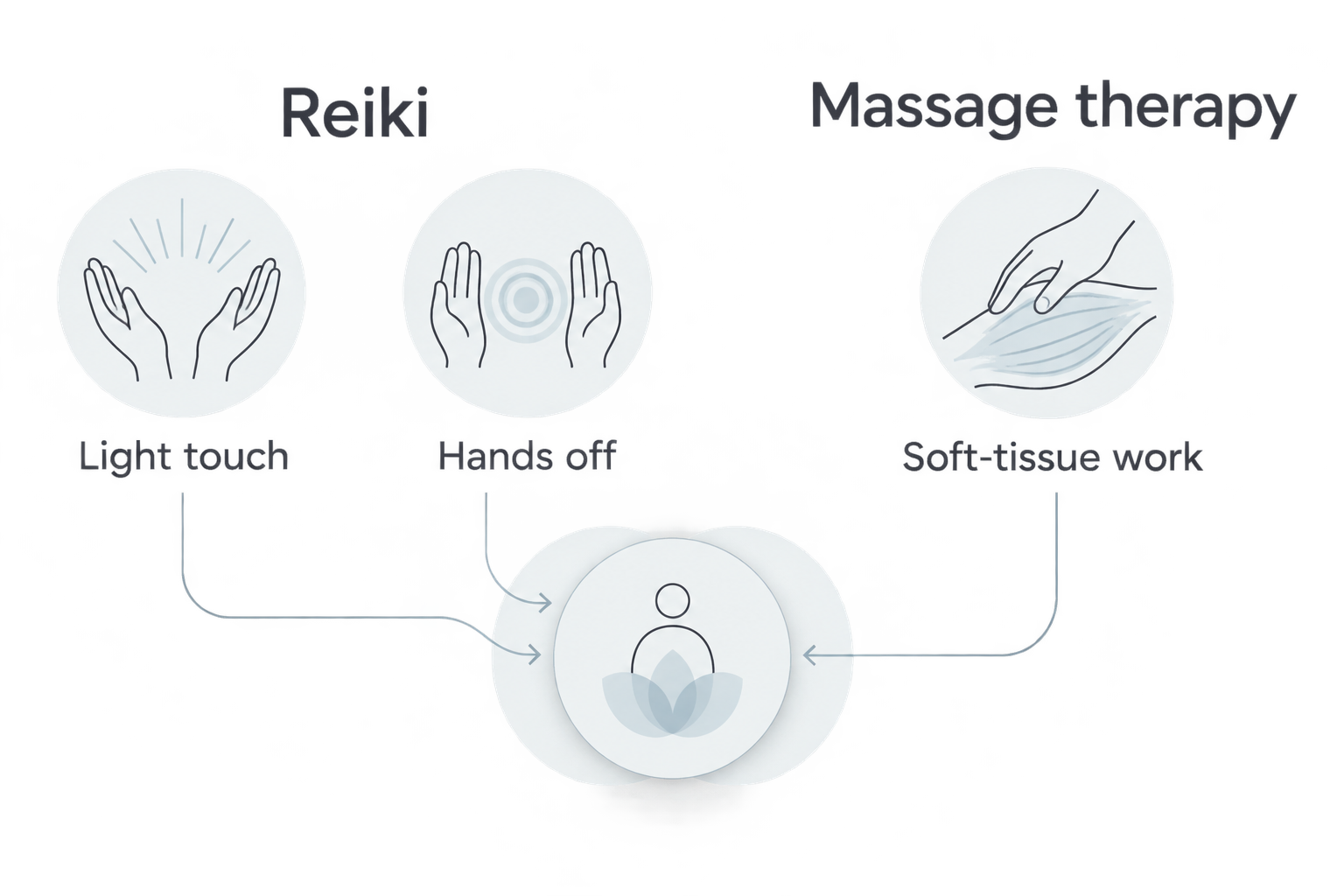
Reiki and massage differ in the physical work you receive, not just the treatment name.
Why Reiki sessions vary
There is no single experience you should expect from every practitioner. These practical differences matter more than dramatic descriptions of what you are supposed to feel:
- Touch preferences: A practitioner might offer light contact, hands held above the body, or a combination. Establish your preference before starting.
- Positioning: A table and a chair create different comfort considerations. Ask what adjustments are possible if you have pain or limited mobility.
- Conversation: Some sessions are quiet; others include discussion or guided attention. Say whether talking helps you settle or feels distracting.
- Spiritual language: Explanations can include beliefs about energy. Ask for plain-language descriptions if you prefer to keep the experience practical.
- Appointment structure: Intake, time resting, and the closing conversation can occupy different portions of the booking. Confirm what the reserved appointment includes.
For a 2026 booking, request these details directly from the practitioner. A familiar treatment name does not establish what a particular appointment will involve.
What should you ask before booking Reiki?
Use 3 questions to make the booking conversation concrete. Clear answers give you something more useful than testimonials about dramatic transformations.
- What will happen during the appointment? Ask about clothing, positioning, touch, conversation, and any additional practices. Find out whether the entire reserved appointment is treatment time.
- What training and boundaries guide your practice? Ask how the practitioner handles consent and health concerns. Reiki training is not the same as medical licensure.
- What outcomes do you claim? Look for a clear distinction between personal relaxation and medical treatment. Promises to diagnose illness, eliminate disease, or replace prescribed care are reasons to choose someone else.
You can ask these questions without defending your interest or skepticism. A respectful practitioner explains the service without pressuring you to believe in it or commit to repeated appointments.
Do you need to prepare for a Reiki appointment?
Preparation is mostly about comfort and communication. Choose clothing you can rest in and tell the practitioner about any difficulty lying down, sensitivity to touch, or discomfort with closed eyes.
For your first appointment in 2026, write down 1 main goal and 2 boundaries beforehand. Your goal might be uninterrupted quiet time; your boundaries might be no physical contact and no spiritual commentary.
This is a planning exercise, not a treatment requirement. You do not need to produce a special mindset, purchase supplements, or interpret normal sensations as evidence of a hidden problem.
If you feel unwell or have new symptoms, contact an appropriate healthcare professional rather than using a wellness appointment to determine the cause. Tell the practitioner if your health affects safe positioning or your ability to participate comfortably.
Can Reiki treat pain, anxiety, or illness?
Reiki is not an established treatment for pain, anxiety disorders, or disease. Research has not clearly demonstrated effectiveness for health-related purposes, and individual testimonials cannot establish that it treats a condition.
If you enjoy a session, you can describe the result narrowly: you felt calmer, appreciated the quiet, or liked the experience. Avoid turning that observation into a claim that a disease improved because energy was transferred.
Keep prescribed care and clinical follow-up in place. New, persistent, or worsening symptoms need medical assessment, even when a relaxation appointment feels helpful.
How many Reiki sessions do you need?
There is no established medical course of Reiki sessions that you need to complete. Do not treat a package recommendation as proof that a particular number of visits will produce a health result.
After an appointment, assess whether the experience met your personal goal and respected your boundaries. Continuing is a preference decision, not a requirement to finish an unseen healing process.
A practitioner should not tell you that feeling worse proves treatment is working. If something feels wrong, stop and seek appropriate advice rather than accepting a promised breakthrough.
Choosing spa care in Costa Mesa and Orange County
Bodycentre Day Spa is best for Orange County guests seeking spa care and recovery services under one roof in Costa Mesa. Its stated services include massage, facials, skincare, waxing, and recovery options such as red light therapy, PEMF, hyperbaric oxygen, and altitude training.
Those services serve different purposes; a facial focuses on skin care, massage provides soft-tissue work, and equipment-based recovery appointments require their own explanation and suitability discussion. Sharing a location does not make the services interchangeable or establish the same evidence for each.
Whether you are coming from Costa Mesa, Newport Beach, Huntington Beach, or Irvine, the physical spa location is Costa Mesa. For your 2026 visit, contact Bodycentre Day Spa to discuss your goal and ask directly about Reiki offerings rather than assuming they appear on the service menu.
FAQ
How does Reiki healing work if the practitioner barely touches me?
Reiki practitioners describe their work as transferring healing energy through light touch or hands held above you, but that mechanism has not been scientifically established. The observable experience is quiet rest with a practitioner's focused attention.
Do I keep my clothes on during Reiki?
Reiki generally takes place while you remain fully clothed. Confirm the setup and tell the practitioner about any clothing, positioning, or touch preferences before starting.
What am I supposed to feel during a Reiki session?
You do not need to feel anything specific during Reiki. Warmth, relaxation, distraction, or no noticeable change does not establish whether healing energy exists or moved.
Is Reiki better than massage for tight muscles?
Massage is the relevant choice when you want hands-on muscle and soft-tissue work. Reiki does not provide the kneading or muscle pressure associated with massage, and neither service should replace assessment of unexplained pain.
Can I ask for Reiki without being touched?
You can request a hands-off Reiki session and confirm that preference before booking. You can also change your mind, ask for an adjustment, or end the appointment.
Is Reiki a proven medical treatment in 2026?
Reiki is not an established medical treatment in 2026. NCCIH's public overview states that Reiki has not been clearly shown effective for any health-related purpose and that the proposed energy field lacks scientific evidence.
Does Bodycentre Day Spa offer Reiki in Costa Mesa?
Ask Bodycentre Day Spa directly whether Reiki is among its current offerings. Its stated services include massage, facials, skincare, waxing, and several recovery treatments at its Costa Mesa location.
One last thing
You do not have to feel something unusual to justify taking time to rest. Before booking, separate the experience you want from the health claims attached to it.
That distinction makes your decision simpler: choose respectful care, clear boundaries, and an appointment that fits your actual goal. Leave diagnosis and treatment decisions with qualified healthcare professionals.