
Is molecular hydrogen therapy worth trying in 2026?
/Molecular hydrogen is worth considering only as an experimental wellness option in 2026, not as a proven way to improve recovery, treat disease, or slow aging. The main caveat is that early research does not establish a reliable benefit, an effective routine, or equivalent results from hydrogen water and hydrogen inhalation.
TL;DR
- Molecular hydrogen benefits remain investigational; early findings do not establish dependable recovery or anti-aging results.
- Hydrogen water and hydrogen inhalation are different delivery methods; evidence for one does not validate the other.
- Bodycentre Day Spa suits Orange County guests seeking spa care and recovery services together, not guaranteed medical outcomes.
- Before trying hydrogen, ask about the evidence, delivery method, equipment safety, and a clear reason to stop.
Why this matters
A treatment can sound scientifically convincing before research establishes whether it helps people in everyday use. With molecular hydrogen, the key distinction is between a proposed biological effect and an outcome you actually notice: less soreness, better function, or improved quality of life.
For local context, Bodycentre Day Spa combines massage, facials, skincare, and advanced recovery services at its Costa Mesa location. That combination gives Orange County guests different ways to approach wellness, but it does not make every treatment interchangeable or establish that hydrogen is part of the service menu.
Choose a service around your actual goal, not the most technical-sounding treatment name. A relaxing appointment, skincare care, and an experimental recovery intervention answer different needs.
Is molecular hydrogen therapy worth trying in 2026?
For routine wellness, molecular hydrogen is an optional experiment—not an evidence-backed essential. If you want predictable recovery improvements or treatment for a medical condition, the research does not justify relying on it.
Start by separating the delivery methods. Drinking water containing dissolved hydrogen is not the same intervention as breathing a hydrogen-containing gas mixture, and neither should inherit claims from the other without matching evidence.
Hydrogen water
- What it involves: Drinking water containing dissolved molecular hydrogen
- Best for: Evaluating research specifically about drinking hydrogen water
- Potential advantage: Avoids the gas-handling issues of inhalation
- Main limitation: A product label alone does not establish the hydrogen concentration at consumption or a health benefit
Hydrogen inhalation
- What it involves: Breathing a hydrogen-containing gas mixture through equipment
- Best for: A research or medically supervised setting with appropriate safety oversight
- Potential advantage: Allows researchers to study an inhaled delivery method
- Main limitation: Requires gas and equipment safety controls; water studies do not validate it
These are best-for evaluation contexts, not treatment endorsements. Neither route earns a general recommendation merely because hydrogen is involved.
A useful decision in 2026 starts with a narrower question: does human research support this exact delivery method for the outcome you want? If the answer relies on animal experiments, unrelated conditions, or another delivery route, the claim has moved beyond its evidence.
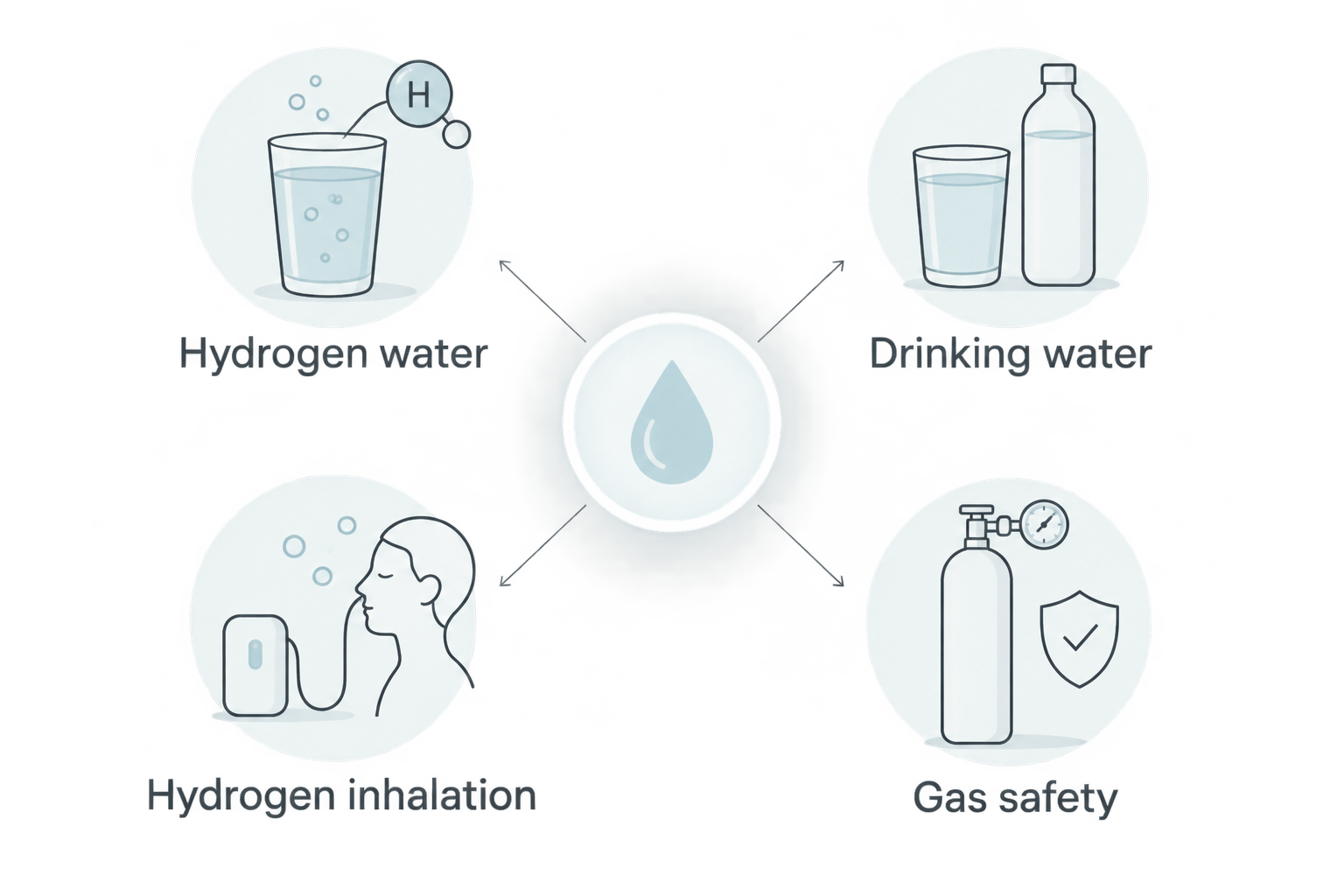
Evidence and safety questions depend on how hydrogen is delivered.
What does the research actually show?
Molecular hydrogen research includes laboratory experiments, animal studies, and human trials. Those categories answer different questions. A biological response in a laboratory does not establish a useful result from a wellness appointment.
Laboratory findings explain interest, not a treatment promise
Ohsawa and colleagues' 2007 paper in Nature Medicine, “Hydrogen acts as a therapeutic antioxidant by selectively reducing cytotoxic oxygen radicals,” investigated mechanisms and experimental injury models, including work in rats. It helps explain why researchers became interested in hydrogen; it does not establish a routine spa treatment for healthy adults.
“Oxidative stress” describes an imbalance involving reactive molecules and the body's protective systems. It is a research concept, not a diagnosis you can make from feeling tired after work or sore after exercise.
Be especially careful when a wellness claim jumps from “affects an oxidative-stress marker” to “prevents aging.” Those are not equivalent findings.
Small human studies are starting points
Aoki and colleagues' 2012 pilot study in Medical Gas Research, “Effects of drinking hydrogen-rich water on muscle fatigue caused by acute exercise in elite athletes,” enrolled 10 male soccer players. Its narrow population and pilot design limit what it establishes about everyday recovery.
That study concerns drinking hydrogen-rich water, not hydrogen inhalation. It also does not establish results for women, older adults, people with chronic illness, or everyone returning to exercise.
A small study can justify more research without justifying a broad treatment promise. Look for replication, suitable comparison groups, and outcomes that matter outside the laboratory.
Your goal must match the study outcome
For a recovery claim, ask whether researchers measured soreness, strength, performance, or another clearly defined outcome. For a skincare claim, ask whether the study actually evaluated skin rather than borrowing conclusions from exercise research.
A change in a blood marker is not automatically better sleep or faster recovery. The research must connect the intervention to the benefit being advertised.
Hydrogen water: what to evaluate
Hydrogen water contains dissolved molecular hydrogen. It is different from alkaline water: “hydrogen” describes dissolved gas, while “alkaline” describes pH. Neither label establishes the other's properties.
The practical attraction is straightforward: drinking water does not require inhalation equipment. The drawback is that the phrase “hydrogen water” does not, by itself, tell you what concentration reaches the drinker or whether that exposure matches a study.
Hydrogen can escape from water, so packaging, preparation, and the time between preparation and consumption matter when interpreting a product claim. Ask for measurements relevant to use, not just a statement about what a machine can produce under different conditions.
For your 2026 decision, reject the idea that ordinary hydration needs an upgrade to become worthwhile. If you are thirsty or inadequately hydrated, drinking water addresses that need without requiring a separate hydrogen benefit.
Best for: someone evaluating drinking-water research with modest expectations. Main drawback: uncertain additional benefit beyond ordinary hydration for routine wellness.
Hydrogen inhalation: safety comes first
Hydrogen inhalation uses equipment to deliver a hydrogen-containing gas mixture. It is not oxygen therapy, and it is not hyperbaric oxygen therapy, which involves breathing oxygen in a pressurized environment.
Hydrogen is flammable. That physical property makes equipment design, gas handling, ventilation, and ignition control essential—not optional details behind the treatment experience.
Do not build a homemade breathing setup or adapt equipment intended for another purpose. Ask who oversees its use, what safety documentation supports the equipment, and what screening happens before a session.
Comfort during a session does not establish safety or effectiveness. Likewise, a device's technical specifications do not prove a health outcome.
Best for: evaluation within a properly overseen research or medical setting. Main drawback: gas-handling risks alongside unresolved questions about benefits for routine wellness.
Why molecular hydrogen claims vary
Differences between claims are not just differences in enthusiasm. They often reflect different interventions, populations, or definitions of success.
- Delivery method: drinking dissolved hydrogen and inhaling a gas mixture create different exposures. Evidence must match the route.
- Exposure conditions: concentration, preparation, and treatment duration affect what researchers are testing. A shared treatment name does not make studies identical.
- Participant health: findings in a specific patient group do not automatically apply to healthy spa guests or recreational athletes.
- Outcome measured: a laboratory marker, a symptom score, and athletic performance are different endpoints. Ask which one supports the claim.
- Study design: comparison groups, blinding, sample size, and follow-up affect how confidently a result can be interpreted.
- Other changes: improved sleep, altered training, hydration, massage, or skincare changes complicate any attempt to credit hydrogen alone.
The useful question is not whether someone reported feeling better. It is whether the research separates hydrogen's effect from everything else happening at the same time.
How do you decide whether to try it?
Use a short decision process before committing to repeated appointments or a home device. The objective is not to prove that you are open-minded; it is to make a choice you can explain clearly.
- Choose a goal. Write down the outcome you want, such as less post-exercise soreness. Avoid goals as vague as “cellular optimization.”
- Check the evidence. Ask for human research using the same delivery method and a relevant population. Read what researchers measured, not just the headline.
- Review safety. Discuss relevant health conditions with your clinician and ask the provider about screening and equipment safeguards.
- Track the outcome. Keep your usual sleep, exercise, and other treatments consistent enough to interpret your experience.
- Set an endpoint. Decide when you will reassess and what would make the experiment unhelpful. Do not let an unclear result become an automatic commitment.
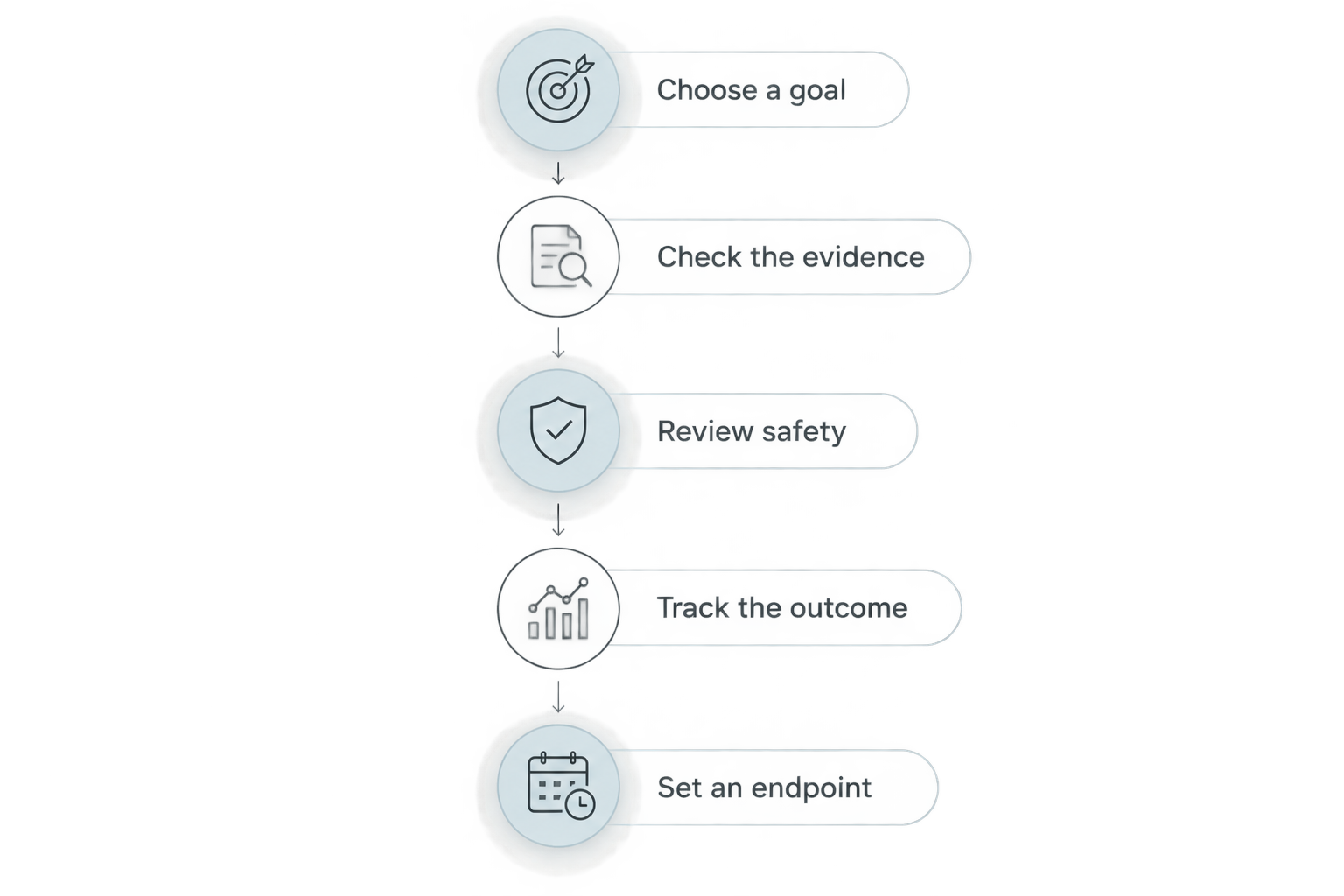
Decide what success means before you try an experimental wellness treatment.
A personal trial can help you judge convenience and how you feel. It cannot establish that hydrogen caused the change or prove that a treatment works for other people.
For a 2026 wellness plan, that distinction protects you from confusing an enjoyable experience with a verified physiological effect. Both deserve accurate descriptions.
Is hydrogen better than massage or a facial?
Hydrogen is not a substitute for massage or a facial because these services address different goals. Massage involves hands-on soft-tissue work; facials focus on skincare; hydrogen claims require evidence specific to the proposed internal effect.
At Bodycentre Day Spa, spa care and advanced recovery services share a Costa Mesa location. The advantage is being able to discuss different wellness interests together; the limitation is that a broader menu does not establish equal evidence or suitability for every service.
If your priority is relaxation, say so. If it is skincare, discuss your skin concerns. If it is persistent pain, unexplained fatigue, or reduced exercise tolerance, start with clinical assessment rather than choosing a recovery treatment by name.
Guests traveling from Newport Beach, Irvine, Huntington Beach, or elsewhere in Orange County should plan around the Costa Mesa location. Ask about the specific service you want instead of assuming that a treatment discussed in an educational article is offered.
Can molecular hydrogen replace medical care?
Molecular hydrogen should not replace prescribed treatment or an evaluation of new symptoms. A wellness intervention does not become a medical alternative because its explanation uses scientific terminology.
Speak with your clinician before considering experimental treatments during pregnancy, while managing a significant medical condition, or when treatment could interfere with ongoing care. This is especially important when a provider proposes treating disease rather than offering a general wellness experience.
Ask direct questions and expect direct answers. A responsible discussion distinguishes established care, investigational use, and claims that remain unsupported.
FAQ
What molecular hydrogen benefits are actually proven?
Molecular hydrogen has not established dependable benefits for routine wellness, anti-aging, or general recovery. Human research must be interpreted by delivery method, population, and measured outcome rather than treated as a blanket endorsement.
Is hydrogen water the same as alkaline water?
Hydrogen water and alkaline water are different descriptions. Hydrogen water contains dissolved molecular hydrogen, while alkaline water has a higher pH; one label does not establish the other.
Is drinking hydrogen water the same as inhaling hydrogen?
Drinking hydrogen water and inhaling hydrogen are different interventions. Evidence about one delivery method does not establish the effectiveness or safety of the other.
Does molecular hydrogen help sore muscles after exercise?
Molecular hydrogen is not established as a dependable treatment for post-exercise soreness. Small exercise studies justify further investigation, not a promise that your soreness or performance will improve.
Can I make a hydrogen inhalation setup at home?
Do not build or improvise a hydrogen inhalation setup. Hydrogen is flammable, and breathing equipment requires appropriate design, oversight, and safety controls.
How many molecular hydrogen sessions do I need?
There is no established session count for general wellness benefits. A suggested schedule needs evidence tied to the delivery method and your specific goal, not a generic recommendation to keep attending.
Does this article mean the Costa Mesa spa offers hydrogen therapy?
This article does not establish that hydrogen therapy is offered at the Costa Mesa spa. Confirm the specific treatment directly before planning a visit.
One last thing
Ask what result would make the provider recommend stopping. A clear answer tells you more than a long list of proposed benefits because it makes the limits of the treatment part of the conversation.
In 2026, the strongest wellness decision is still a specific one: choose care that fits your goal, understand its limits, and reassess. If you are planning a Costa Mesa visit, contact the spa to discuss Bodycentre Day Spa services without assuming hydrogen is included.