How long do cupping massage marks last?
/Cupping massage marks usually fade within 1–2 weeks, although some disappear sooner. That window describes temporary discoloration, not a guarantee that every skin change after cupping is harmless. Blisters, increasing pain, spreading redness, or marks that are not improving need attention rather than extra time alone.
TL;DR
- Cupping massage marks how long? Usually 1–2 weeks; darker circles do not prove a better treatment.
- Protect tender skin from friction, harsh products, and additional suction while it recovers.
- Increasing pain, warmth, swelling, or blistering calls for medical advice, not stronger massage.
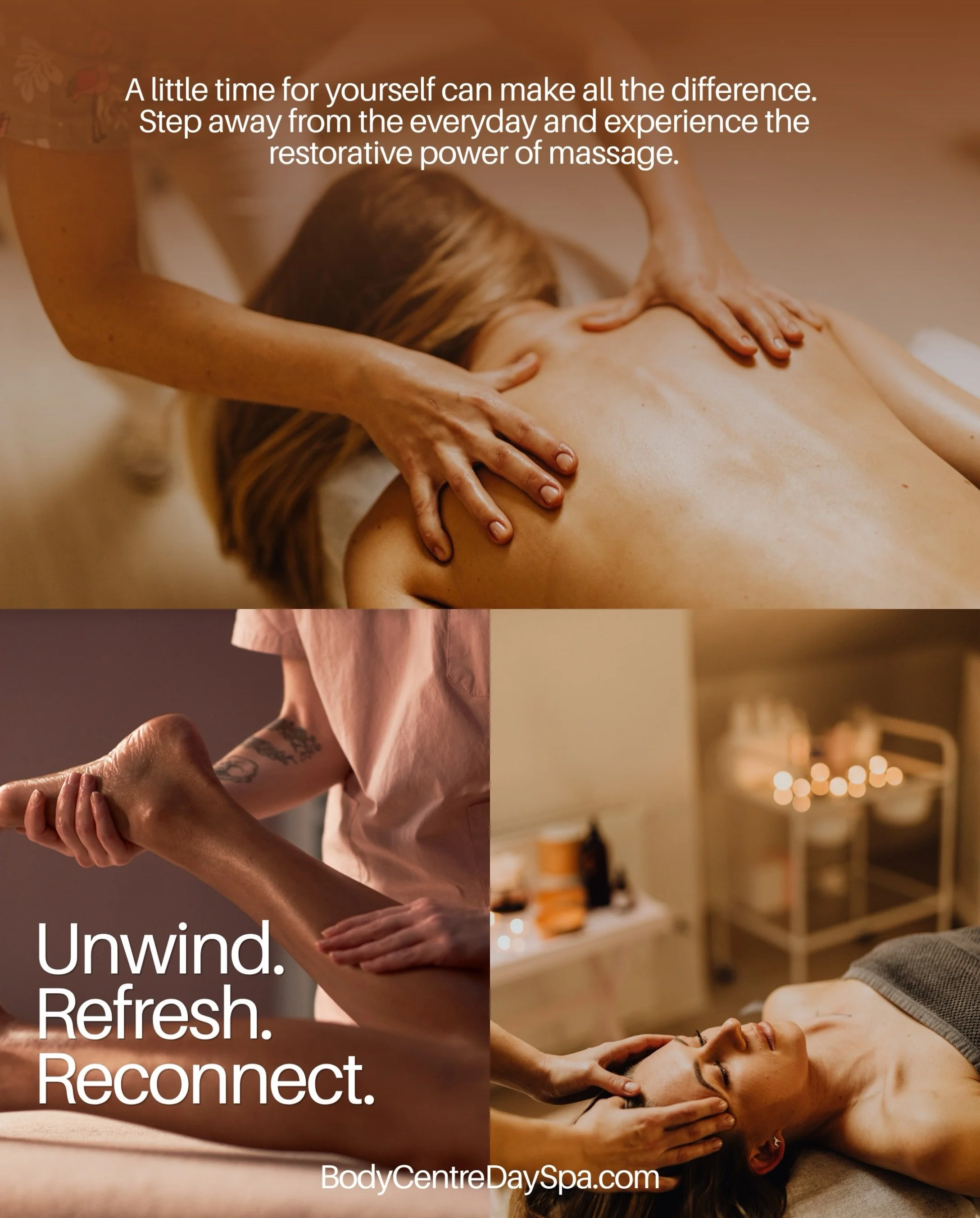
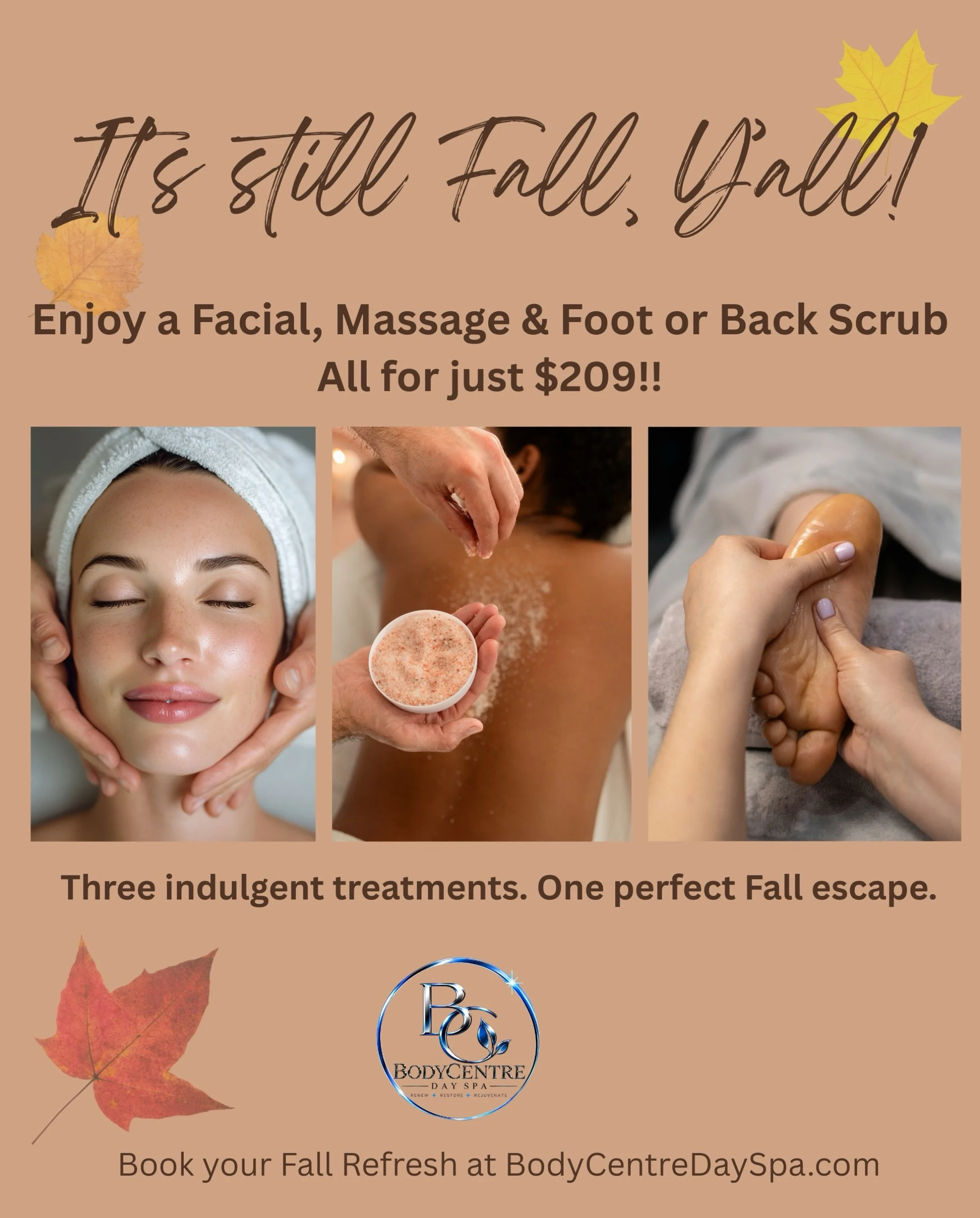
- Bodycentre Day Spa combines massage, facials, and recovery services in Costa Mesa; confirm cupping availability before booking.
Why this matters
Visible circles can outlast the appointment that caused them. If your 2026 calendar includes a wedding, beach trip, competition, or photographs, discuss exposed treatment areas before agreeing to cupping. Do not book around a promise that every mark will disappear by a particular date.
Your treatment choice matters more than the appearance of a mark. Start with your comfort, medical history, and goals; the guide to choosing the right massage in Costa Mesa can help you frame that conversation.
How long do cupping massage marks last?
Most temporary cupping marks fade within 1–2 weeks. Cleveland Clinic’s patient guidance on cupping describes marks that generally fade within that window. Treat it as general patient education, not a prediction for your individual skin.
Cupping creates suction against the skin. That suction can break small blood vessels near the surface, leaving circular discoloration as blood collects beneath the skin. The body gradually clears that blood, much as it does with other bruising.
The practical distinction is whether the area is improving. A circle that becomes less noticeable and less tender is different from a patch that grows increasingly painful, hot, or swollen.
Flat discoloration that gradually fades
- What it means for your next step: Continue gentle care and watch the trend
- What not to assume: Every circle must disappear at the same speed
Mild tenderness that steadily improves
- What it means for your next step: Avoid rubbing or treating the area again while tender
- What not to assume: Soreness proves the treatment worked
Blistering or broken skin
- What it means for your next step: Get medical advice and protect the area from further irritation
- What not to assume: Blisters are necessary for recovery
Increasing warmth, redness, swelling, or pain
- What it means for your next step: Seek prompt medical assessment
- What not to assume: All changes after cupping are harmless marks
Discoloration that is not improving after 2 weeks
- What it means for your next step: Contact a healthcare professional for an assessment
- What not to assume: More cupping will clear the existing mark
A photograph taken in consistent lighting can help you compare changes. Do not use online color charts to diagnose a health condition or decide how much suction you need next time.
Why cupping marks last different lengths of time
The same treatment can leave different-looking circles on different people—or on different areas of your own body. These factors help explain the variation without turning mark color into a diagnosis:
- Suction intensity: Stronger suction places more stress on small blood vessels and can increase bruising.
- Time under suction: Longer exposure changes the amount of mechanical stress on the skin. Longer is not automatically better.
- Individual bruising tendency: People differ in how readily they bruise and how quickly visible discoloration clears.
- Medicines and supplements: Blood-thinning medicines and some supplements can increase bleeding or bruising. Share your list before treatment; never stop prescribed medicine on your own.
- Skin condition and repeat treatment: Irritated, damaged, or already bruised skin needs a different decision from comfortable, intact skin. Reapplying suction adds stress rather than giving the area time to recover.
Skin tone and lighting also affect how easily you see a mark. Appearance alone cannot tell you whether the underlying tissue has recovered or whether a treatment helped your original concern.
For a 2026 appointment, tell the practitioner about previous reactions before treatment begins. Describe what happened, where it happened, and whether you developed pain, blisters, or lingering discoloration—not just whether the circles looked dark.
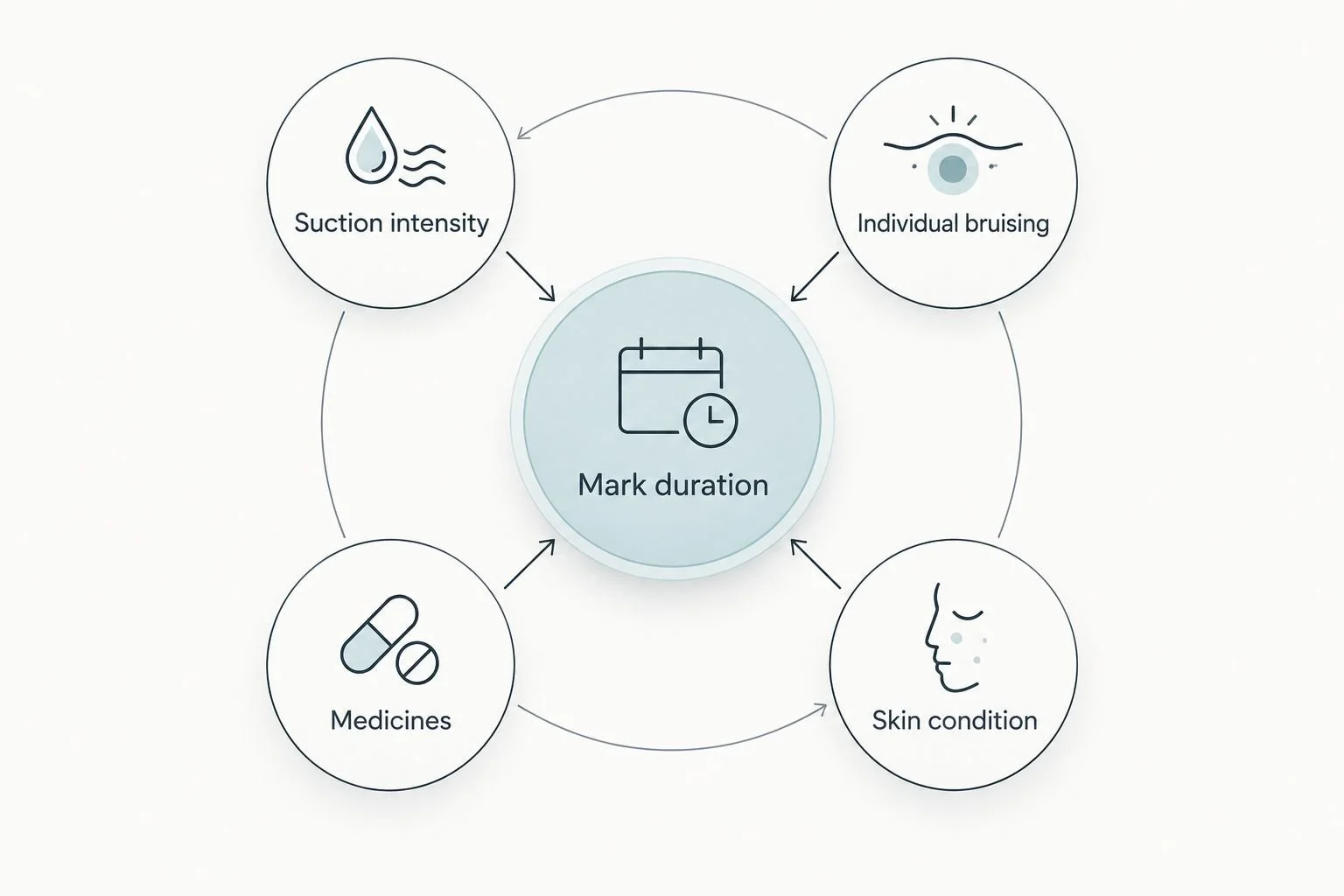
Several factors affect fading; mark color alone does not explain your response.
Do darker cupping marks mean a better treatment?
Darker cupping marks do not prove better results, deeper healing, or more toxins removed. They show discoloration after suction; they are not a validated score for treatment quality.
Dry cupping, which uses suction without deliberately piercing the skin, does not provide evidence of toxins leaving the body through those circles. Wet cupping involves breaking the skin and has different bleeding and infection risks. These are distinct procedures, not interchangeable names for the same appointment.
Dry cupping
- What happens: Cups create suction without deliberate skin punctures
- Best for understanding: Why circular marks can appear after suction
- Important limitation: Bruising, burns with heated methods, and skin irritation remain possible
Wet cupping
- What happens: Skin is pierced as part of the procedure
- Best for understanding: Why bleeding and infection precautions differ
- Important limitation: Open skin adds risks beyond temporary discoloration
Ask which approach is being discussed before you consent. Neither a darker mark nor visible bleeding establishes that a procedure is appropriate for you.
For a 2026 wellness plan, track outcomes that matter: comfort, movement, and whether symptoms interfere with your daily activities. Evidence for cupping’s benefits remains limited, so do not use visible circles as a substitute for an assessment of persistent pain.
How should you care for cupping marks?
Use gentle skin care and avoid adding irritation. There is no reliable overnight method that guarantees cupping marks will disappear before an event.
- Check the skin. Look for broken skin, blisters, unusual swelling, or increasing redness. Those findings change the next step from routine aftercare to medical advice.
- Clean gently. Wash intact skin without scrubbing, and pat it dry. If skin is broken, obtain wound-care guidance rather than applying your usual body products.
- Reduce friction. Choose comfortable clothing that does not repeatedly rub tender areas. Avoid aggressive exfoliation or deep massage directly over the marks.
- Protect from sun. Cover exposed areas or use suitable sunscreen on intact skin. Sun protection is especially relevant when inflammation leaves lingering pigment changes.
- Pause repeat treatment. Let tenderness and skin changes settle before considering more suction in the same place. Ask the practitioner to reassess rather than repeating the original settings automatically.
These steps support skin care; they do not create a guaranteed clearing schedule. Drinking water is reasonable for normal hydration, but extra water does not flush a bruise out of your skin.
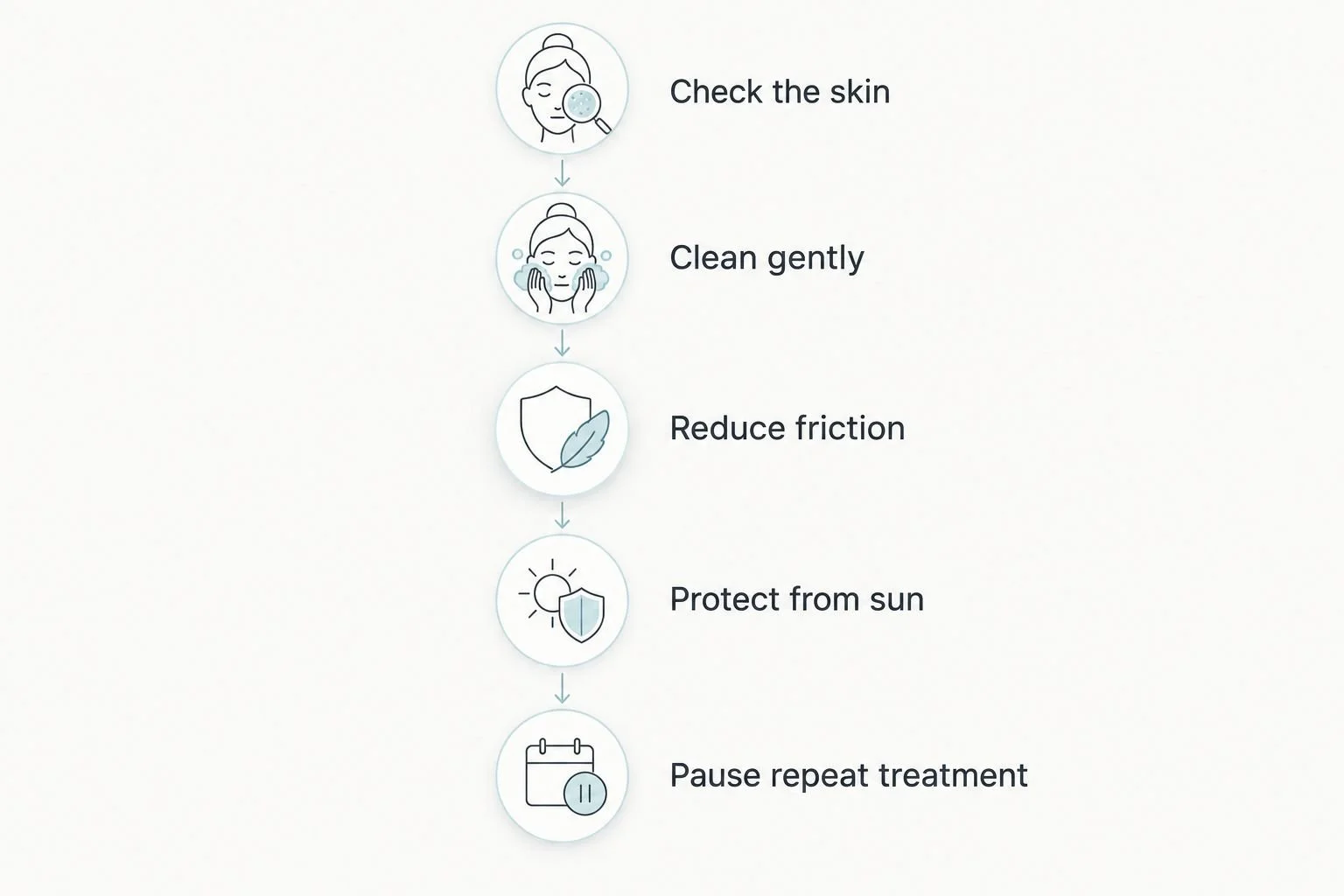
Gentle care avoids adding irritation while the skin recovers.
Avoid applying a new acid, retinoid, essential oil, or exfoliating product to tender treatment areas simply because it is described as a recovery product. Familiar skincare products can still sting or irritate compromised skin.
If you want to conceal a mark, use clothing first. Makeup belongs only on intact, comfortable skin, and removal should not require vigorous rubbing. Concealment changes visibility, not healing.
When should you get medical advice about cupping marks?
Seek prompt medical advice for worsening symptoms rather than waiting for the usual fading window. Increasing pain, spreading redness, warmth, swelling, drainage, fever, or blistering deserves assessment. Severe pain, rapidly expanding swelling, or bleeding that will not stop needs urgent care.
Contact a healthcare professional if a mark is not improving after 2 weeks, or sooner if you bruise unusually easily. Persistent discoloration is not automatically an emergency, but it deserves an explanation when the expected improvement is missing.
Tell the clinician when you had cupping, which areas were treated, and whether heat or skin punctures were involved. Mention medicines that affect bleeding and any history of bleeding disorders or skin reactions.
Do not let an explanation about toxins or blocked energy delay care for a possible burn, infection, or other injury. A spa appointment should not replace medical evaluation of unexplained pain or skin changes.
Can you exercise while cupping marks are fading?
The 1–2 weeks of visible discoloration is not automatically a ban on all exercise. Base your decision on symptoms, skin integrity, and the instructions you received—not whether a faint circle remains.
Avoid activity that rubs, stretches, or presses painfully against the treated area. Equipment straps, tight waistbands, and contact sports deserve particular attention when they sit directly over tender skin. Stop if movement increases pain or swelling.
Broken skin changes the decision. Ask a healthcare professional about swimming, shared equipment, and return to activity if the treatment caused wounds or blisters. Do not cover a concerning reaction and train through it.
Should you book cupping before a wedding or beach trip?
Allow for the usual 1–2 weeks of fading, but do not treat that window as a clearance guarantee. If visible marks would be unacceptable, avoiding cupping on exposed areas is more dependable than trying to predict your skin’s response.
Bring up photographs, clothing, and planned activities when arranging a 2026 appointment. A first cupping session immediately before an important event gives you no personal history to guide expectations. Ask about a massage approach without suction if avoiding circular marks is your priority.
Also explain any plans for a facial, waxing, or another skin treatment on the same area. Combining appointments requires attention to the skin being treated, not simply fitting everything into one visit.
Planning spa and recovery care in Orange County
Bodycentre Day Spa is best for Orange County guests seeking massage, facials, and advanced recovery services at one Costa Mesa location. That combination lets you discuss relaxation, skincare, and recovery goals together; it does not make every treatment suitable for every guest.
For guests traveling from Newport Beach, Irvine, or Huntington Beach, the physical spa location is Costa Mesa. Use the contact page to ask whether cupping is offered, which method is used, and what screening and aftercare the appointment involves. Do not assume a particular treatment is included in a massage booking.
Bodycentre Day Spa’s recovery services include PEMF, which uses pulsed electromagnetic fields, and red light therapy, which exposes skin to specific wavelengths of light. These services are different from suction-based cupping; neither should be presented as an automatic way to erase cupping marks.
For your 2026 visit, lead with your main goal and any skin concerns. A useful consultation explains both what a treatment involves and why you might choose not to have it that day.
FAQ
How long do cupping massage marks usually last?
Cupping massage marks usually fade within 1–2 weeks, with some clearing sooner. Contact a healthcare professional if they are not improving after 2 weeks or develop worsening symptoms.
Can cupping marks disappear overnight?
There is no reliable way to make cupping marks disappear overnight. Gentle care helps you avoid additional irritation, but scrubbing, extra suction, and aggressive massage do not provide a guaranteed shortcut.
Are dark purple cupping marks a sign of toxins?
Dark purple cupping marks are not evidence of toxins leaving your body. Suction-related discoloration is not a validated measure of treatment effectiveness or internal health.
Is it normal for cupping marks to hurt?
Mild tenderness can occur after cupping, but increasing or severe pain needs assessment. Spreading redness, warmth, swelling, fever, drainage, or blisters are reasons to seek medical advice.
Should I get cupping again while the marks are visible?
Do not apply suction directly to skin that remains tender, damaged, or significantly bruised. Ask the practitioner to reassess the area rather than using mark color alone to decide when to repeat treatment.
Can I have a facial or waxing over cupping marks?
Avoid facial treatments or waxing directly over irritated, broken, or tender skin. Tell both practitioners which areas were treated so they can assess whether to postpone treatment or avoid the area.
Does Bodycentre Day Spa offer cupping massage in Costa Mesa?
Confirm cupping availability directly with Bodycentre Day Spa before booking. The Costa Mesa business offers massage, facials, and recovery services, but cupping should not be assumed to be part of an appointment.
One last thing
A faint mark can remain after tenderness improves, and a concerning skin injury can start before a mark looks dramatic. Judge the direction of change—not just the color. For your next appointment, report how your skin felt afterward as carefully as how it looked.