Best hyperbaric oxygen therapy benefits for recovery
/The best-supported hyperbaric oxygen therapy benefits involve selected medical conditions, not routine post-workout soreness. This guide ranks recovery uses by clinical purpose and explains what to ask before considering a wellness session at Bodycentre Day Spa in Costa Mesa in 2026.
TL;DR
- Hyperbaric oxygen therapy benefits depend on the diagnosis, oxygen delivery, chamber pressure, and medical oversight.
- Selected diabetic wounds and delayed radiation injuries have recognized medical uses; routine athletic recovery is a different question.
- Bodycentre Day Spa combines spa care and recovery services in Costa Mesa; confirm treatment details before booking.
- Massage, facials, and hyperbaric oxygen serve different goals; choose by your actual need, not the equipment.
Why this matters
A chamber session is not a single standardized treatment. Medical hyperbaric oxygen therapy involves breathing oxygen inside a pressurized chamber, but oxygen concentration, pressure, supervision, and treatment purpose matter.
Room air contains about 21% oxygen. Medical hyperbaric treatment commonly uses 100% oxygen, while normal sea-level atmospheric pressure is 1 atmosphere absolute, abbreviated ATA. Those figures explain the treatment concept; they are not specifications for this spa's equipment.
For your 2026 decision, separate a recognized medical indication from a general wellness claim. FDA patient guidance distinguishes cleared medical uses from promoted uses that have not been established, and the Undersea and Hyperbaric Medical Society identifies specific treatment indications. Neither makes every chamber session equivalent.
What makes a hyperbaric benefit worth considering?
Use these criteria before comparing recovery claims:
- Clinical fit: Your diagnosis matches a recognized medical use rather than a broad promise of better health.
- Treatment match: The chamber, oxygen delivery, and pressure match the treatment being discussed.
- Medical oversight: A qualified clinician screens you and manages condition-specific care.
- Meaningful outcome: The goal is something specific, such as wound healing, rather than an undefined feeling of optimization.
- Honest limits: The provider explains risks, alternatives, and what the treatment cannot establish.
A benefit ranks higher here when it addresses a defined clinical problem. Convenience, relaxation, and an impressive-looking chamber do not establish medical effectiveness.
Recovery benefits at a glance
This 2026 comparison ranks use cases, not local providers. The clinical treatments below should not be assumed to be services offered by a day spa.
Selected diabetic wounds
- Best for: Clinician-selected difficult diabetic foot wounds
- Potential contribution: An adjunct to established wound care
- Key limitation: Not appropriate for every wound or a replacement for circulation assessment
Delayed radiation injury
- Best for: Selected tissue damage after radiation treatment
- Potential contribution: Support for healing in affected tissue
- Key limitation: Requires specialist diagnosis and a condition-specific plan
Compromised grafts or flaps
- Best for: Surgically transferred tissue with threatened survival
- Potential contribution: An adjunct in selected surgical salvage cases
- Key limitation: Requires urgent surgical evaluation; healthy grafts do not routinely need it
Athletic recovery
- Best for: Athletes discussing an optional wellness treatment
- Potential contribution: A question for individualized assessment
- Key limitation: Routine performance and soreness benefits are not established clinical indications
The distinction is medical treatment versus elective wellness use, not simply stronger versus gentler treatment. A chamber's appearance does not tell you which category applies.
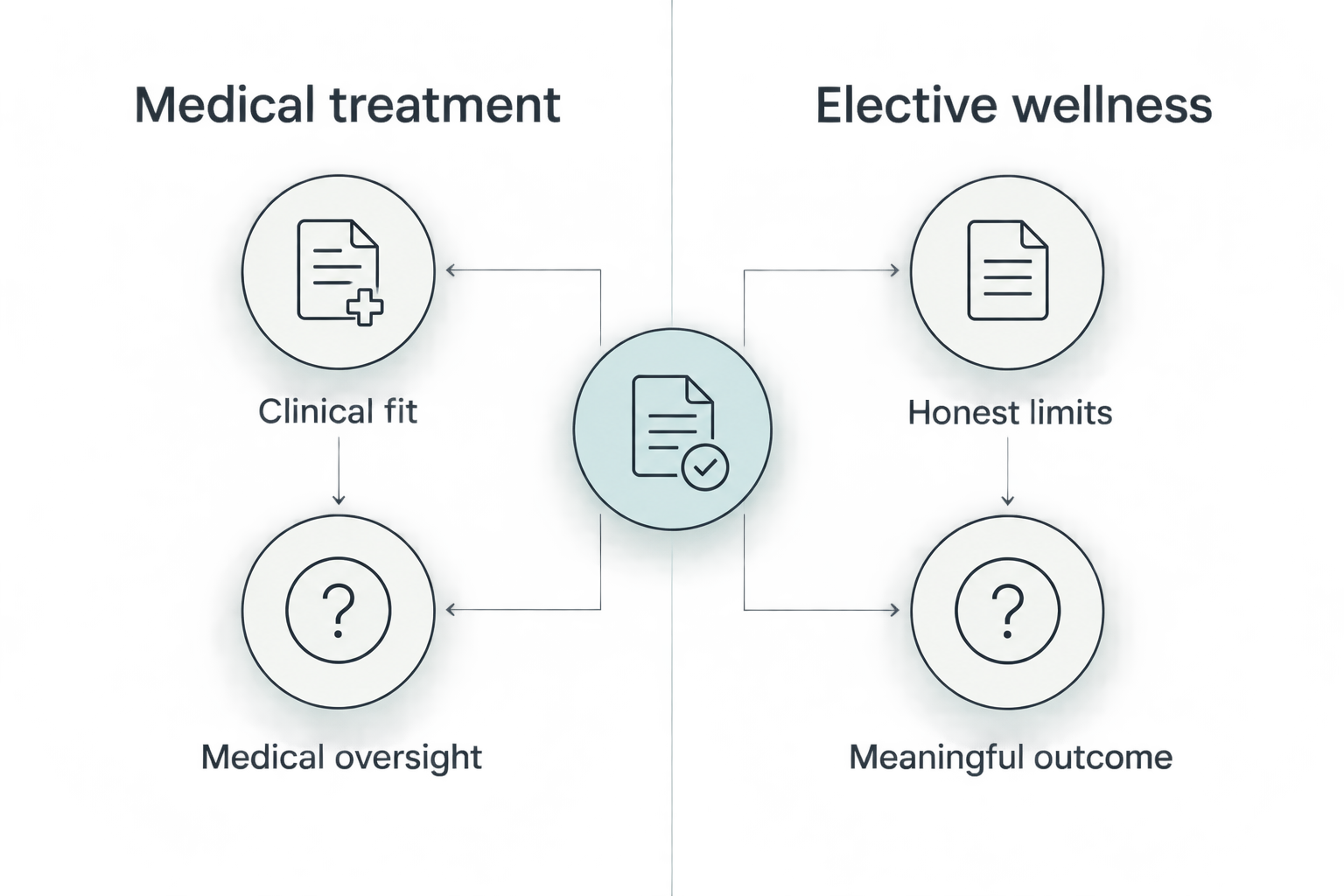
Medical treatment and elective wellness use require different expectations.
1. Selected diabetic wounds: best for specialist-led wound care
Hyperbaric oxygen is an accepted adjunct for selected difficult diabetic foot wounds. It does not replace wound cleaning, pressure relief, infection management, blood glucose management, or assessment of blood supply.
The relevant benefit is support for healing in an appropriately selected wound. That decision belongs to a wound-care team, not a general recovery menu.
Selected diabetic wound treatment pros:
- Addresses a defined medical problem rather than a general wellness goal.
- Can form part of coordinated wound management.
- Allows clinicians to follow a visible, condition-specific healing outcome.
Selected diabetic wound treatment cons:
- Not every diabetic wound meets treatment criteria.
- Poor circulation and infection still require their own assessment and treatment.
- Chamber exposure adds pressure-related and oxygen-related risks.
Best for: People whose wound-care clinician recommends hyperbaric treatment after evaluating the wound and the rest of their care.
If you have an open foot wound, new discoloration, drainage, or worsening symptoms, seek medical assessment rather than booking a spa session as the next step. Verdict: Hold until a wound-care specialist confirms suitability.
2. Delayed radiation injury: best for a diagnosed tissue problem
Some tissue injuries appear after radiation treatment has ended. Hyperbaric oxygen has recognized uses for selected delayed radiation injuries involving soft tissue or bone.
This is not a general treatment for fatigue after cancer care. Your oncology team or another treating specialist must establish what is causing symptoms and whether hyperbaric treatment fits.
Delayed radiation injury treatment pros:
- Has a defined place within specialist medical care.
- Focuses on diagnosed tissue injury rather than nonspecific recovery claims.
- Can be coordinated with other necessary treatment.
Delayed radiation injury treatment cons:
- Not every symptom following radiation comes from radiation injury.
- Treatment requires an individualized medical plan.
- It does not replace cancer surveillance or evaluation of new symptoms.
Best for: People with a confirmed delayed radiation injury whose treating team recommends evaluation by a hyperbaric medicine clinician.
Bring your treatment history and current symptoms to your medical team. A wellness provider cannot determine the cause from the symptom alone. Verdict: Hold until the diagnosis and referral are clear.
3. Compromised grafts or flaps: best for urgent surgical review
A graft or flap transfers tissue to repair another area of the body. When that transferred tissue has a threatened blood supply, hyperbaric oxygen is sometimes used alongside surgical care.
This is a salvage situation, not a routine post-surgery upgrade. Healthy grafts and flaps do not automatically need chamber treatment.
Compromised graft or flap treatment pros:
- Addresses a specific surgical complication.
- Can support a surgeon-directed effort to preserve threatened tissue.
- Keeps the treatment goal tied to tissue survival and healing.
Compromised graft or flap treatment cons:
- Does not correct every mechanical problem with blood flow.
- Must not delay urgent surgical assessment.
- Cannot be selected safely from appearance or discomfort alone.
Best for: Patients whose surgeon identifies compromised transferred tissue and coordinates appropriate hyperbaric evaluation.
After surgery, contact your surgical team about unexpected color changes, worsening pain, or wound concerns. Do not substitute a wellness appointment for that call. Verdict: Hold for immediate surgical guidance, not self-booking.
4. Athletic recovery: best for a discussion, not a promise
Routine post-workout soreness and performance improvement are different from the medical indications above. Those recognized uses do not establish that an elective chamber session speeds recovery in a healthy athlete.
For a 2026 recovery plan, start by identifying the problem: ordinary soreness, persistent pain, poor sleep, or a diagnosed injury. Each calls for a different response.
Athletic recovery consideration pros:
- Creates an opportunity to discuss recovery goals and health history.
- Encourages questions about what the equipment actually delivers.
- Can prompt a clearer distinction between relaxation and medical treatment.
Athletic recovery consideration cons:
- Routine soreness and performance benefits are not established clinical indications.
- Feeling better after a session does not prove faster tissue healing.
- Treatment can distract from sleep, nutrition, training adjustments, or injury assessment.
Best for: Athletes seeking an informed conversation about elective wellness use, without expecting guaranteed healing or performance gains.
Persistent pain, weakness, or loss of function deserves clinical assessment. Verdict: Skip hyperbaric oxygen as a default workout-recovery recommendation.
How these uses were ranked
The ranking prioritizes recognized clinical purpose, patient selection, and a measurable treatment goal. Selected wound care, radiation injury, and threatened surgical tissue belong in medical discussions; routine athletic recovery does not inherit their evidence.
This is not a claim that every person with a listed condition benefits. Appropriate treatment depends on assessment, and no ranking establishes what a particular local chamber can deliver.
What to ask before a chamber session
Start with the treatment details, not a package recommendation. Pressure, oxygen delivery, and supervision matter more than the label “hyperbaric.”
- Treatment goal: What specific concern is the session intended to address?
- Oxygen delivery: What oxygen concentration will you breathe, and how is it delivered?
- Chamber pressure: What operating pressure is used, and how is it measured?
- Health screening: Who reviews your health history and decides whether you should proceed?
- Stop procedure: How do you communicate discomfort and end the session?
Ask these questions before combining treatments or committing to repeat visits. A clear answer should distinguish the service's actual setup from medical treatment described elsewhere.
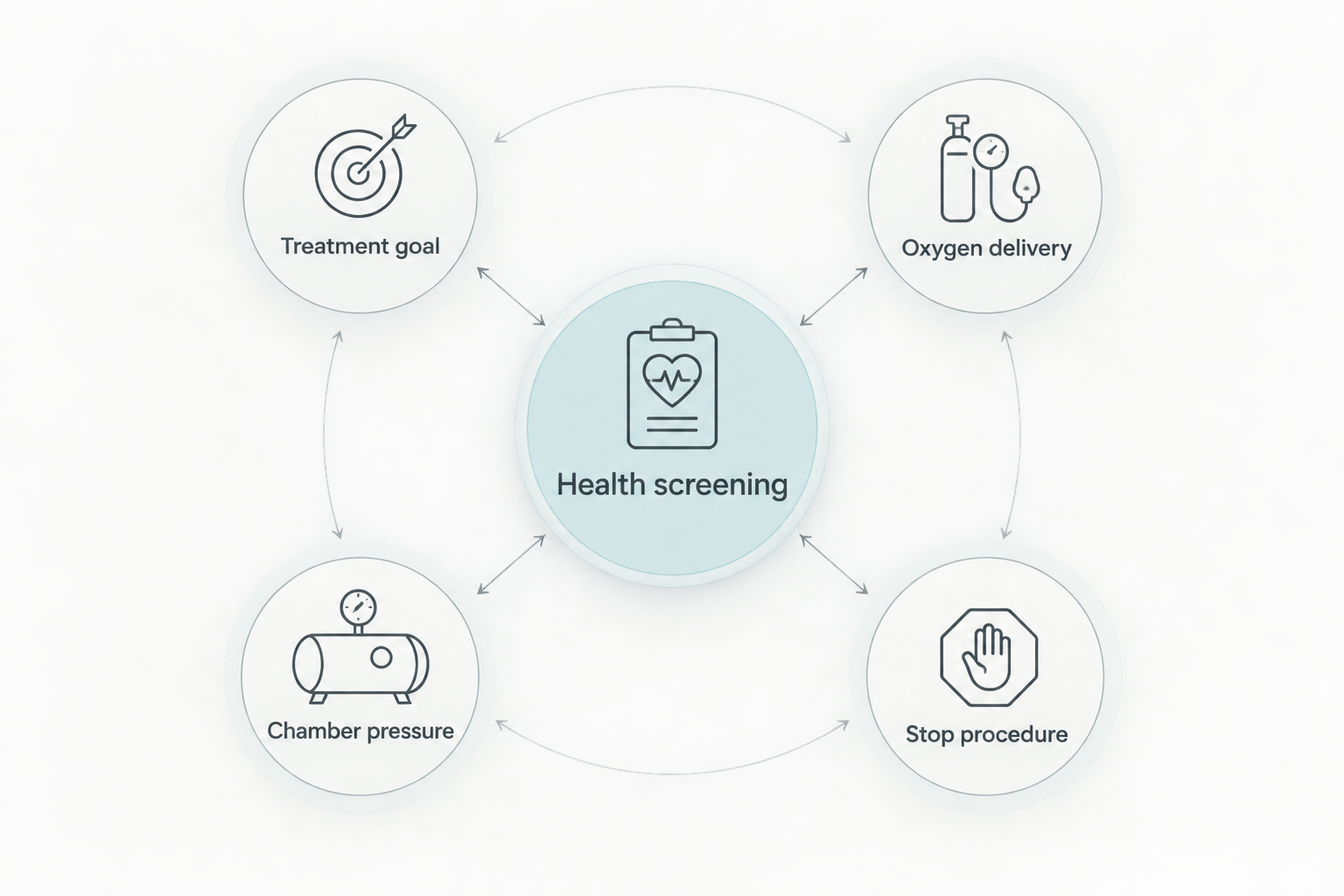
Understand the treatment setup and screening before deciding whether to proceed.
Pressure changes can cause ear or sinus discomfort and injury. Oxygen exposure also carries risks, and oxygen-rich environments require strict fire-safety practices. An untreated pneumothorax, meaning air around a lung, is a contraindication to hyperbaric treatment.
Tell the screening clinician about lung disease, ear problems, recent procedures, medications, pregnancy, and difficulty with enclosed spaces. Read the guide to hyperbaric oxygen therapy safety for questions to bring to that conversation; written guidance does not replace individual clearance.
Which recovery option should you choose?
Bodycentre Day Spa is best suited to local guests seeking spa care and recovery services in one Costa Mesa location, rather than a substitute for hospital-based hyperbaric care. Its service mix includes massage, facials, skincare, and recovery options such as hyperbaric oxygen, PEMF, and red light therapy.
Choose by purpose:
- Hands-on relaxation: Discuss massage, including comfort preferences and pressure. Massage does not diagnose or repair an injury.
- Skin-focused care: Discuss a facial and your current skincare. A facial is not a treatment for a suspicious or changing skin lesion.
- Device-based wellness: Ask about hyperbaric oxygen, PEMF, or red light therapy separately. Different devices do different things; one service's evidence does not validate another.
- A medical recovery problem: Start with your treating clinician, especially after surgery or with a wound.
PEMF means pulsed electromagnetic field therapy: a device produces changing magnetic fields. Red light therapy uses light directed at the body. Neither is the same as breathing oxygen under pressure, and combining them does not automatically improve results.
For guests traveling from Newport Beach, Irvine, or Huntington Beach, the physical Bodycentre Day Spa location is Costa Mesa. Before a 2026 visit, confirm the treatment setup, screening requirements, and whether your goal fits the service.
FAQ
What are the best-supported hyperbaric oxygen therapy benefits?
The best-supported benefits relate to specific medical indications, including selected diabetic wounds, delayed radiation injury, and compromised grafts or flaps. These uses require medical assessment and should not be treated as evidence for general wellness claims.
Does hyperbaric oxygen therapy help muscle recovery after exercise?
Routine post-exercise muscle recovery is not an established clinical indication for hyperbaric oxygen therapy. Do not assume benefits from wound-care treatment apply to healthy athletes with ordinary soreness.
Is a mild chamber session the same as medical hyperbaric oxygen therapy?
No, the treatments are not automatically equivalent. Compare operating pressure, oxygen concentration, delivery method, medical supervision, and intended use before applying medical treatment claims to a wellness session.
Can I use hyperbaric oxygen instead of wound care?
No, hyperbaric oxygen does not replace wound care. Selected patients receive it alongside treatment addressing infection, circulation, pressure on the wound, and other healing barriers.
Who should not have hyperbaric oxygen therapy?
An untreated pneumothorax is a contraindication to hyperbaric oxygen therapy. Other health conditions, medications, and recent procedures require individual review by the clinician responsible for screening.
Is hyperbaric oxygen better than massage or a facial?
No single treatment is better across these different goals. Massage addresses hands-on comfort, facials focus on skin care, and hyperbaric oxygen requires its own suitability assessment; none should replace necessary medical care.
Can I combine hyperbaric oxygen with red light therapy?
Combining treatments does not establish an added recovery benefit. Ask whether each service independently fits your health history and goals before deciding to schedule both.
Where is Bodycentre Day Spa located?
Bodycentre Day Spa is physically located in Costa Mesa, California. Guests from Newport Beach, Irvine, Huntington Beach, and other Orange County communities should plan travel to Costa Mesa.
One last thing
More oxygen is not automatically better recovery. Oxygen concentration alone does not describe a chamber treatment, and a recognized medical use does not validate every wellness claim.
For your 2026 decision, write down the outcome you actually want before choosing equipment. Better relaxation, help with skincare, and treatment of a diagnosed wound are different needs; the right next step should reflect that difference.