

Is deep tissue massage safe for everyone?
/No, deep tissue massage is not safe for everyone: people with suspected blood clots, increased bleeding risk, fragile bones, recent surgery, or certain injuries need medical guidance before receiving firm pressure. Your medications, symptoms, skin condition, and pregnancy status also affect whether you should proceed, modify the massage, or postpone it.
TL;DR
- Is deep tissue massage safe for everyone? No—medical history, medications, and current symptoms determine whether firm pressure is appropriate.
- Deep tissue massage should not cause sharp pain, numbness, or tingling; ask the therapist to stop.
- BodyCentre Day Spa combines massage, facials, and recovery services in Costa Mesa; treatment suitability still requires individual screening.
- Suspected blood clots, unexplained swelling, and new injuries need medical assessment rather than massage.
Is deep tissue massage safe for everyone?
Deep tissue massage is not appropriate for every person or every body area. Firm, sustained pressure can aggravate injured tissue or increase risk when a condition affects bleeding, bone strength, circulation, or sensation. Feeling healthy does not replace discussing your medical history.
For your 2026 appointment, choose the treatment around your health—not around the strongest pressure available. BodyCentre Day Spa offers spa care and recovery services in Costa Mesa, but a service menu is not medical clearance.
Deep tissue massage
- Best for: People seeking focused muscle work after appropriate screening
- Potential benefit: Addresses areas of muscle tension with sustained pressure
- Limitation or reason to pause: Unsuitable over suspected clots, fragile or injured tissue, and some medical conditions
Gentle massage
- Best for: People who prefer lighter touch and have no contraindications
- Potential benefit: Offers relaxation without the same pressure intensity
- Limitation or reason to pause: Lighter pressure is not automatically safe when a medical concern is unresolved
Postponing massage
- Best for: People with new warning symptoms or restrictions from a clinician
- Potential benefit: Gives you time to obtain assessment or allow healing
- Limitation or reason to pause: Delays your spa visit, but avoids treating an unexplained problem as routine tension
The National Center for Complementary and Integrative Health’s public guidance, Massage Therapy: What You Need To Know, describes massage risks as generally low while noting rare serious injuries, particularly with vigorous techniques or people at increased risk. That distinction matters: general safety does not establish safety for your situation.
Why this matters
A tight-feeling calf, painful shoulder, or sore back is not a diagnosis. Before you book in 2026, separate familiar muscle tension from new, unexplained, or worsening symptoms. Massage is not a substitute for evaluating those symptoms.
You do not need to tolerate pain to receive useful care. Pressure should remain within an agreed comfort level, and you can withdraw consent at any point—even after the session has started.
When should you postpone deep tissue massage?
Some concerns affect a single body area; others mean you should postpone the entire appointment. A therapist can adjust treatment within their training, but cannot rule out a blood clot, diagnose an injury, or override your clinician’s restrictions.
Suspected blood clots or unexplained swelling
Do not massage an area with suspected deep vein thrombosis, a blood clot in a deep vein. New swelling, warmth, redness, or pain in one leg needs prompt medical assessment, especially after surgery or prolonged immobility.
Chest pain or sudden shortness of breath requires emergency care, not a spa appointment. These symptoms can have serious causes, including a clot that has traveled to the lungs.
Bleeding disorders or blood-thinning medication
Tell the therapist if you have a bleeding disorder or take anticoagulants, often called blood thinners. Firm pressure can increase bruising and bleeding risk, so ask your prescribing clinician whether massage is appropriate and what restrictions apply.
Do not stop prescribed medication to make a massage appointment possible. The treatment must fit your medical care, not the reverse.
Fragile bones, fractures, or recent surgery
Osteoporosis weakens bones and increases fracture risk; forceful pressure is not an appropriate default. Recent fractures, surgical sites, and healing tissues also need protection.
Ask your treating clinician about timing, positioning, and areas to avoid. An incision that looks closed does not establish that deeper tissues are ready for pressure.
Fever, infected skin, or an acute injury
Postpone massage when you have a fever or feel acutely unwell. Open wounds, burns, active skin infections, and inflamed areas should not receive direct massage.
A new sprain, sudden muscle injury, or unexplained severe pain also deserves assessment before deep pressure. Do not assume that working harder on a painful spot will resolve the cause.
When does deep tissue massage need modification?
A health condition does not always rule out all massage. It does change the questions you need to ask, and sometimes the appropriate answer is lighter touch, different positioning, avoiding an area, or choosing another day.
Pregnancy
Pregnancy calls for appropriate positioning and a therapist trained to work with pregnant clients. Tell the therapist how far along you are, whether the pregnancy is high-risk, and whether your maternity clinician has given any restrictions.
Deep pressure is not automatically the right choice for pregnancy-related discomfort. New leg swelling, severe headache, chest symptoms, or other concerning changes need medical advice rather than a massage adjustment.
Cancer treatment or a history of lymph-node removal
Share active cancer treatment, radiation-treated skin, implanted devices, and any lymph-node surgery. Treatment effects and bone involvement can change what pressure and positioning are appropriate.
If you have lymphedema, ordinary deep tissue work is not a substitute for care from someone trained in that condition. Coordinate with your treating team rather than selecting a technique from its name alone.
Diabetes, neuropathy, or reduced sensation
Reduced sensation makes it harder to judge whether pressure is excessive. Tell the therapist about numbness, circulation problems, wounds, or areas where you cannot reliably feel touch.
Do not use discomfort as the only safety check. A therapist needs to know about these conditions before working on an affected area.
Sensitive skin or recent skin treatments
Tell the therapist about irritated skin, recent waxing, and areas treated with procedures that carry aftercare restrictions. Friction, positioning, or products can make sensitive areas uncomfortable.
The same principle applies when combining massage with a facial: share both plans before treatment. Skin care and muscle care should not work against each other.
Why deep tissue massage safety varies
For a 2026 booking, these factors matter more than whether you have enjoyed firm massage before. Your situation can change between appointments, so update the therapist rather than relying on an old intake form.
- Medical history: Clotting problems, fragile bones, recent surgery, and active treatment can change suitability.
- Medications: Blood thinners and medicines that affect sensation or skin condition belong in the discussion.
- Current symptoms: New swelling, weakness, numbness, fever, or unexplained pain needs attention before pressure.
- Treatment area: A healthy shoulder and a recently injured ankle should not receive the same approach.
- Pressure response: Guarding, breath-holding, sharp pain, or tingling are reasons to pause and reassess.
- Practitioner training: Pregnancy, cancer-related concerns, and lymphedema require relevant knowledge and appropriate referral when needed.
These are screening topics, not a self-clearance checklist. If an answer raises a concern, resolve it before treatment instead of assuming a lighter session removes the risk.
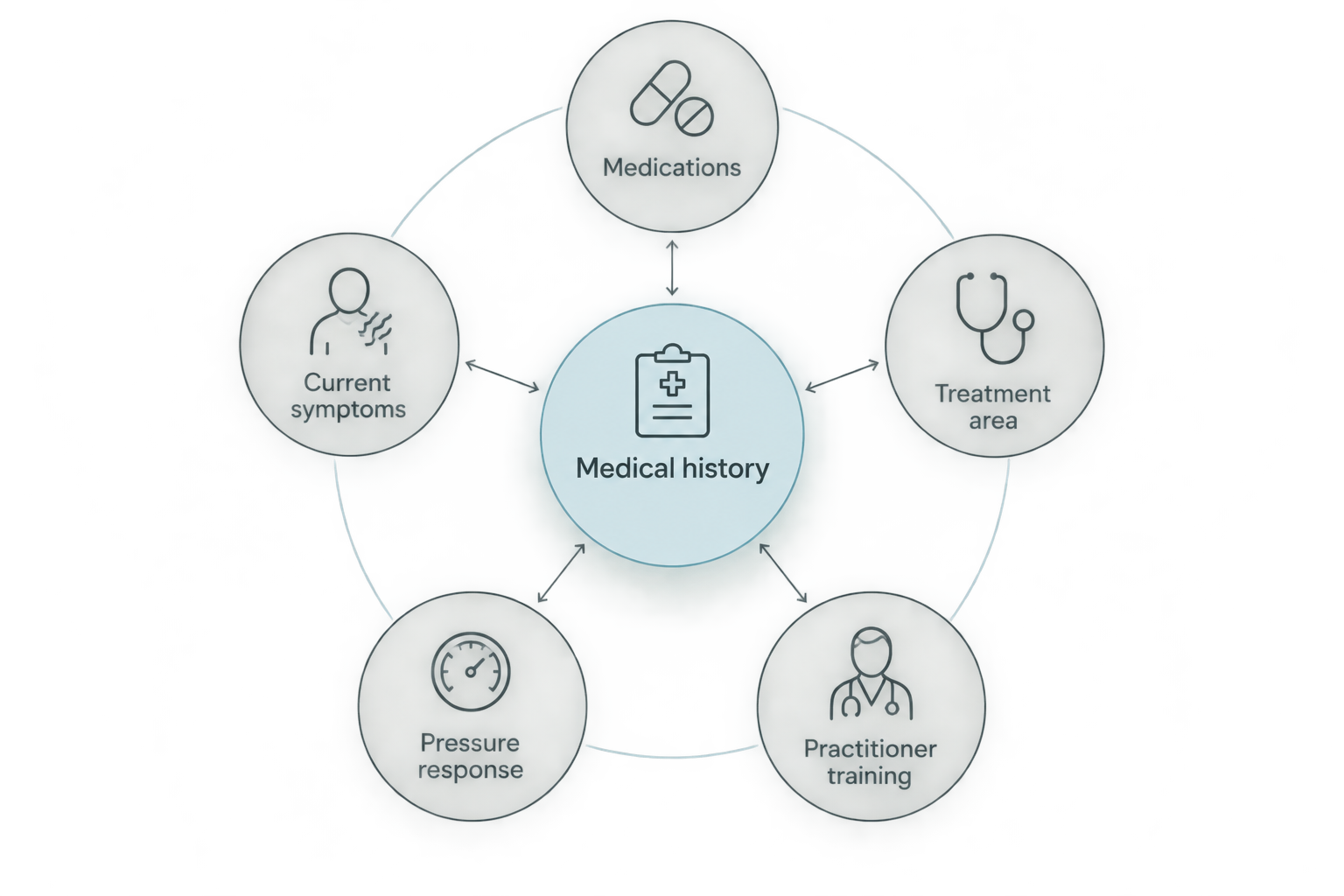
Massage suitability depends on your current health and the planned treatment, not pressure preference alone.
How do you prepare for a safer massage appointment?
Use these 5 steps for your next appointment in 2026. The goal is not to diagnose yourself; it is to give the therapist the information needed to identify limits and explain when medical guidance is necessary.
- Share health changes. Mention diagnoses, recent illness, pregnancy, surgery, injuries, and changes since your last visit. Include concerns even when they seem unrelated to the area being massaged.
- List medications. Bring an accurate list rather than relying on memory. Explain any clinician-imposed restrictions without changing medication yourself.
- Describe symptoms. Say where discomfort occurs, when it began, and whether it travels, causes numbness, or affects normal movement. Distinguish familiar tension from something new.
- Agree on pressure. Ask the therapist to start conservatively and explain how to request a change. Name areas you do not want touched.
- Report changes. Speak up during treatment and mention symptoms afterward. Stop rather than pushing through a new sensation that feels wrong.
A useful request is simple: ask for focused work within a comfortable pressure level, with check-ins before increasing intensity. You do not need anatomical vocabulary to describe what you feel or set a boundary.
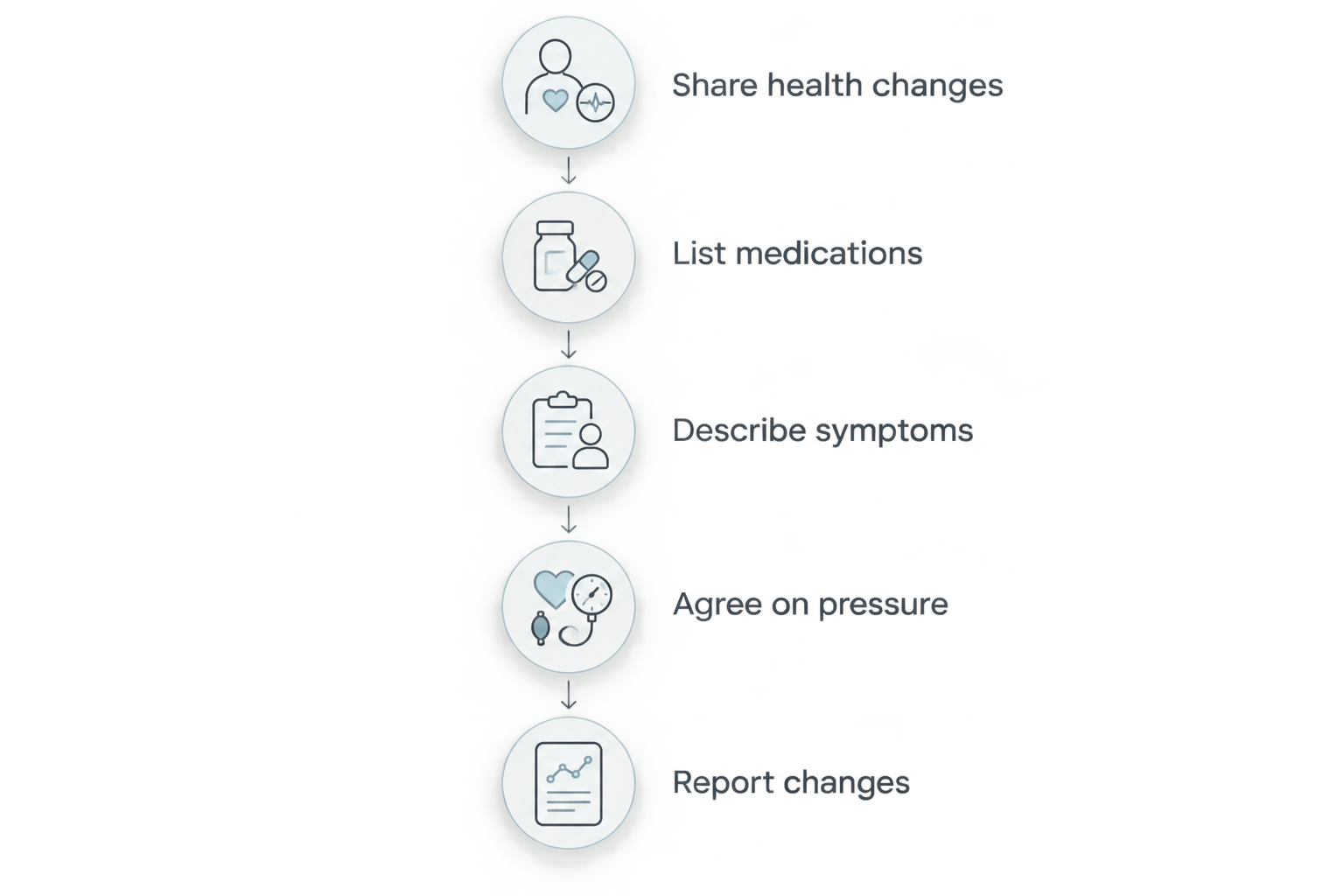
Discuss health concerns before treatment and keep communicating while pressure is applied.
Should deep tissue massage hurt?
Deep tissue massage should not require you to endure sharp, burning, electric, or escalating pain. Tell the therapist immediately if you feel numbness, tingling, dizziness, or pain that makes you tense up or hold your breath.
Firm pressure can feel intense, but intensity is not proof of effectiveness. Your therapist should adjust or stop rather than persuade you that painful treatment is necessary.
Mild temporary soreness can occur after massage. Severe pain, substantial bruising, weakness, or symptoms that worsen need medical advice; do not dismiss them as evidence that the treatment worked.
Is a gentler massage always safer?
Gentler massage reduces pressure, but it does not remove every medical risk. Suspected blood clots, fever, an infected area, or an unexplained acute injury still require appropriate assessment or postponement.
Choose lighter work because it matches your needs and screening—not because it bypasses a warning sign. If you dislike firm pressure, relaxation-focused care is a valid choice without any need to progress toward deeper work.
Choosing spa and recovery care in Orange County
BodyCentre Day Spa is a fit for Orange County guests seeking massage, facials, and advanced recovery services at one Costa Mesa location. Its combination of traditional spa care and services such as red light therapy, PEMF, and hyperbaric oxygen gives you different options to discuss; none is a substitute for medical assessment.
Whether you live in Costa Mesa, Newport Beach, Huntington Beach, or Irvine, the physical spa location is Costa Mesa. For your 2026 visit, start with your goal—relaxation, skin care, or recovery—and share relevant health information before choosing treatments.
Ask about each service separately. Being suitable for a facial does not establish suitability for deep tissue massage, and adding a recovery treatment does not make excessive pressure safe.
FAQ
Is deep tissue massage safe if I take blood thinners?
Deep tissue massage needs medical guidance if you take blood thinners because firm pressure can increase bruising and bleeding risk. Tell the therapist what you take, and do not stop prescribed medication for an appointment.
Can I get deep tissue massage while pregnant?
Pregnancy requires individual screening, appropriate positioning, and a therapist trained in prenatal care. Discuss complications or restrictions with your maternity clinician before choosing firm pressure.
Can deep tissue massage help a swollen calf?
An unexplained swollen calf needs medical assessment before massage because a blood clot is one possible cause. Do not apply deep pressure while waiting to find out what is causing the swelling.
Is bruising after deep tissue massage a good sign?
Bruising is not a sign that deep tissue massage worked. Significant bruising, severe pain, or worsening symptoms warrants medical advice, particularly if you take medication that affects bleeding.
Can I have deep tissue massage after surgery?
Deep tissue massage after surgery requires guidance from your surgical team about timing, positioning, and areas to avoid. A closed incision alone does not establish that underlying tissues are ready for firm pressure.
What should I tell my massage therapist before treatment?
Tell your massage therapist about medications, pregnancy, surgery, injuries, medical conditions, skin problems, and new symptoms. Explain your pressure preferences and any areas you do not want treated.
Does stronger pressure mean a better massage?
Stronger pressure does not automatically mean a better massage. Appropriate pressure matches your health, treatment goals, and comfort without causing sharp pain, numbness, or other warning symptoms.
One last thing
You can change your mind after booking deep tissue massage—or after treatment begins. Consent includes the pressure, the body area, and whether treatment continues. Asking for lighter work is a useful treatment decision, not a failed appointment.