
Combining a hyperbaric oxygen session with red light therapy
/Instead of arranging separate appointments without a shared plan, coordinate your hyperbaric oxygen red light therapy combo around a clear goal, safety screening, and provider-approved scheduling. Use this 2026 guide to plan separate treatments—not simultaneous equipment use—and decide whether one visit or separate days fits your needs.
TL;DR
- A hyperbaric oxygen red light therapy combo needs separate safety screening for each treatment, not an assumed shared benefit.
- BodyCentre Day Spa combines spa care and recovery services at its Costa Mesa location.
- Confirm chamber instructions, medication considerations, eye protection, and treatment order before booking both services.
- Choose separate days when you want to assess your response to each treatment independently.
Why this matters
Hyperbaric oxygen therapy involves breathing oxygen in a pressurized chamber. Red light therapy exposes tissue to selected wavelengths of light; some devices also use near-infrared light. These treatments work differently, so a reason to consider one does not automatically justify adding the other.
Combining appointments is a scheduling decision, not proof that the treatments produce better results together. Do not assume a particular order improves oxygen delivery, increases light absorption, or accelerates recovery.
BodyCentre Day Spa offers massage, facials, skincare, and advanced recovery services in Costa Mesa. BodyCentre Day Spa is best for Orange County guests seeking spa care and recovery services at one Costa Mesa location. Use the contact page to discuss your goal and ask what screening applies before requesting a combined visit.
Compare the appointment formats
The best starting point depends on what you want to understand, not how many treatments fit your calendar. This comparison separates practical advantages from limitations; it does not rank medical effectiveness.
Hyperbaric oxygen alone
- Best for: Guests evaluating a chamber session independently
- Practical advantage: Keeps the appointment focused on one treatment
- Limitation: Requires pressure-related screening and chamber-specific safety instructions
Red light therapy alone
- Best for: Guests evaluating light-based treatment independently
- Practical advantage: Avoids adding chamber exposure to the same appointment
- Limitation: Requires device-specific instructions and review of light sensitivity
Both in one visit
- Best for: Guests whose providers approve coordinated scheduling
- Practical advantage: Reduces separate journeys
- Limitation: Makes it harder to identify which treatment affected how you felt
Treatments on separate days
- Best for: Guests prioritizing individual response tracking
- Practical advantage: Separates each treatment experience
- Limitation: Requires additional calendar planning and travel
For a 2026 wellness plan, choose the least complicated arrangement that answers your question. If you are unsure whether you tolerate either treatment, a combined appointment adds uncertainty rather than removing it.
Before you start
- Have your health information ready. Bring a current medication and supplement list, relevant diagnoses, recent procedures, and details of previous chamber or light-treatment experiences. Ask your treating clinician about medical suitability when you have an active condition or are recovering from surgery.
- Confirm the actual treatments. Ask about the chamber, oxygen delivery, supervision, and red light device. The term hyperbaric alone does not tell you the pressure, oxygen exposure, or whether a service matches treatment prescribed by a physician.
- Resolve the easy-to-miss preparation conflict. Chamber rules can restrict clothing, electronics, cosmetics, and other personal items. Before combining treatments with a facial or massage, ask whether products applied to your skin conflict with either service's instructions.
Do not bring a personal red light device into a hyperbaric chamber. Oxygen-enriched environments require strict fire-safety controls. A combined visit means separately delivered services unless the responsible clinical team explicitly directs otherwise using equipment approved for that environment.
Your treatment goal
Set the purpose before setting the order
- Write down 1 primary goal, such as exploring a recovery service or understanding whether a light treatment suits your skincare plan. Keep a diagnosed medical condition separate from a general wellness objective.
- Describe your starting point in plain language. Note what bothers you, when it happens, and whether a clinician is already managing it. Avoid translating a vague feeling into a self-diagnosis.
- Ask what each proposed treatment is intended to address. Request an explanation specific to your goal, rather than accepting broad claims about cellular health or whole-body optimization.
- Choose how you will evaluate the visit. A brief note about comfort, skin response, and any symptoms is more useful than trying to judge every possible outcome.
Expected result: You can explain why you are considering each treatment separately. If you cannot explain the purpose of the second service, pause that addition rather than booking it by default.
A simple appointment-planning sequence keeps the decision focused: Goal, Screening, Scheduling, and Review. The sequence puts suitability before convenience and leaves room to change the plan after your first experience.
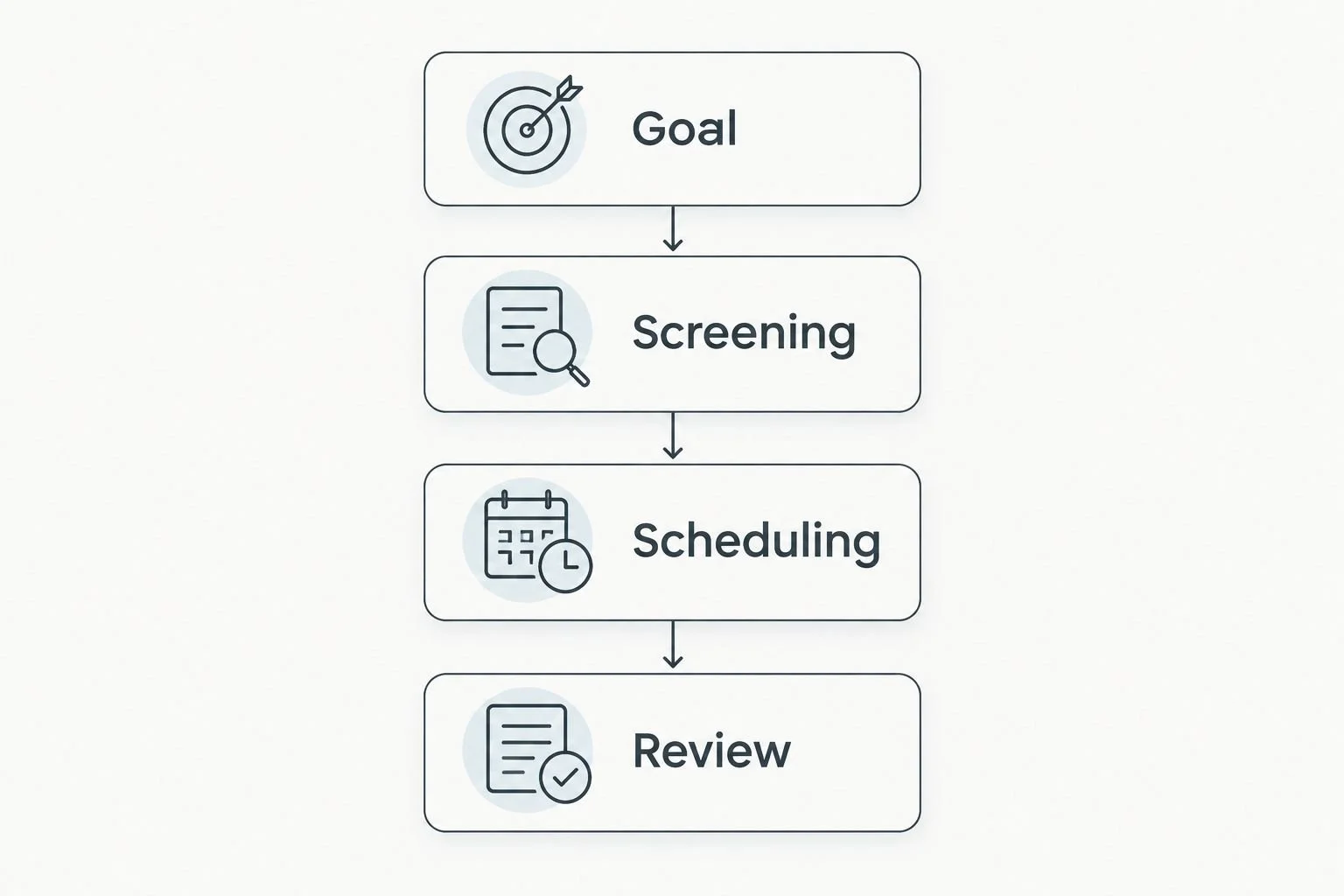
Confirm suitability before deciding how to schedule the treatments.
Use the same goal when discussing both services. If one provider understands your visit as general relaxation and another understands it as medical treatment, clarify that difference before proceeding.
Safety screening and preparation
Confirm suitability for each treatment
- Tell the chamber provider about ear or sinus problems, difficulty equalizing pressure, lung conditions, recent illness, and previous problems in pressurized environments. An untreated pneumothorax—a collapsed lung—is a contraindication to hyperbaric oxygen therapy.
- Give both providers your medication and supplement list. Ask specifically about medicines that affect light sensitivity and any treatment-related precautions. Do not stop prescribed medication to accommodate a spa appointment.
- Disclose pregnancy, seizure history, relevant eye conditions, and recent procedures. Let qualified clinicians determine what matters for your situation rather than screening yourself from an online checklist.
- Request preparation instructions for each service. Confirm clothing, skin products, eye protection, personal belongings, and how to communicate discomfort during treatment.
- Ask who supervises the chamber session and what happens if you need assistance. You should understand the communication method before the chamber session begins.
Expected result: Each provider has reviewed the information relevant to their treatment, and you know whether further medical review is needed. A completed form is not permission to ignore a new symptom on appointment day.
For 2026 planning, keep your information current even if you have visited before. A new prescription, respiratory illness, procedure, or change in symptoms can change the suitability discussion.
Ear discomfort during pressure changes deserves attention. Ask the operator to explain pressure equalization and the procedure for stopping; do not force yourself through pain to finish a session.
Appointment order and handoff
Arrange separate sessions within a shared plan
- Ask whether both treatments are appropriate on the same day for your circumstances. Do not treat a combined booking option as medical clearance.
- Let the responsible providers determine the order using their treatment instructions and your screening information. There is no single order this guide can prescribe for every chamber, light device, and guest.
- Confirm the 2 separate services, their scheduled durations, preparation requirements, and any transition time. Do not assume the listed treatment time equals the full visit length.
- Tell staff about any massage, facial, waxing, or skincare appointment you also want. Ask whether products, skin sensitivity, or preparation requirements make another day a better choice.
- Before starting the second treatment, describe how you feel after the first. Report ear pressure, headache, dizziness, skin irritation, or other new symptoms rather than treating them as a normal part of a combined visit.
Expected result: You have a clear appointment sequence, service-specific instructions, and a point at which to reassess before continuing. You also know whom to tell if your condition changes.
Same visit or separate days?
A same-visit arrangement prioritizes coordination. Separate days prioritize understanding your response to each service. Neither format removes the need for screening, and neither establishes better treatment results.
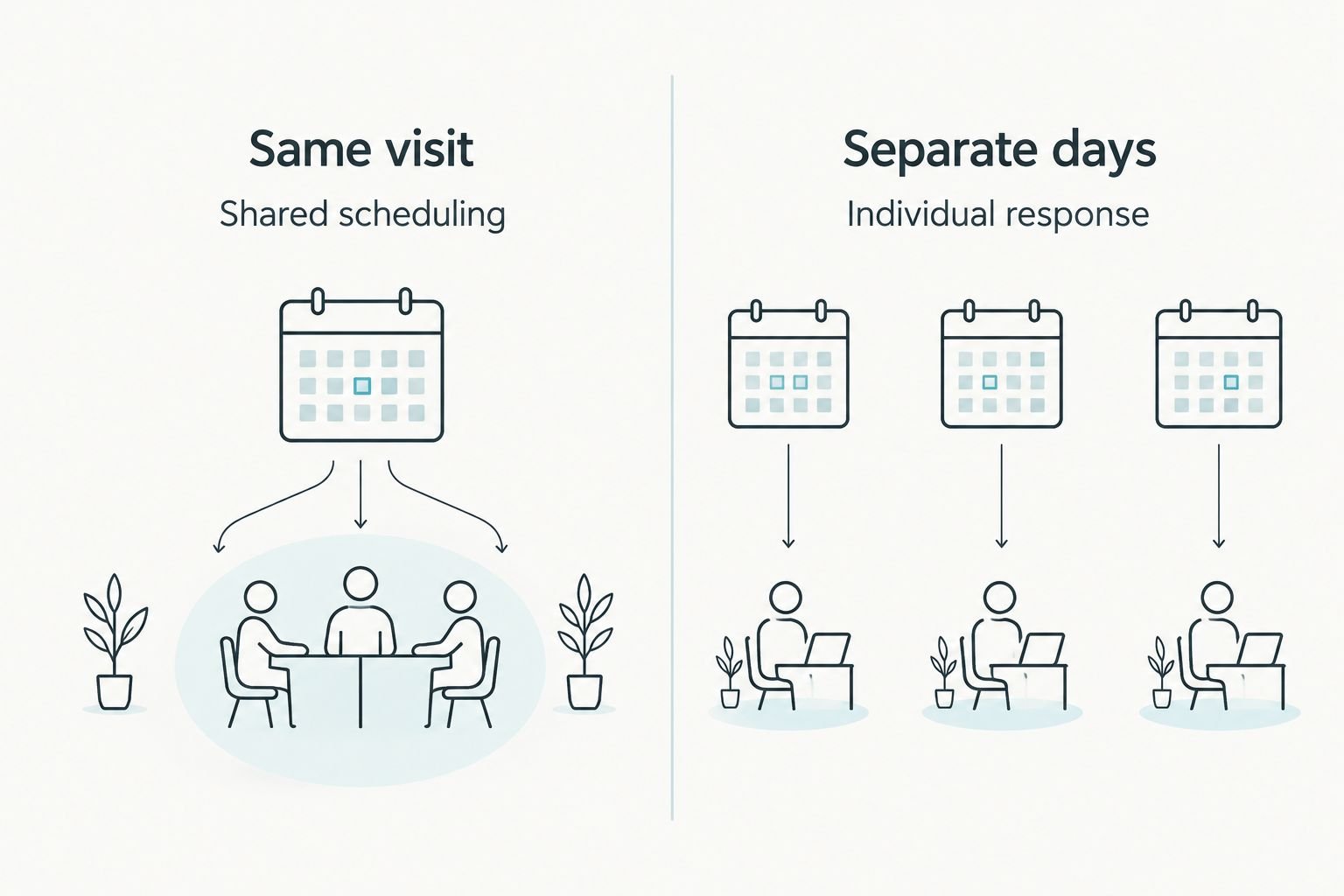
Choose the format around your planning needs, not an assumed combined benefit.
If you are traveling from Newport Beach, Irvine, Huntington Beach, or elsewhere in Orange County, account for the whole visit rather than just treatment time. The physical BodyCentre Day Spa location is Costa Mesa; planning around nearby cities does not mean there are branches in those cities.
Response tracking and follow-up
Record the experience before adding more
- Note which treatments you received and in what order. Record provider-supplied treatment details rather than guessing settings or copying another guest's plan.
- Separate immediate comfort from your longer-term goal. Feeling relaxed after an appointment does not establish that a medical condition has improved.
- Record new symptoms and contact the provider for guidance. Seek urgent medical care for severe symptoms such as chest pain, significant breathing difficulty, or sudden neurological changes.
- Review the notes before scheduling another combined visit. Ask whether continuing both treatments still serves the original goal.
- Change 1 planning variable at a time when practical, such as appointment order or same-day scheduling. Let providers control treatment settings and medical decisions.
Expected result: You have a usable account of the visit rather than a general impression that everything felt different. The notes support a follow-up conversation; they do not diagnose a condition or prove which treatment caused a change.
For your 2026 appointment record, distinguish what you observed from what you inferred. “My ears hurt during the pressure change” is actionable information. “The treatment increased my circulation” is a conclusion you cannot establish from sensation alone.
Another approach: introduce treatments on separate days
Choose separate days when you want to understand each experience before coordinating them. This approach is particularly useful when you have never tried either service or when preparation instructions complicate a combined appointment.
- Complete screening for the treatment you intend to try first.
- Attend that appointment without adding the other treatment simply to fill the visit.
- Record comfort, tolerance, and questions for the provider.
- Arrange the other treatment only after its separate suitability review.
- Discuss a combined visit after you understand both experiences individually.
The advantage is clearer observation; the trade-off is additional scheduling. Separate days do not guarantee that you can identify the cause of every symptom, but they avoid introducing both experiences at once.
Do not invent your own spacing rule between appointments. Ask the providers what interval fits their instructions and your circumstances, especially when another clinician is directing your care.
Troubleshooting your combined visit
Ear or sinus pressure makes the chamber uncomfortable
Tell the operator immediately and follow the stopping or pressure-adjustment instructions. Mention congestion or recent ear symptoms before starting; do not push through pain or use medication just to complete the appointment without medical advice.
A medication raises a light-sensitivity question
Pause the light-treatment decision and ask the prescribing clinician or pharmacist to review the medicine. Give the treatment provider the answer, and never discontinue a prescription on your own.
A facial or massage adds conflicting product instructions
Ask staff to reconcile the preparation requirements before any products are applied. Moving a facial or massage to another visit is better than guessing whether oils, skincare products, or recently treated skin fit the device instructions.
You cannot tell which service affected how you felt
Stop adding variables and discuss separate appointments. Review your notes with the providers; a same-day combination is convenient for travel but less useful for isolating an individual experience.
Your schedule leaves no room for reassessment
Book fewer services rather than rushing directly into the next treatment. Tell staff about your hard departure time in advance, and leave the second treatment for another day if the first creates a concern.
Customize your workflow
Build the visit around your actual priority. Massage addresses a different guest experience from light-based care, and a facial involves different skin considerations from a chamber session. Combining services under one roof does not make them interchangeable.
For a 2026 routine, keep these boundaries clear:
- Relaxation: Discuss massage preferences and comfort without turning the appointment into a promise of medical recovery.
- Skincare: Ask how a facial, waxing, or recent skin treatment affects preparation for light exposure.
- Exercise recovery: Describe your training and symptoms, and seek assessment for an injury rather than using spa services to postpone care.
- Medical treatment: Keep the treating clinician involved and distinguish prescribed hyperbaric care from a general wellness visit.
BodyCentre Day Spa can be part of your local spa and recovery planning without every visit becoming a multi-service appointment. A focused treatment with a clear purpose is a valid choice.
FAQ
Can I combine hyperbaric oxygen and red light therapy on the same day?
Ask the responsible providers to confirm whether same-day treatment is appropriate for you. Each service needs its own screening, and the appointment should include reassessment before the second treatment.
Should red light therapy come before or after hyperbaric oxygen?
There is no universal order to follow from this guide. Use the providers' instructions for the actual chamber, light device, and your health circumstances rather than assuming one sequence improves results.
Does a hyperbaric oxygen red light therapy combo work better than either alone?
A combined booking does not establish better results than either treatment alone. Ask what evidence supports the proposed combination for your specific goal, rather than treating different mechanisms as proof of added benefit.
Can I use a red light device inside a hyperbaric chamber?
Do not bring a personal red light device into a hyperbaric chamber. Chamber equipment and personal items must follow the operator's safety requirements, particularly where oxygen-enriched conditions create fire hazards.
What should I tell the provider before a combined appointment?
Share your medications, supplements, diagnoses, recent procedures, ear or sinus symptoms, lung history, and previous treatment reactions. Also disclose pregnancy and relevant eye or seizure history so qualified staff can identify what requires medical review.
Can I add a massage or facial to the visit?
Ask staff to check the full sequence before adding massage or a facial. Skin products, recent skincare treatments, and chamber preparation requirements need to be reconciled rather than assumed compatible.
Where is BodyCentre Day Spa located for Orange County guests?
BodyCentre Day Spa is physically located in Costa Mesa. Guests planning visits from Newport Beach, Irvine, Huntington Beach, and other Orange County cities should allow for travel and the complete appointment sequence.
One last thing
The most useful question is not “Which treatment goes first?” but “What would make us stop before the next one?” Agree on that decision point before starting. A coordinated visit includes permission to leave the second service for another day.