
Can you use FSA or HSA funds for facials?
/You generally cannot use FSA or HSA funds for a facial performed for relaxation, routine skincare, or cosmetic improvement. Treatment directed at a specific medical condition requires a separate eligibility review: a clinician’s recommendation or letter of medical necessity does not automatically make a spa facial a qualified medical expense.
TL;DR
- FSA HSA facials eligibility depends on medical purpose, not the treatment name or payment terminal.
- IRS Publication 502 excludes cosmetic care that only improves appearance, subject to specific exceptions.
- A medical necessity letter supports documentation; it does not guarantee that a facial qualifies.
- Ask your FSA administrator about substantiation; keep HSA records supporting the medical expense.
Can you use FSA or HSA funds for facials?
For your 2026 benefits decisions, separate ordinary cosmetic skincare from treatment of a medical condition. These are different tax categories, even when both involve your face.
A facial selected for your skin type
- General eligibility position: Cosmetic or general-wellness care generally does not qualify
- Best for: Personal skincare and relaxation
- Main limitation: A skin concern alone does not establish medical necessity
Clinician-directed treatment of a diagnosed skin disease
- General eligibility position: Medical treatment can qualify when it meets applicable requirements
- Best for: Managing a medical condition
- Main limitation: The exact service, purpose, and documentation matter
A cosmetic facial with a medical necessity letter
- General eligibility position: A letter alone does not establish eligibility
- Best for: Documenting a legitimate treatment recommendation
- Main limitation: Cosmetic exclusions still apply
An appointment combining treatment and cosmetic extras
- General eligibility position: Assess each charge separately
- Best for: Separating medical care from optional services
- Main limitation: One qualifying expense does not qualify the entire appointment
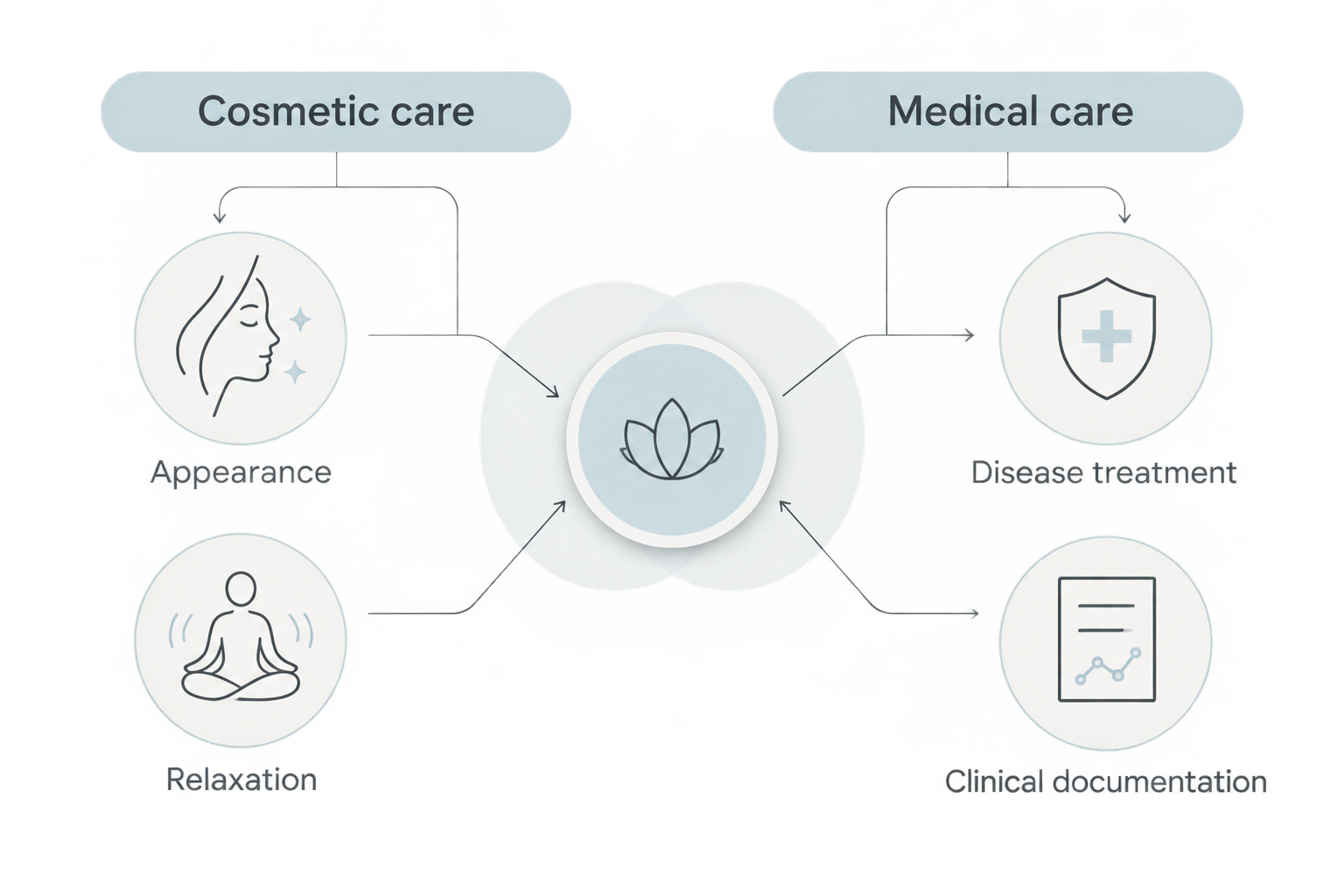
The medical purpose of the expense matters more than the word facial. A treatment menu, a skincare goal, and a benefits-card transaction are not substitutes for a qualified medical expense determination.
Why this matters
You can choose a facial because you want time to unwind, attention to your skin, or a regular self-care appointment. Those are valid reasons to book, but they do not turn the expense into tax-qualified medical care.
The distinction protects your benefits funds and your records. For an FSA, unsupported claims can require correction or repayment; for an HSA, a nonqualified distribution can create tax consequences. Confirm eligibility before using benefits funds, rather than trying to justify a cosmetic appointment afterward.
Cosmetic facials: plan to use personal funds
A facial intended to improve appearance, provide routine cleansing, or support general well-being generally falls outside qualified medical care. Describing a service as rejuvenating, restorative, or advanced does not change that standard.
This includes an important distinction about aging skin. Wanting smoother-looking skin or fewer visible signs of aging is not, by itself, treatment of a disease. A recommendation from a skincare professional also does not automatically establish a medical expense.
Best for: guests seeking cosmetic skincare or relaxation without relying on reimbursement. The benefit is straightforward personal choice; the limitation is that tax-advantaged funds generally are not appropriate for that purpose.
If your appointment is purely cosmetic, choose it on its own merits. Do not add medical language to a receipt or request a diagnosis simply to support a claim.
Medical skin treatment: assess the exact service
Treatment of a diagnosed skin condition is different from an ordinary cosmetic facial. For example, acne treatment can be medical care, but that does not mean every facial advertised for blemish-prone skin qualifies.
The relevant question is whether the specific expense meets the definition of medical care. Ask the treating clinician what condition the service addresses, why that service is appropriate, and whether a spa-delivered procedure is actually part of the recommended care.
Best for: people whose skin concern needs clinical assessment rather than a cosmetic service selection. The benefit is a treatment decision tied to a medical need; the limitation is that a diagnosis does not make every related product or appointment eligible.
For a 2026 claim, use the exact service description. Do not substitute a broad term such as dermatology treatment for an appointment that was delivered and billed as a cosmetic facial.
What about cosmetic procedures with a medical exception?
Federal tax rules recognize limited exceptions to the cosmetic-procedure exclusion, including certain care related to a congenital abnormality, an accident or trauma, or a disfiguring disease. These exceptions are not a general route to reimbursement for appearance-focused skincare.
Have the treating clinician and, where appropriate, a tax professional assess the actual circumstances. A condition-specific exception requires more than dissatisfaction with how your skin looks.
Why facial eligibility varies
The same service label can describe appointments with different purposes. These factors explain why a broad yes-or-no statement about all facials would be misleading:
- Treatment purpose: care directed at disease differs from care intended only for appearance or general well-being.
- The actual service: an appointment’s components matter more than a marketing name.
- Clinical documentation: records should explain the medical condition and the relationship between that condition and the treatment.
- Account rules: an FSA uses plan-administered claims procedures, while an HSA places recordkeeping responsibility on the account holder.
- Separate charges: cosmetic extras do not become eligible simply because they accompany medical care.
- Timing: account establishment, coverage periods, and claim deadlines can affect reimbursement independently of medical purpose.
Before your 2026 appointment, resolve the purpose question first. There is little value in assembling an elaborate claim for a service that is cosmetic from the outset.
The distinction below summarizes the decision, not a promise of reimbursement. A medical purpose still requires supporting facts and the applicable account rules.
How do you check before paying?
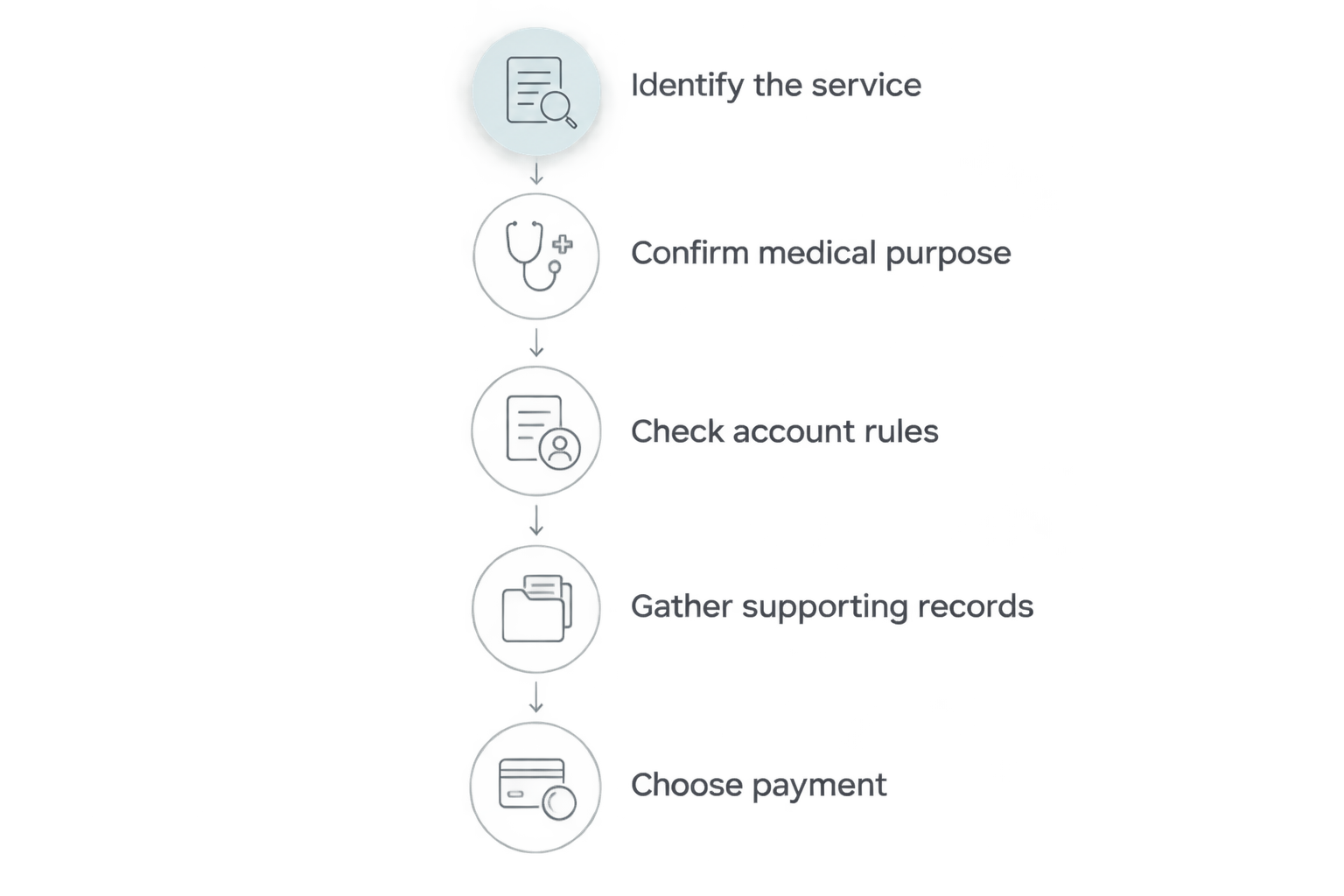
Use this 5-step check before directing FSA or HSA funds toward a facial-related expense. Start with what you are receiving, not how you hope to pay.
- Identify the service. Obtain an accurate description of the appointment and its components. Separate the base service from optional cosmetic extras.
- Confirm medical purpose. If you are seeking disease treatment, discuss the specific service with your treating clinician. Do not assume an existing diagnosis covers every skincare appointment.
- Check account rules. Ask your FSA administrator about the exact expense and required evidence. For an HSA, consult the applicable IRS guidance and obtain tax advice if the classification remains unclear.
- Gather supporting records. Keep the itemized receipt, relevant treatment documentation, and any explanation required for the claim.
- Choose payment. Use personal funds for cosmetic care. For potentially qualified medical care, follow the applicable payment and reimbursement requirements.
A written FSA response is more useful than a casual assurance that a service is usually covered. Ask whether the response addresses your exact treatment, not merely a general category such as skincare.
For HSA spending, a custodian processing a payment does not establish its tax treatment. You remain responsible for supporting the qualified medical purpose of an HSA distribution.
The sequence below keeps the financial decision after the service and eligibility checks. That order prevents a successful payment from becoming your only evidence.
Does a letter of medical necessity make a facial eligible?
A letter of medical necessity does not automatically make a facial eligible. It can explain why a clinician recommends a service, but the expense must still meet the applicable medical-care requirements.
Ask your FSA administrator whether a letter is required and what information it must contain. Documentation requirements are not interchangeable across plans, and a generic note recommending self-care does not establish the purpose of a specific facial.
For an HSA, retain any relevant clinical explanation with your expense records. A letter is supporting evidence, not a substitute for checking whether the actual service qualifies.
Does an accepted FSA or HSA card prove eligibility?
An accepted benefits card does not prove that a facial is eligible. Payment processing and tax qualification are separate questions.
A merchant’s ability to accept a card does not establish whether your expense treats a medical condition. An ordinary payment receipt also does not explain why the treatment was medically necessary.
If you already used benefits funds for a questionable expense, contact your FSA administrator or HSA custodian promptly about the applicable correction process. Ask a tax professional about tax consequences rather than assuming you can resolve the issue with a different service description.
What records should you keep?
Keep 3 record categories together: the transaction record, the clinical basis where relevant, and the account-specific claim correspondence. Each serves a different purpose.
- Transaction record: an itemized receipt identifying the recipient, service, date, and amount paid.
- Clinical basis: relevant documentation explaining the condition and the recommended treatment, when needed to establish medical purpose.
- Claim correspondence: administrator requests, submitted documents, and the claim determination for an FSA.
A bank statement shows that money changed hands. It does not necessarily show what service you received or establish eligibility.
For your 2026 records, also track whether another source reimbursed the same expense. You cannot obtain duplicate tax-advantaged reimbursement for the same medical expense, and an HSA-reimbursed expense cannot also support an itemized medical deduction.
Planning skincare and recovery in Costa Mesa
BodyCentre Day Spa is best for Orange County guests seeking facials, massage, and advanced recovery services at one Costa Mesa location. That combination supports choosing services around your personal goals; it does not establish FSA or HSA eligibility.
BodyCentre Day Spa serves guests seeking traditional spa care alongside services such as hyperbaric oxygen, PEMF, and red light therapy. PEMF means pulsed electromagnetic field therapy. Different services require separate suitability and payment decisions; a recovery label does not make a treatment a qualified medical expense.
Whether you travel from Newport Beach, Irvine, Huntington Beach, or elsewhere in Orange County, the physical spa location is Costa Mesa. Before visiting BodyCentre Day Spa, ask about the actual service and available itemized documentation, then direct eligibility questions to the appropriate benefits or tax adviser.
You can contact the spa to clarify appointment details. Keep that service conversation separate from the medical and tax review.
Where should you check the rules?
For a 2026 eligibility review, consult IRS Publication 502, Medical and Dental Expenses, for the federal distinction between medical care and cosmetic expenses. Consult IRS Publication 969, Health Savings Accounts and Other Tax-Favored Health Plans, for account-specific guidance on HSAs and health FSAs.
Publication 502 is a starting point, not a complete FSA claims manual. Your FSA plan documents explain its submission procedures, and a tax professional can address an uncertain HSA expense.
This article provides general information, not individualized medical or tax advice. The service you receive and your account circumstances determine the appropriate next step.
FAQ
Can I use my HSA for a regular spa facial?
A regular spa facial for cosmetic improvement or relaxation generally is not a qualified HSA expense. Use personal funds unless the exact service meets the applicable medical-care requirements.
Can I use my FSA for an acne facial?
An acne facial is not automatically FSA-eligible. Treatment of acne can qualify as medical care, but your administrator must assess the actual service and supporting documentation under your plan.
Will a doctor’s note make an anti-aging facial eligible?
A doctor’s note does not automatically make an anti-aging facial eligible. Cosmetic care remains subject to the cosmetic-expense exclusion even when a clinician recommends it.
Is FSA eligibility the same as insurance coverage?
FSA eligibility and health insurance coverage are separate determinations. Insurance declining a service does not, by itself, establish whether the expense qualifies for FSA reimbursement.
Can I claim a facial and cosmetic extras together?
Each component needs its own eligibility assessment. Ask for an itemized receipt rather than treating a combined appointment as entirely qualified medical care.
Does BodyCentre Day Spa guarantee FSA or HSA reimbursement?
No reimbursement guarantee is established by this guide. Confirm the exact service with the spa, then check FSA requirements with your administrator or HSA tax treatment with a qualified adviser.
One last thing
A diagnosis and an eligible expense are not the same thing. Having acne or another skin condition does not turn every facial into medical treatment; the connection must apply to the specific service you receive.
Choose cosmetic care because you want it. Use tax-advantaged funds only when the expense itself qualifies and your records support that decision.