
Can you use FSA or HSA funds for massage therapy?
/Yes, you can use FSA or HSA funds for massage therapy when the expense qualifies as medical care, rather than general relaxation or wellness. For 2026, the key distinction is why you receive the massage; a medical recommendation does not automatically make every session eligible. Confirm documentation requirements before booking, and keep records supporting the medical purpose and the expense.
TL;DR
- FSA massage eligibility depends on a qualifying medical purpose, not the treatment name or payment card acceptance.
- Health FSAs require claim substantiation; HSA owners must retain records supporting tax-free distributions.
- A letter of medical necessity supports a claim but does not guarantee eligibility.
- Bodycentre Day Spa offers massage therapy in Costa Mesa; confirm payment arrangements separately from tax eligibility.
Why this matters
A massage can feel therapeutic without qualifying as a tax-advantaged medical expense. That distinction matters before you use account funds, submit a claim, or schedule repeated appointments.
Bodycentre Day Spa combines massage and other spa care with advanced recovery services in Costa Mesa. Those service categories describe the experience, not its tax treatment. Your medical purpose, supporting records, and account rules determine the funding question.
Can you use FSA or HSA funds for massage therapy?
Yes, provided the massage meets the federal definition of medical care and satisfies the applicable account requirements. Treatment directed at a specific medical condition is different from massage purchased for ordinary relaxation, general health, or a spa celebration.
For 2026 planning, IRS Publication 502 explains the distinction between medical care and expenses that merely benefit general health. IRS Publication 969 explains health FSAs, HSAs, and the rules governing their tax advantages. Neither publication makes every massage eligible simply because a healthcare professional suggests it.
What must the expense qualify as?
- Health FSA: Eligible medical care under federal rules and the plan's terms
- HSA: A qualified medical expense under federal rules
Who handles substantiation?
- Health FSA: The plan administrator reviews required claim documentation
- HSA: You retain records supporting the distribution's tax treatment
Does card acceptance establish eligibility?
- Health FSA: No; additional documentation can still be required
- HSA: No; payment does not establish a qualified expense
What timing matters?
- Health FSA: When care is provided, the coverage period, and plan deadlines
- HSA: Whether the expense was incurred after the HSA was established
Best for
- Health FSA: Eligible expenses incurred within your plan's permitted period
- HSA: Qualified expenses supported by records you retain
Main limitation
- Health FSA: Plan deadlines and claim requirements apply
- HSA: You remain responsible for proper tax reporting
Choose the treatment for an appropriate care goal, then verify the funding—not the reverse. A booking confirmation is not a benefits decision.
FSA massage: confirm the claim requirements first
A health flexible spending arrangement, usually called a health FSA, reimburses eligible medical expenses under an employer-sponsored plan. Its administrator can require documentation showing what service you received, when you received it, and why it qualifies.
The advantage is using tax-advantaged funds for an eligible expense. The limitation is that a medical recommendation alone does not bypass the plan's substantiation requirements or deadlines.
Before booking in 2026, ask your administrator specifically about massage therapy. Ask whether a letter of medical necessity is required, which healthcare professionals can supply it, what the letter must contain, and whether the plan requires a particular form.
Do not assume your debit card settles the question. A transaction can process and still require follow-up documentation. Keep the itemized receipt even if you pay directly with the account card.
Also distinguish the deadline for receiving care from the deadline for submitting a claim. An FSA's run-out period generally gives you time to submit eligible claims; it does not, by itself, extend the period in which you can receive care. Grace periods and carryovers depend on the plan.
HSA massage: eligibility still needs support
A health savings account, or HSA, allows tax-free distributions for qualified medical expenses. Unlike an FSA claim, an HSA withdrawal generally does not involve an administrator approving the medical necessity of each service before payment.
That flexibility is the advantage. The responsibility is the trade-off: you must keep records establishing that the expense qualifies, was not reimbursed elsewhere, and was not also claimed as an itemized medical deduction.
For HSA massage expenses, retain the same practical evidence you would want for a documented medical claim. A card statement establishes that money changed hands, but it does not explain the treatment's medical purpose.
An expense must have been incurred after your HSA was established to qualify for tax-free reimbursement from that account. Paying for an older expense with a newer account does not change when the care occurred.
For 2026 recordkeeping, keep each massage receipt connected to its supporting medical documentation. If you reimburse yourself later, retain a clear record of which expense the withdrawal covered so you do not reimburse the same session again.
Why massage eligibility varies
The massage technique alone does not answer the eligibility question. These factors explain why similar-looking appointments can receive different treatment:
- Medical purpose: Treatment for a specific medical condition differs from an appointment intended only to improve general well-being.
- Supporting documentation: A medical recommendation should explain the treatment's connection to the condition, rather than simply endorse massage.
- Account type: Health FSAs involve plan substantiation; HSA owners retain responsibility for documenting qualified withdrawals.
- Timing: The service date, FSA coverage period, submission deadline, and HSA establishment date have different roles.
- Other reimbursement: The same expense cannot receive reimbursement from multiple tax-advantaged sources.
- Service details: Bundles and memberships need enough detail to distinguish potentially eligible care from other purchases.
A deep-tissue massage is not automatically eligible, and a gentle massage is not automatically excluded. Intensity is not the tax test. Neither is whether the appointment takes place in a spa.
What should you do before booking?
Use this 5-step checklist before committing account funds. It separates the clinical decision, the account rules, and the payment arrangements.
- Define the purpose. Discuss the condition and whether massage is appropriate with your treating healthcare professional. Do not seek a medical letter solely to relabel a relaxation appointment.
- Check account rules. For an FSA, ask the administrator about eligibility and required substantiation. For an HSA, review qualified-expense requirements and seek tax advice when the situation is unclear.
- Get documentation. Obtain any required medical recommendation or letter before relying on reimbursement. Ask what period and treatment details it needs to address.
- Confirm service details. Ask the provider what appears on the receipt and whether services in a package can be itemized. Confirm payment arrangements without treating them as eligibility approval.
- Save your records. Keep the receipt, medical support, claim decision, and reimbursement record together. Check that the expense has not been reimbursed elsewhere.
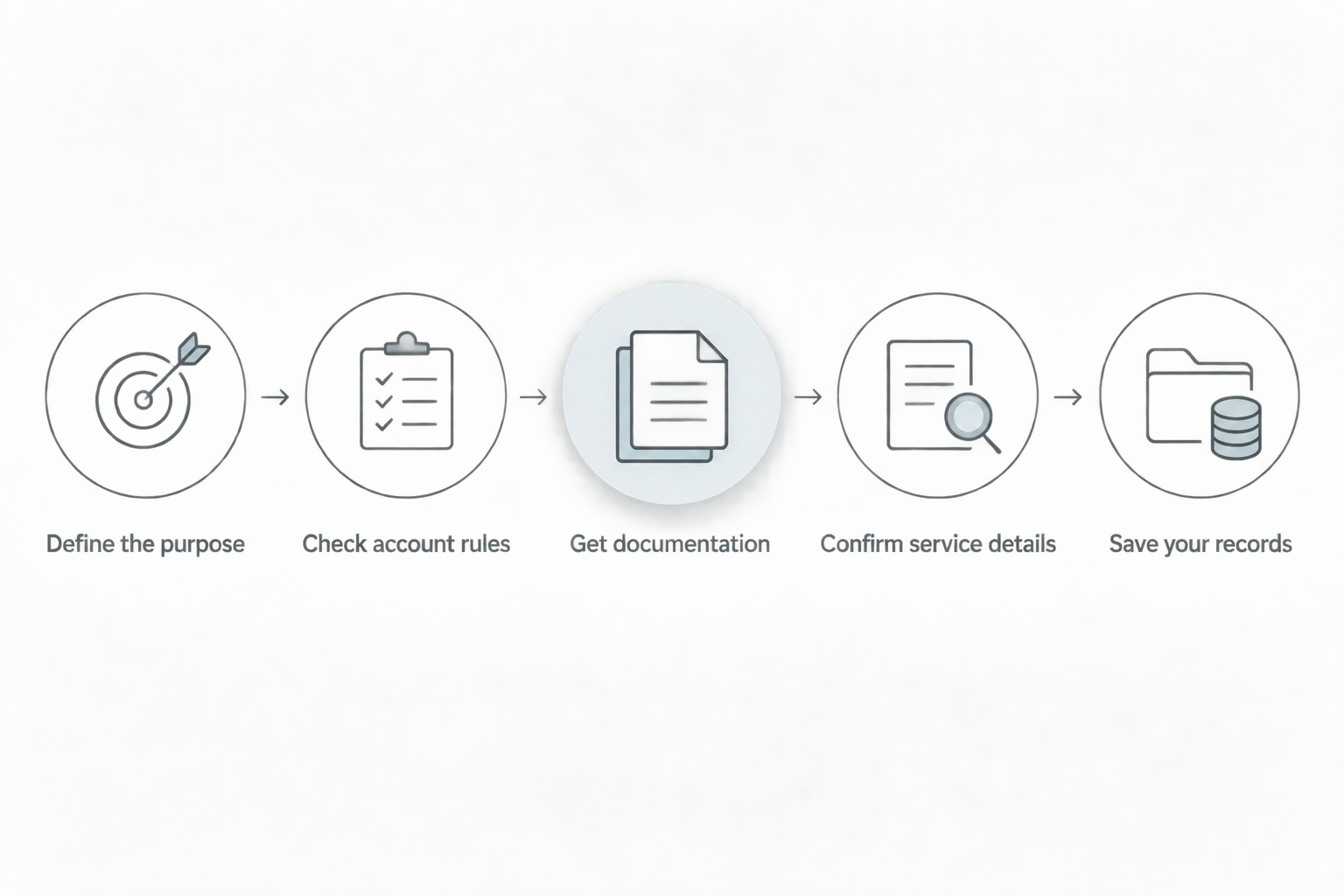
Confirm the medical purpose and account requirements before relying on reimbursement.
Keep 2 questions separate when you contact a provider: can the business process your preferred payment method, and does the expense qualify under your account rules? The provider can answer the payment question; accepting a card does not resolve the tax question.
What paperwork should you keep for massage reimbursement?
Organize 3 record types: the medical basis, the service receipt, and the reimbursement trail. Keeping them together makes it easier to explain the expense without reconstructing the appointment months later.
Medical basis
Retain the healthcare professional's recommendation and any letter of medical necessity your administrator requires. Useful details include the condition being addressed, why massage is recommended, and the proposed treatment frequency and duration where relevant.
A letter is supporting evidence, not a guarantee. Avoid assuming that a broad statement about stress relief establishes a qualifying medical expense.
Service receipt
Request an itemized receipt identifying the patient, provider, service date, service description, and amount paid. A credit-card slip alone generally does not supply enough information to establish the nature of the expense.
For appointments involving several services, ask for separate line items. A single description such as spa package makes it harder to distinguish massage from a facial, a gift purchase, or another component.
Reimbursement trail
Retain the submitted claim, the administrator's decision where applicable, and the record of any account withdrawal or repayment. Clear records help prevent duplicate reimbursement and identify unresolved claims.
For an FSA, tracking FSA receipts and deadlines means matching each service date to the correct coverage period and submitting the supporting documents within the plan's claim window. Treat those as separate tasks, not a single year-end reminder.
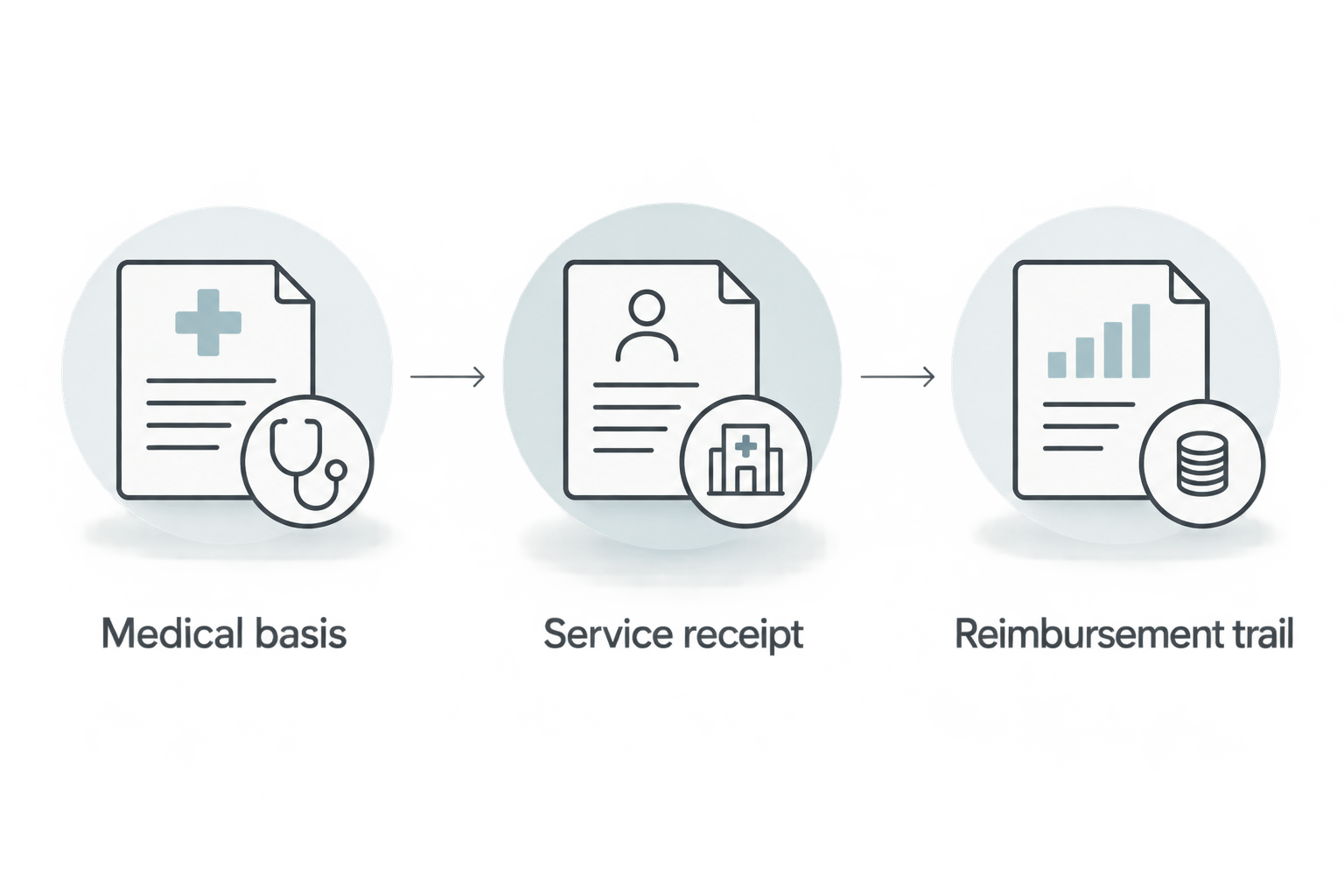
Keep the reason for treatment, proof of service, and reimbursement history together.
For 2026 appointments, save documents as you receive them rather than waiting until the filing deadline. Ask the administrator or your tax adviser how long to retain records for your circumstances.
Can you use FSA funds for a massage membership or package?
A massage membership or package is not automatically eligible because it includes massage. The medical purpose and the actual services still matter, and an advance payment does not by itself establish when an eligible FSA expense was incurred.
Ask how individual visits are documented. If the package also includes facials, skincare, or recovery treatments, do not assign the entire purchase to massage or assume every component shares the same eligibility.
General cosmetic and wellness services do not become medical care because they are bundled with a potentially qualifying treatment. Hyperbaric oxygen, red light therapy, and PEMF—pulsed electromagnetic field therapy—also require their own eligibility assessment; a recommendation for massage does not cover them automatically.
Does a doctor's note guarantee massage reimbursement?
No, a doctor's note does not guarantee massage reimbursement. The expense must still meet the medical-care rules, and an FSA administrator can require specific documentation beyond a general recommendation.
Ask for the requirements before requesting the letter. This gives your healthcare professional the right questions to address without asking the professional to promise a benefits outcome.
Planning a massage visit in Costa Mesa
Bodycentre Day Spa is best for Orange County guests seeking massage and advanced recovery options at one Costa Mesa location. The combination lets you consider traditional spa care alongside recovery services, but each service needs its own funding assessment.
Whether you travel from Costa Mesa, Newport Beach, Irvine, or Huntington Beach, keep the appointment location and account requirements clear. Nearby cities are part of the guest community, not additional spa locations.
Before booking with Bodycentre Day Spa, ask about service and receipt details. Confirm any payment arrangements directly, and obtain eligibility guidance from your account administrator or tax adviser. Do not assume direct FSA or HSA card acceptance or reimbursement assistance.
FAQ
Can I use my FSA for a relaxation massage?
A massage purchased only for relaxation or general wellness is not a qualifying medical expense. FSA eligibility requires a medical-care purpose and the documentation your plan requires.
Do I need a letter of medical necessity for FSA massage?
Your FSA administrator can require a letter of medical necessity for massage therapy. Ask for the plan's requirements before booking; a letter supports the claim but does not guarantee approval.
Can I pay for massage with my HSA card?
You can use HSA funds tax-free only if the massage is a qualified medical expense. Whether a provider accepts the card is a separate payment question, and you must retain supporting records.
Is deep-tissue massage automatically FSA eligible?
Deep-tissue massage is not automatically FSA eligible. The medical purpose and supporting documentation matter more than the technique's name or pressure level.
Can I reimburse the same massage from my FSA and HSA?
No, you cannot reimburse the same massage expense from both an FSA and an HSA. Keep a reimbursement record so each eligible expense is paid back only once.
Can I use remaining FSA funds for a massage gift certificate?
Buying a massage gift certificate does not establish an eligible medical expense. FSA reimbursement depends on qualifying care being provided within the applicable coverage period, not simply purchasing future access.
Does a massage receipt prove medical necessity?
A massage receipt documents the service and payment, not medical necessity by itself. Keep any required medical recommendation and account documentation alongside the receipt.
One last thing
Paying before an FSA deadline is not the same as receiving eligible care before that deadline. Before purchasing future sessions in 2026, check the service-date rules. That distinction matters more than whether a payment goes through.