Best craniosacral massage benefits for stress and tension
/Best overall for general stress: Swedish massage. Best for very light contact: craniosacral massage. Best for focused muscle work: deep tissue massage. This 2026 guide separates realistic relaxation benefits from treatment claims and helps you choose by pressure, comfort, and your reason for booking.
TL;DR
- Craniosacral massage suits people seeking very light touch; evidence does not establish it as a treatment for medical conditions.
- Swedish massage is the default recommendation for general relaxation when you want hands-on muscle work.
- Bodycentre Day Spa combines massage, skincare, and recovery services at its Costa Mesa location.
- Choose by comfort and purpose, not promises about spinal fluid, detoxification, or guaranteed pain relief.
Why this matters
Stress and tension describe experiences, not diagnoses. A busy week, uncomfortable desk setup, persistent headache, and recent injury call for different decisions—even when each leaves you feeling tight.
Craniosacral massage is best understood as a gentle bodywork option, not a proven correction for the nervous system. Its light contact appeals to some guests, but that preference does not establish a medical benefit. You can enjoy a quiet appointment without accepting an explanation about how it treats disease.
For local guests, Bodycentre Day Spa brings massage, facials, and advanced recovery services together in Costa Mesa. Guests traveling from Newport Beach, Irvine, Huntington Beach, and elsewhere in Orange County visit that Costa Mesa location, not separate neighborhood branches.
What makes the best massage for stress and tension?
Use these criteria to choose a massage in 2026. The strongest recommendation is the one that matches your needs without asking you to tolerate unwanted pressure or believe unsupported claims.
- Pressure fit: You should understand whether the session uses light contact, broad massage strokes, or focused pressure.
- Goal fit: Relaxation, muscle work, and medical evaluation are different needs.
- Clear consent: Your therapist should explain contact areas and respect requests to adjust or stop.
- Honest expectations: A useful explanation distinguishes comfort from treatment of an underlying condition.
- Safety screening: Discuss relevant health conditions, recent procedures, injuries, and medications before treatment.
If you are choosing your first appointment, this guide to choosing the right massage in Costa Mesa provides a starting point. Confirm the specific technique with the spa before booking; a general massage menu does not establish that craniosacral work is offered.
Massage options at a glance
These rankings describe suitability for different preferences, not measured differences in treatment results. None of these options replaces evaluation of unexplained or worsening symptoms.
1. Swedish massage
- Best for: General relaxation with muscle contact
- Standout characteristic: Broad strokes with pressure you can discuss
- Key limitation: Not a diagnosis or treatment plan for persistent pain
2. Craniosacral massage
- Best for: People who prefer very light contact
- Standout characteristic: Gentle, relatively still hands-on contact
- Key limitation: Evidence does not establish disease-treatment claims
3. Deep tissue massage
- Best for: Guests requesting focused muscle work
- Standout characteristic: Targeted pressure and slower work
- Key limitation: Greater intensity is not automatically more useful
4. Hot stone massage
- Best for: Guests who enjoy warmth during massage
- Standout characteristic: Heated stones used alongside hands-on work
- Key limitation: Heat adds safety considerations and does not suit everyone
1. Swedish massage: best for general stress relief
Swedish massage uses techniques such as gliding strokes and kneading. For someone who wants familiar hands-on massage rather than very still contact, it is the clearest starting choice.
The practical benefit is straightforward: you can ask for a relaxing session and discuss how much pressure feels comfortable. You do not need to select an intense technique just because your shoulders feel tight.
Swedish massage pros:
- Broad strokes suit a general relaxation appointment.
- You can explain pressure preferences in everyday language.
- The session can focus on comfort rather than chasing a painful spot.
Swedish massage cons:
- Light or moderate work does not match every guest's preference.
- A relaxing appointment does not identify the cause of recurring symptoms.
Best for: Someone who wants general relaxation and expects the therapist to work directly with muscles.
Tell the therapist whether you want conversation, quiet, or occasional pressure checks. These preferences shape the experience without requiring technical vocabulary.
Verdict: Buy—choose Swedish massage as the default for a relaxation-focused appointment.
2. Craniosacral massage: best for very light contact
Craniosacral massage, often called craniosacral therapy, uses light hands-on contact, commonly around the head, neck, back, or sacrum—the bone at the base of the spine. It differs from massage that kneads or compresses muscles.
Practitioners sometimes describe the technique in terms of subtle rhythms or movement of fluid around the brain and spinal cord. Those explanations do not establish that a therapist can reliably detect or correct a medical problem through touch.
Which benefits are reasonable to expect?
A quiet setting, comfortable positioning, and gentle contact can be appealing when you do not want firm pressure. Some people describe feeling relaxed afterward; that experience is different from evidence that the technique treats headaches, trauma, or a neurological disorder.
For your 2026 booking decision, treat relaxation as the goal you can discuss—not a promised physiological reset. There is no need to accept a claim about changing spinal fluid to decide whether light-touch bodywork sounds comfortable.
Craniosacral massage pros:
- Light contact suits a preference against kneading or firm pressure.
- The relatively still approach offers an alternative to movement-heavy massage.
- You can set clear boundaries about head, neck, and body contact.
Craniosacral massage cons:
- Evidence for condition-specific benefits is limited and uncertain.
- It does not provide the focused muscle work some guests expect.
- Unsupported explanations can create unrealistic expectations.
Best for: Someone seeking a gentle, quiet bodywork experience who understands the limits of the evidence.
Ask the provider what the appointment involves, what training informs the approach, and which claims they make about results. Decline explanations that promise cures or suggest abandoning medical care.
Verdict: Hold—choose craniosacral massage only when light contact is your preference, not because you expect a medical correction.
3. Deep tissue massage: best for focused muscle work
Deep tissue massage generally involves slower, more focused work on muscles and related soft tissues. It fits a request for targeted attention better than a request for minimal contact.
The useful distinction is focus, not toughness. You can ask for attention to a particular area while still setting a firm limit on pressure.
Deep tissue massage pros:
- Focused work matches a clearly described area of muscular discomfort.
- You can discuss the location and character of pressure throughout treatment.
- The approach suits guests who prefer more direct muscle contact.
Deep tissue massage cons:
- Strong pressure is uncomfortable for some guests.
- Temporary soreness can occur after massage.
- Persistent pain still needs assessment rather than progressively harder treatment.
Best for: Someone who wants targeted muscle work and feels comfortable giving immediate feedback.
Do not use pain tolerance as the measure of a successful appointment. Sharp pain, tingling, numbness, or an urge to pull away are reasons to speak up and stop the provoking technique.
Verdict: Buy—choose deep tissue for focused work, but skip any pressure you cannot comfortably tolerate.
4. Hot stone massage: best for guests who enjoy warmth
Hot stone massage incorporates heated stones into a massage session. The defining feature is warmth, not proof of deeper healing or more effective tension relief.
Choose it because you enjoy heat and hands-on care together. Before treatment, discuss conditions that affect sensation or make temperature difficult to judge.
Hot stone massage pros:
- Warmth provides a distinct alternative to massage without heated tools.
- You can discuss both temperature and pressure preferences.
- It suits guests who find a warm treatment experience appealing.
Hot stone massage cons:
- Heated tools introduce a burn risk if temperature is inappropriate.
- Reduced sensation makes heat safety especially important.
- Warmth does not establish that the session treats an underlying injury.
Best for: Someone who enjoys warmth, can reliably sense temperature, and has discussed relevant health concerns.
Tell the therapist immediately if a stone feels too hot. Staying silent to preserve the atmosphere is not part of relaxation.
Verdict: Buy—choose hot stone massage for the warmth; skip it when heat is unsuitable or uncomfortable.
How these massage options were ranked
Swedish massage takes the default position because it directly matches a general request for relaxing muscle contact. Craniosacral massage, deep tissue massage, and hot stone massage each serve a different preference: very light contact, focused work, and warmth.
This is a fit-based ranking, not a claim that one technique delivers better clinical results. Your comfort, informed consent, and reason for booking carry more weight than a treatment name.
Before booking: use this simple decision sequence
Start your 2026 appointment planning with 1 main goal, rather than a long list of promised benefits. Then ask 3 questions that make the session easier to understand.
- Name your goal. Say whether you want quiet relaxation, gentle contact, or attention to a muscular area.
- Ask about contact. Which body areas are involved, and what pressure or tools will the practitioner use?
- Discuss safety. What health information should you share before the session?
- Set boundaries. How will you request a pressure change, repositioning, or a pause?
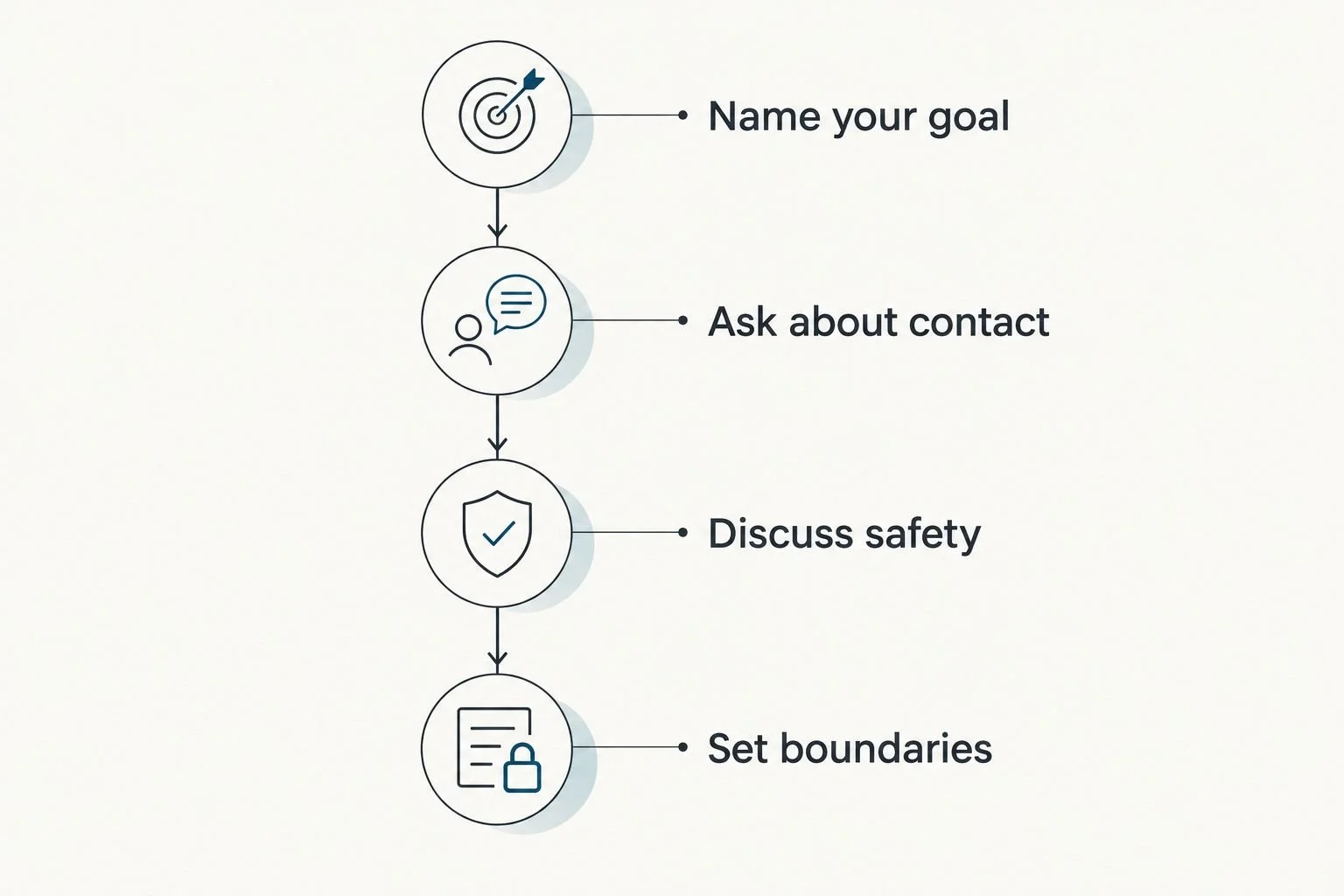
Choose the experience and agree on boundaries before treatment begins.
If you like tracking your experience, use a 0–10 scale for your own perceived tension before and after the appointment. This is a personal check-in, not a diagnostic test or proof that a treatment changed an underlying condition.
Keep spa care and recovery goals separate
Bodycentre Day Spa combines massage therapy, facials, skincare, and waxing with services such as hyperbaric oxygen, PEMF, red light therapy, and altitude training. That range lets you discuss different interests at one Costa Mesa location, but the services are not interchangeable.
PEMF means pulsed electromagnetic field therapy. Hyperbaric oxygen involves breathing oxygen in a pressurized environment, while altitude training changes the oxygen conditions used during exercise. Each requires its own suitability discussion; a technical name does not prove a benefit for your particular concern.
A facial addresses a skincare appointment, massage provides hands-on bodywork, and performance-focused services involve different goals and precautions. For a 2026 wellness plan, select each service for a stated purpose rather than assuming a longer combination produces a better result.
Discuss your spa visit
Explore massage, skincare, and recovery services at the Costa Mesa location.
Which massage should you choose?
Choose Swedish massage when you want a straightforward relaxation appointment with muscle contact. Choose craniosacral massage when very light contact is the main attraction and the provider explains its limitations honestly.
Choose deep tissue for focused muscle work, or hot stone when warmth is a welcome part of the experience. None is the right next step for a symptom that requires medical attention.
For Bodycentre Day Spa massage appointments, describe the experience you want and confirm the specific technique before booking. That conversation is more useful than arriving with a treatment name but no clear goal.
FAQ
What's craniosacral massage supposed to do?
Craniosacral massage uses very light contact and is often offered as a gentle relaxation experience. Claims that it corrects spinal fluid movement or treats medical conditions are not established by strong evidence.
Is craniosacral massage better than Swedish massage for stress?
Craniosacral massage is not established as better than Swedish massage for stress. Choose Swedish for hands-on muscle work and craniosacral work when very light contact is your main preference.
Can craniosacral massage help neck tension?
Some people report feeling more relaxed after craniosacral massage, but that does not establish treatment of the cause of neck tension. Persistent, worsening, or unexplained symptoms need medical assessment.
Should craniosacral massage hurt?
Craniosacral massage is intended to use light contact, not painful pressure. Tell the practitioner immediately about discomfort, tingling, numbness, or any contact you do not want.
Who should ask a clinician before craniosacral massage?
People with a recent head or spine injury, recent surgery, or a significant neurological condition should seek medical guidance before craniosacral work. Do not use a spa appointment to assess a new severe headache or symptoms after an injury.
Does Bodycentre Day Spa offer craniosacral massage?
Confirm craniosacral massage directly with Bodycentre Day Spa before booking. The spa offers massage and recovery services in Costa Mesa, but a general massage offering does not confirm this specific technique.
How do I choose a massage appointment in 2026?
Choose your 2026 massage appointment by goal, pressure preference, and health considerations. Ask what the session involves, disclose relevant medical information, and agree on how to request changes.
One last thing
You do not have to enjoy head or neck contact to enjoy massage. Say which areas you want left alone before the session begins, even when a technique usually includes them. A clear boundary is more useful than enduring an appointment that does not suit you.