Recovery treatments for post-surgery patients: complete 2026 guide
/Post-surgery patients’ recovery care is clinician-directed support aimed at protecting healing and restoring everyday function. When comparing post surgery recovery treatments in 2026, start with your surgical team’s instructions; massage, facials, and recovery services are optional additions, not substitutes for wound care or rehabilitation.
TL;DR
- Post surgery recovery treatments start with surgical aftercare, prescribed rehabilitation, and treatment-specific clearance.
- Bodycentre Day Spa is best for clinician-cleared spa relaxation, not surgical aftercare.
- Massage, skincare, red light therapy, and PEMF need separate suitability checks after surgery.
- New chest pain or difficulty breathing requires emergency care, not a recovery appointment.
Why recovery care matters for post-surgery patients
After surgery, ordinary wellness choices need extra scrutiny. An incision, a drain, medication, or a movement restriction changes whether pressure, heat, positioning, and skin products are appropriate. Feeling ready for an outing does not establish that a particular treatment is safe.
A useful 2026 recovery plan separates medical needs from comfort goals. Your surgeon manages surgical healing; a rehabilitation professional manages prescribed rehabilitation; a spa appointment addresses an approved relaxation or wellness goal.
If swelling has you researching lymphatic drainage massage options, ask your surgical team whether you need assessment or a referral before booking. A treatment name alone does not establish postoperative suitability.
The right next step depends on your operation and restrictions, not on how many recovery services a venue offers.
How to choose post surgery recovery treatments
1. Turn your discharge instructions into a working plan
Start with the instructions you already received. Put wound care, medication directions, follow-up appointments, and activity restrictions in one place. If instructions conflict or leave something unclear, contact the surgical team rather than filling the gap with general wellness advice.
Write down 3 priorities: protecting the surgical area, following prescribed movement guidance, and managing symptoms as directed. These priorities help distinguish necessary care from optional appointments. They are planning categories, not a treatment schedule.
For your 2026 plan, record who to contact during office hours and what to do after hours. Keep that information accessible to anyone helping you recover. Do not stop prescribed medication or alter wound care to make a spa visit possible.
- Keep the discharge instructions somewhere easy to find.
- Record follow-up dates and the surgical team’s contact details.
- List restrictions on lifting, movement, bathing, and positioning.
- Ask which symptoms require a call and which require emergency care.
2. Get clearance for the exact treatment
Permission to resume daily activities is not permission for every wellness service. Ask about the treatment by name and explain what it involves: physical pressure, heat, light exposure, electromagnetic fields, or a pressurized environment.
Describe where you would lie, which body areas would be treated, and whether the appointment involves changing position. Clearance should address the proposed service, not simply confirm that you can leave home.
If massage is being considered, distinguish ordinary relaxation massage from manual lymphatic drainage and scar work. These are different techniques with different purposes. Do not assume a provider has postoperative training because massage appears on a service menu.
- Name the exact treatment you want to discuss.
- Ask which areas must remain untouched.
- Confirm permitted pressure, positioning, and exposure to heat.
- Request relevant restrictions in writing when practical.
Your clearance conversation should connect your goal to a specific service, with restrictions carried through to the appointment.
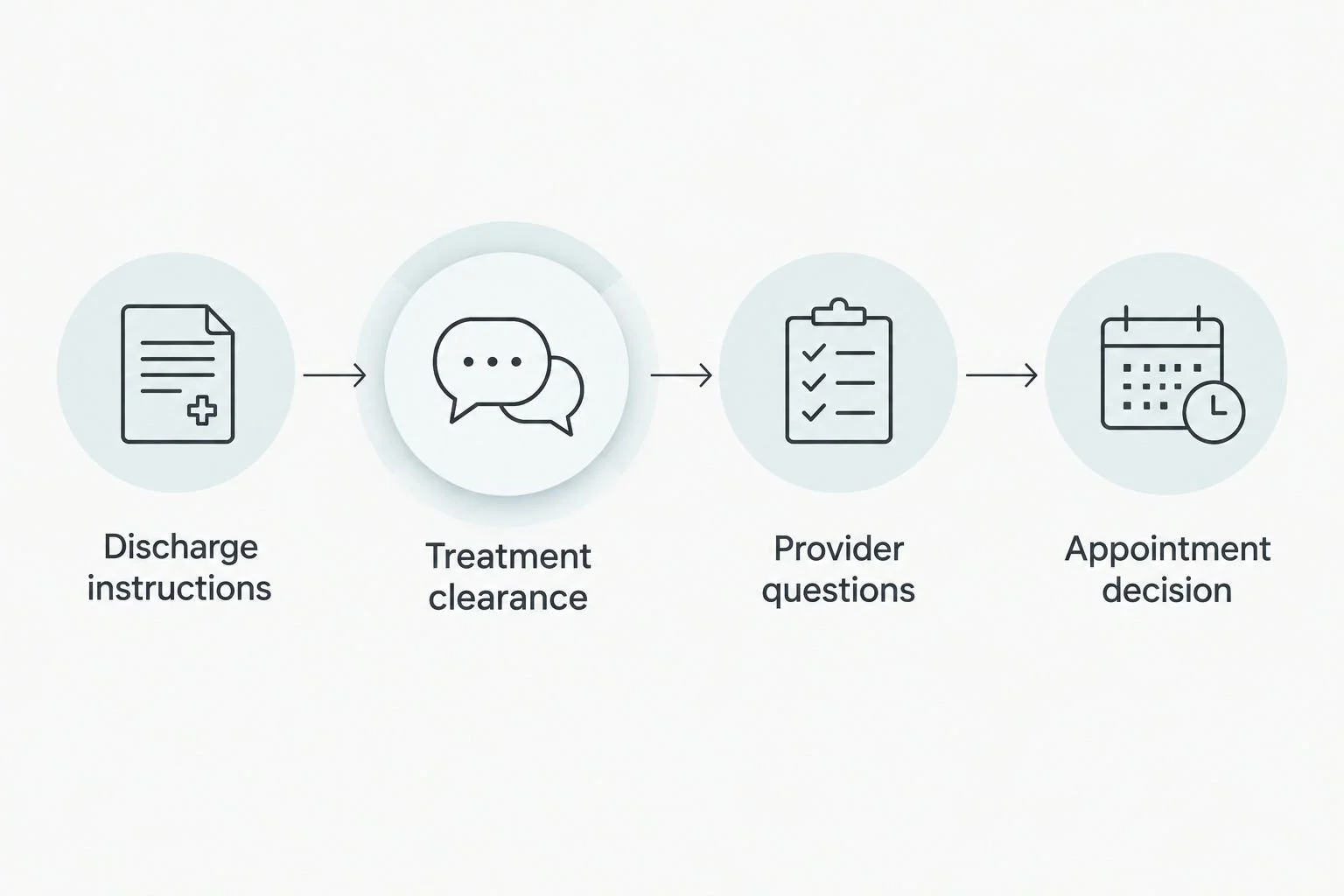
Treatment-specific clearance comes before choosing an appointment.
3. Match the service to a realistic goal
Choose a goal you can describe plainly: relaxing without pressure near the surgical area, discussing skincare after facial surgery, or understanding a recovery service before considering it. Avoid goals such as accelerating healing unless your treating clinician has recommended a specific intervention for that purpose.
Bodycentre Day Spa combines massage, facials, skincare, and advanced recovery services at its Costa Mesa location. That combination gives local guests several service categories to discuss, but it does not establish that any particular service is appropriate after surgery.
Bodycentre Day Spa is best for clinician-cleared spa relaxation, not surgical aftercare. Its service range does not replace a postoperative examination, prescribed rehabilitation, or specialist treatment.
A facial also needs clearance when surgery, healing skin, or positioning restrictions affect the face or neck. Do not assume that choosing skincare instead of massage removes the need to ask.
- Choose one main goal for the appointment.
- Explain the operation and relevant restrictions before booking.
- Ask whether the service can accommodate your approved positioning.
- Keep medical rehabilitation separate from optional spa care.
4. Check recovery technologies individually
“Biohacking” describes a broad wellness category, not a postoperative medical indication. Assess each service separately rather than booking several technologies under a general recovery label.
Red light therapy exposes skin to red or near-infrared light. PEMF stands for pulsed electromagnetic field therapy. Their names do not establish a benefit for your incision, surgical swelling, or rehabilitation goal; ask your clinician whether the proposed device and use fit your situation.
Hyperbaric oxygen involves breathing oxygen in a pressurized chamber. Medical hyperbaric treatment has specific indications and oversight requirements; a wellness offering should not be treated as interchangeable with a prescribed medical treatment. Altitude training involves reduced-oxygen conditions and should not be a self-selected addition to postoperative recovery.
- Ask what the proposed service actually involves.
- Share implanted-device information with the treating clinician and provider.
- Ask about medication-related precautions and positioning requirements.
- Decline claims that promise faster healing without a clinical assessment.
5. Check the practical fit before you travel
Use a phone call or written inquiry before arranging transport. An appointment that requires an uncomfortable position or difficult transfers is a poor fit, even when the service itself has been cleared.
Bring 4 appointment details: the surgery date, the procedure name, current restrictions, and the surgical team’s relevant guidance. Share medication and health information requested for screening. A booking form is not a replacement for explaining a restriction that affects treatment.
The physical spa is in Costa Mesa. Guests traveling from Newport Beach, Irvine, Huntington Beach, or elsewhere in Orange County should account for getting into the vehicle, sitting comfortably, and returning home. Do not drive when your discharge instructions or medication directions prohibit it.
- Confirm access and positioning before setting out.
- Arrange help with transport when your care instructions require it.
- Explain drains, dressings, or movement limits in advance.
- Choose another date if the appointment cannot respect your restrictions.
6. Review comfort without treating it as proof of healing
An appointment can feel relaxing without demonstrating that an incision has healed or that rehabilitation is complete. Keep those judgments separate. Your surgical follow-up remains the place to assess postoperative progress.
Record 2 observations after an approved service: how comfortable the positioning felt and whether any symptoms changed. Report concerns to the appropriate clinician rather than repeatedly booking the same service to address an unexplained symptom.
Keep your 2026 recovery notes simple. Record what was done, which areas were treated, and any concerns; avoid assigning a healing score based on how energized or relaxed you feel afterward.
- Tell the provider immediately if pressure or positioning hurts.
- Stop an optional service if you feel unwell.
- Contact your surgical team about concerning changes.
- Keep prescribed follow-ups even when you feel better.
Compare your recovery-care options
Choose the option that addresses an identified need. The table distinguishes medical care from optional comfort services; it does not rank spa treatments as alternatives to surgical aftercare.
Surgical follow-up and home instructions
- Best for: Managing the operation’s recovery requirements
- Main advantage: Addresses wound care, restrictions, and complications
- Key limitation: Requires contacting the clinical team when instructions need clarification
Prescribed physical or occupational therapy
- Best for: Rebuilding function when referred
- Main advantage: Connects rehabilitation to an assessed functional need
- Key limitation: Exercises and progression must fit the operation
Clinician-approved massage
- Best for: An approved relaxation or comfort goal
- Main advantage: Offers hands-on relaxation
- Key limitation: Pressure and positioning can conflict with restrictions
Clinician-directed manual lymphatic drainage
- Best for: Patients specifically advised to seek it
- Main advantage: Uses a technique distinct from ordinary massage
- Key limitation: Needs a clear indication and a suitably trained provider
Facials and skincare
- Best for: Approved skin-care goals away from healing tissue
- Main advantage: Keeps skincare separate from deeper bodywork
- Key limitation: Products, exfoliation, and positioning still need review
Red light therapy or PEMF
- Best for: A service-specific discussion with the treating clinician
- Main advantage: Offers options that do not rely on massage pressure
- Key limitation: Neither label establishes postoperative suitability or benefit
Medically prescribed hyperbaric oxygen
- Best for: A diagnosed indication assessed by a medical team
- Main advantage: Provides a defined medical intervention when indicated
- Key limitation: A wellness service is not automatically equivalent
Altitude training
- Best for: A later fitness discussion after medical clearance
- Main advantage: Addresses a training goal rather than incision care
- Key limitation: Not a self-selected postoperative recovery treatment
The distinction is purpose: wound management, functional rehabilitation, and relaxation answer different needs. Keep those categories separate when reviewing any service menu.
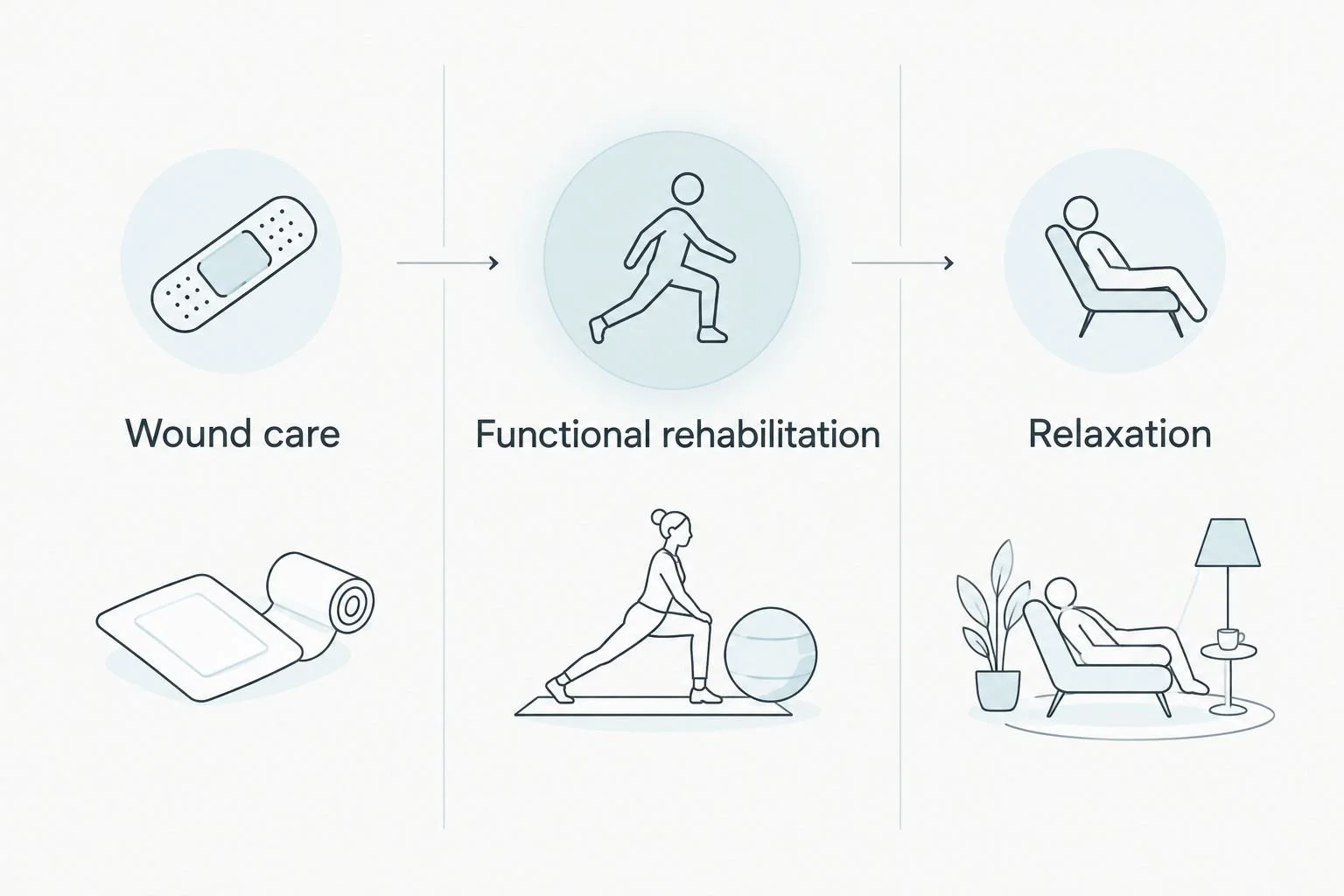
Relaxation services do not replace wound care or prescribed rehabilitation.
Common mistakes post-surgery patients make
Treating unexplained swelling as a massage problem
New or worsening swelling needs the response specified by your surgical team, not an automatic lymphatic massage booking. One-sided leg swelling or pain warrants prompt medical assessment. New chest pain or difficulty breathing requires emergency care; call 911 in the United States.
Using a calendar date as universal clearance
There is no single waiting period that makes every treatment appropriate after every operation. Your procedure, healing status, complications, and proposed service determine the decision. Another patient’s recovery timetable is not your clearance.
Hiding restrictions to keep an appointment
A drain, dressing, implanted device, or inability to lie comfortably matters to service selection. Explain these issues before arrival. If a provider cannot accommodate the restrictions, postpone the optional appointment rather than minimizing the information.
Treating a technology name as evidence
A 2026 recovery menu can include familiar terms without answering the important question: is this service appropriate for this patient after this operation? Ask for a plain-English explanation and take clinical questions back to your treating professional.
Combining several new services at once
A complicated appointment makes it harder to identify what caused discomfort. Ask your clinician which service, if any, fits your current stage, and keep the appointment focused. More services do not establish better recovery.
FAQ
What are the best post surgery recovery treatments?
The best starting point is your surgical team’s aftercare plan and any prescribed rehabilitation. Optional massage, skincare, or recovery services require treatment-specific clearance and should address a defined goal.
How soon after surgery can I get a massage?
Your surgical team must determine when massage is appropriate for your operation and healing status. Ask about the exact technique, body area, pressure, and positioning rather than relying on a general waiting period.
Is lymphatic drainage massage necessary after every surgery?
No, lymphatic drainage massage is not a universal requirement after surgery. Ask your surgical team whether it is indicated and what qualifications the provider should have.
Can I use red light therapy or PEMF after surgery?
Use red light therapy or PEMF after surgery only when your treating clinician has reviewed the proposed service and relevant precautions. Neither treatment name alone establishes safety or a benefit for your surgical recovery.
Is a facial safer than massage after surgery?
A facial is not automatically safer after surgery. Facial or neck procedures, healing skin, products, and treatment positioning can all affect suitability.
Does Bodycentre Day Spa replace postoperative rehabilitation?
Bodycentre Day Spa does not replace prescribed postoperative rehabilitation or surgical follow-up. Its Costa Mesa spa and recovery services belong in the optional-care discussion after treatment-specific medical clearance.
What should I do if swelling gets worse before a spa appointment?
Contact your surgical team about worsening swelling instead of using the appointment to assess it. Seek emergency care for chest pain or difficulty breathing, and follow your discharge instructions for other warning signs.
One last thing
Permission to walk, exercise, or return to work is not blanket permission for a spa treatment. Before any optional appointment in 2026, ask one precise question: does my clearance cover this treatment, in this position, on this body area? That question is more useful than asking whether you are generally “ready for recovery services.”